

Key Takeaways
Why Food Labels Feel Overwhelming
Nutrition labels are designed to inform, but for many people they deliver the opposite experience - a wall of numbers, abbreviations, and percentages that seems to require a science degree to interpret. The good news is that once you understand the structure, the label follows a predictable logic you can apply to nearly any packaged food.
The U.S. Food and Drug Administration (FDA) requires a standardized Nutrition Facts panel on most packaged foods. Learning to read it accurately supports realistic, health-focused eating - whether you're managing a specific health condition or simply trying to make more informed choices at the grocery store. For a broader look at how nutritional thinking can go astray, see common traps that undermine good dietary intentions.
What you will need
How to Read a Nutrition Label Step by Step
Work through the label from top to bottom. Each section builds on the one before it, so skipping ahead can lead to misreading the numbers that follow.
Start with the serving size
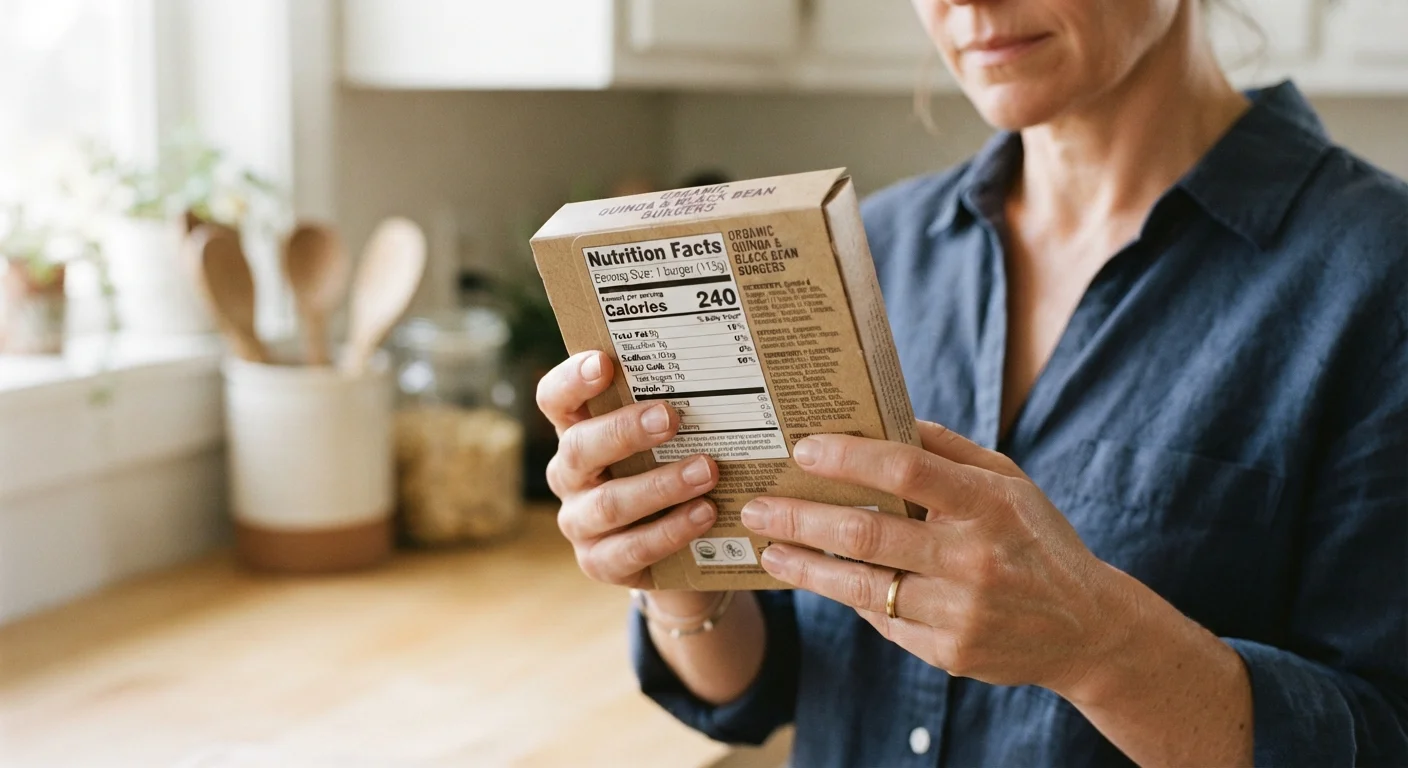
The very first line under "Nutrition Facts" is the serving size, followed by the number of servings per container. Every number on the label refers to one serving - not the whole package. If a bag lists a serving size of 28g but you typically eat twice that amount, you need to double every figure shown.
This single detail is responsible for more label misreading than any other. Always anchor your interpretation here before moving on.
Check the calorie count in context
Calories per serving appear prominently below the serving information. This figure tells you how much energy one serving provides. While calorie awareness has a role in balanced eating, it's most useful when considered alongside the nutritional quality of those calories - what else does this serving deliver?
Use % Daily Value as a quick benchmark
The right-hand column shows % Daily Value (% DV) for each listed nutrient. This figure is based on a 2,000-calorie daily diet and indicates what proportion of the recommended daily amount one serving provides. A general rule of thumb: 5% DV or less is low; 20% DV or more is high. Use this scale to quickly assess whether a food is a meaningful source of a given nutrient - or whether it contributes an outsized amount of something you may want to moderate.
Scan the macronutrients
Below the calorie line, you'll find total fat (broken into saturated and trans fat), total carbohydrates (broken into dietary fiber, total sugars, and added sugars), and protein. Trans fat has no established safe intake level, so even small amounts are worth noting. For carbohydrates, the split between fiber and added sugars is more informative than the total figure alone. For a deeper look at carbohydrate types, see the difference between simple and complex carbs.
Read the ingredient list
Ingredients are listed in descending order by weight - the first ingredient makes up the largest proportion of the food. A short ingredient list with recognizable items generally indicates less processing. If added sugars appear multiple times under different names (such as corn syrup, dextrose, or cane juice), their combined contribution may be higher than any single listing suggests.
Front-of-Package Claims Aren't Regulated the Same Way
Terms like "natural," "made with real fruit," or "multigrain" are marketing language and carry no standardized nutritional definition. The Nutrition Facts panel and ingredient list are regulated and reliable - always use those as your primary reference rather than front-of-package messaging. This is one of the most well-documented ways packaging claims mislead well-intentioned shoppers.
What to Watch - and What to Ignore
Not every line on the label deserves equal attention. For most adults, a few key nutrients carry the most practical weight:
- Sodium: Many packaged foods are high in sodium. Adults generally benefit from awareness here, particularly those managing blood pressure. A % DV above 20% per serving is considered high.
- Added sugars: The label now distinguishes added sugars from naturally occurring ones. Foods that derive a large share of calories from added sugars tend to offer less nutritional value overall.
- Saturated fat: Current dietary guidelines suggest keeping saturated fat intake moderate. This figure is especially relevant for cardiovascular health.
- Fiber: Most Americans fall short of fiber recommendations. A % DV of 20% or more per serving is a useful marker for a fiber-rich food.
Vitamins and minerals listed at the bottom - such as vitamin D, calcium, iron, and potassium - indicate nutrients the FDA has identified as commonly under-consumed. If your eating pattern may be missing key nutrients, these signs of nutritional gaps are worth reviewing.
Meanwhile, calories alone don't tell the full story. Two foods with identical calorie counts can deliver very different nutrition - a point explored in depth in our piece on calories versus nutrient quality.
Labels Aren't a Substitute for Professional Guidance
Reading nutrition labels is a useful skill for general health awareness, but it is not a clinical tool. If you are managing a chronic condition, following a therapeutic diet, or have specific health concerns, consult a registered dietitian or healthcare provider. Label literacy supports informed choices - it does not replace personalized medical or nutritional advice.
This article is for general informational purposes only and does not constitute medical or dietary advice. Consult a qualified healthcare professional or registered dietitian for guidance tailored to your individual health needs.