

Key Takeaways
Summary
18 items · 20-35 minutes
Why a Monthly Physical Self-Check Matters
Strength and mobility tend to decline gradually as we age - so gradually, in fact, that many people don't notice changes until daily tasks become noticeably harder. A structured monthly self-check gives you a personal baseline and lets you spot trends early, when they're most responsive to lifestyle adjustments.
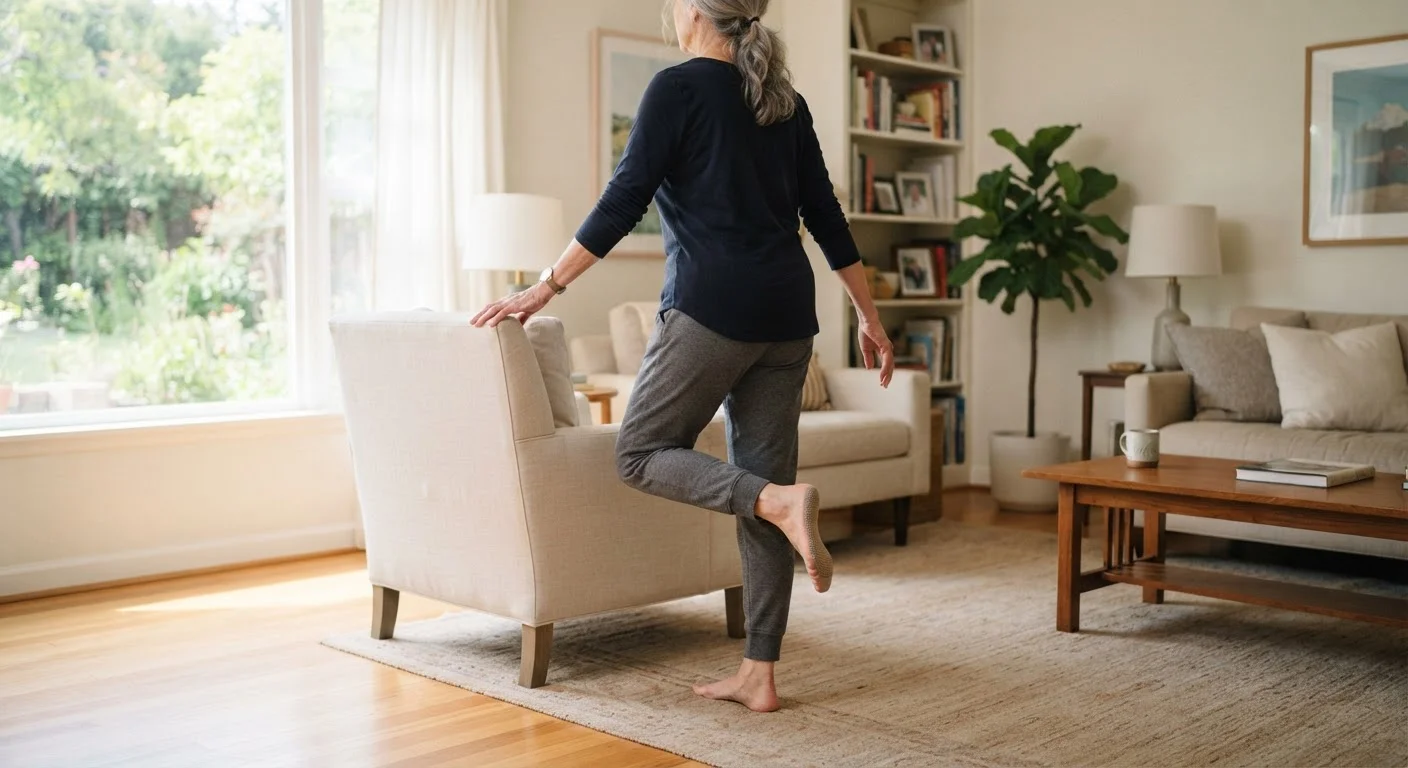
These tests aren't meant to diagnose anything. They're practical movement benchmarks you can perform in your own home, record in a notebook or phone, and compare month to month. Think of it the way you might track blood pressure readings at home - useful data that helps you and your care team make more informed decisions.
For context on how your activity levels stack up against broad public health recommendations, see our plain-language activity guidelines for older adults. And if you want to understand your starting point even better, the Daily Movement Audit is a helpful companion tool.
Stop Immediately if You Feel Pain or Dizziness
These self-checks are designed to be low-risk, but they are not risk-free. If you experience chest pain, sudden dizziness, sharp joint pain, or shortness of breath at any point, stop the activity immediately and seek medical attention. Do not attempt to push through discomfort to complete a test - your safety is always the priority.
What You'll Need Before You Start
Most items on this checklist require nothing more than what's already in your home. Gather the following before you begin, and always perform your check on a day when you feel typical - not right after an illness or an unusually strenuous day.
Sturdy armless chair
Used as a base for the Chair Stand Test and seated flexibility checks.
Smartphone or kitchen timer
Times balance holds, the Chair Stand Test, and other timed assessments accurately.
Notebook or tracking log
Records raw results each month so you can identify trends over time.
Tape measure or ruler
Measures reach distance during flexibility tests for a more precise monthly comparison.
Non-slip mat or bare floor
Provides a safe, stable surface for standing balance and movement tests.
Choose the same time of day each month to reduce variability. Morning is often best, after a brief warm-up walk around your home. If you have a known balance condition, chronic pain, or a recent injury, please consult your healthcare provider before attempting any balance or strength tests.
The Monthly Self-Check Checklist
Work through each group in order. Record your raw results - number of repetitions, seconds held, distance measured - rather than simply pass or fail. Trends across months tell you far more than any single session.
Setup and Safety Checks
Lower Body Strength
Balance and Stability
Upper Body and Core Strength
Flexibility and Range of Motion
Record and Reflect
Once you've completed the checklist, note any movements that felt significantly harder or easier than last month. If you're also tracking symptoms or functional changes to share with your doctor, our guide on what to record before your next medical appointment can help you organize those notes effectively.
Interpreting Your Results and Knowing When to Act
There is no universal "passing" score for these tests, because individual baselines vary widely. What matters is your trend over time. A small dip one month followed by a rebound is normal. A steady decline across two or three consecutive months - in any category - is a meaningful signal.
Declining Scores Deserve Professional Attention
A consistent drop in balance, lower-body strength, or grip across two or more consecutive monthly checks is not something to monitor indefinitely on your own. Bring your tracking log to your next healthcare appointment. Functional decline that's caught early is significantly more manageable than decline that goes unaddressed for months or years.
If your scores are holding steady or improving, that's valuable information too. Use it to stay motivated and to build on what's working. Our article on mobility exercises for everyday tasks offers practical movements you can incorporate between monthly checks to support the areas you're monitoring.
For a broader look at daily habits that influence how you feel and move, the Aging Well Daily hub covers nutrition, sleep, and lifestyle strategies that work alongside physical self-monitoring.
This article is for general informational and educational purposes only and is not a substitute for professional medical advice, diagnosis, or treatment. Always consult a qualified healthcare provider before starting a new exercise program or if you have concerns about your physical health.