

Key Takeaways
Integrates exercise into existing daily schedule
Active commuting uses time that would otherwise be spent sitting in a vehicle or on transit, making it one of the most time-efficient ways to accumulate physical activity without restructuring your day.
Supports cardiovascular and metabolic health
Regular moderate-intensity movement like cycling or brisk walking is associated with lower risk of cardiovascular disease, type 2 diabetes, and hypertension - benefits that have been documented in large population studies of active commuters.
Consistent and habitual by design
Because commuting happens on a fixed schedule tied to work obligations, the movement becomes habitual rather than optional - a structural advantage over discretionary exercise that relies on motivation.
Supports mental wellbeing and stress management
Research links active commuting with lower self-reported stress and better mood compared to passive car travel, likely due to a combination of physical activity and time spent outdoors.
Low financial barrier once established
Walking costs nothing beyond appropriate footwear, and cycling, while requiring upfront investment in a bike, eliminates fuel, parking, and transit costs over time.
Distance and geography limit feasibility
Many people live too far from their workplace for walking or cycling to be practical as a primary commute method. Long distances, hilly terrain, or high-speed roads with no cycling infrastructure present genuine barriers.
Weather creates unreliability and risk
Cycling in heavy rain, extreme heat, or icy conditions carries real safety risks and discomfort. Unlike gym-based exercise, active commuting is directly exposed to environmental conditions with no easy indoor alternative.
Workplace facilities are often inadequate
Without secure bike storage, showers, or changing areas, active commuting - especially cycling - becomes impractical for workers who need to arrive professionally presentable.
Air quality and traffic exposure are real concerns
Cyclists and pedestrians traveling along busy roads can be exposed to higher concentrations of vehicle emissions than car occupants, which is worth considering especially for those with respiratory conditions.
Adds physical demand on already-tiring days
On days following poor sleep, illness, or high-stress workloads, the physical effort of an active commute may be counterproductive - and the fixed nature of commuting makes it harder to skip than a discretionary workout.
Our Verdict
Active commuting is one of the most efficient ways to add consistent, moderate-intensity movement to a daily routine without carving out extra time. The health case is solid, but its feasibility depends heavily on individual circumstances like distance, terrain, and local infrastructure. A partial or hybrid approach often works well for those who can't commit fully.
People who live within a reasonable distance of work, have access to safe cycling or walking routes, and are looking for a sustainable, low-effort way to meet daily movement goals.
What Active Commuting Actually Means
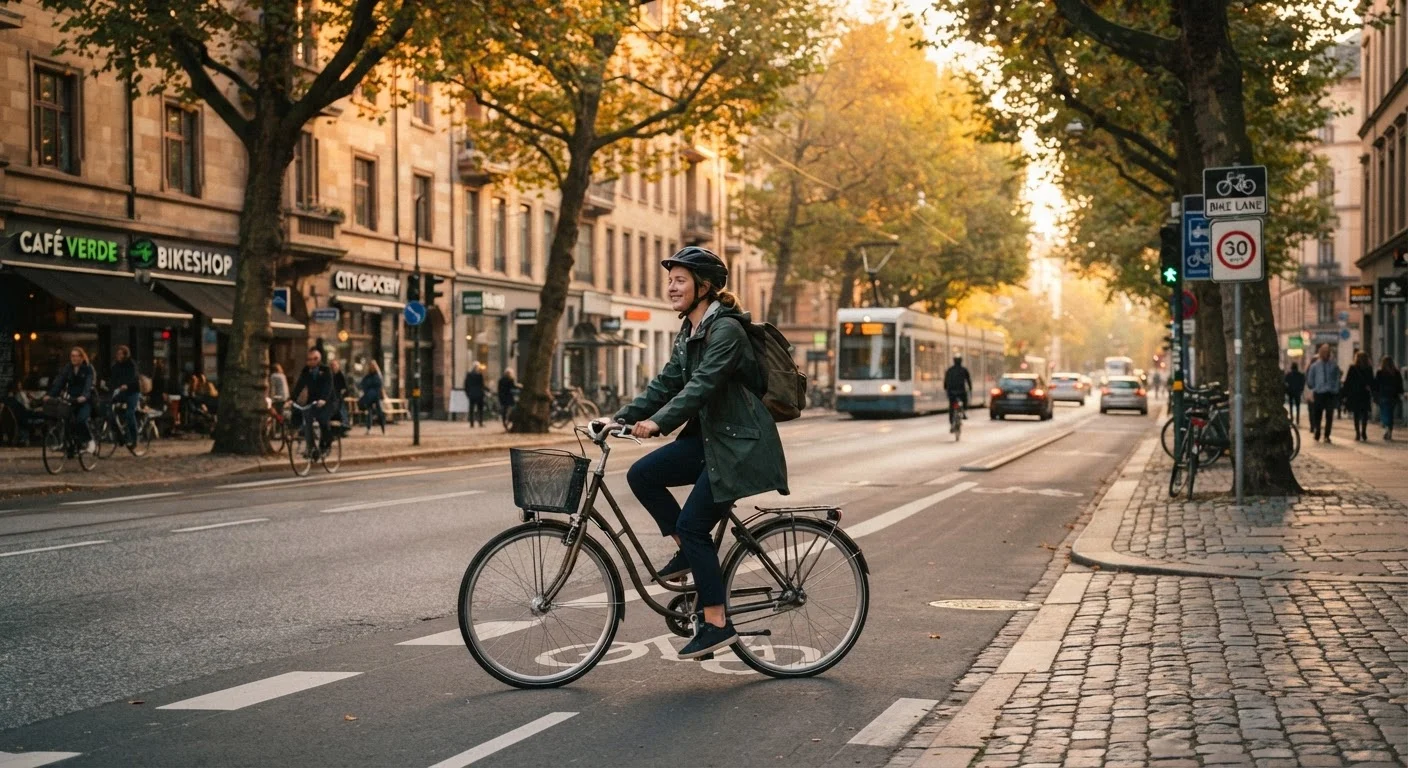
Active commuting refers to traveling to and from work - or other regular destinations - using human-powered movement rather than motorized transport. Walking and cycling are the most common forms, though some people combine modes, such as cycling to a bus stop or walking the final stretch from a train station.
Unlike structured exercise, active commuting doesn't require setting aside dedicated workout time. The movement happens within a journey you're already making, which is why it appeals to people who struggle to fit conventional exercise into a busy schedule. For a broader look at how incidental movement accumulates into lasting health benefits, see Moving More Without a Gym.
The intensity of active commuting is generally moderate - think brisk walking or steady cycling on flat terrain. This sits within the zone most public health guidelines recommend for cardiovascular benefit.
The Advantages Worth Considering
The evidence in favor of active commuting is well-established and spans multiple dimensions of health.
Integrates exercise into existing daily schedule
Active commuting uses time that would otherwise be spent sitting in a vehicle or on transit, making it one of the most time-efficient ways to accumulate physical activity without restructuring your day.
Supports cardiovascular and metabolic health
Regular moderate-intensity movement like cycling or brisk walking is associated with lower risk of cardiovascular disease, type 2 diabetes, and hypertension - benefits that have been documented in large population studies of active commuters.
Consistent and habitual by design
Because commuting happens on a fixed schedule tied to work obligations, the movement becomes habitual rather than optional - a structural advantage over discretionary exercise that relies on motivation.
Supports mental wellbeing and stress management
Research links active commuting with lower self-reported stress and better mood compared to passive car travel, likely due to a combination of physical activity and time spent outdoors.
Low financial barrier once established
Walking costs nothing beyond appropriate footwear, and cycling, while requiring upfront investment in a bike, eliminates fuel, parking, and transit costs over time.
~30%
Reduced cardiovascular disease risk in cyclists
A large UK Biobank study published in the British Medical Journal found that cycling to work was associated with approximately a 45% lower risk of cardiovascular disease and a 41% lower risk of cancer, compared to non-active commuters.
150 min
Weekly moderate activity recommended by major health bodies
The World Health Organization recommends at least 150 minutes of moderate-intensity aerobic activity per week for adults - a target a 30-minute daily active commute can substantially help meet.
Beyond individual health, active commuting reduces dependence on vehicles, which can translate to lower transportation costs over time. It also tends to improve mood and cognitive focus at the start of the workday - research has associated active travel with lower reported stress and higher morning alertness compared to passive commuting by car.
If you're newer to regular movement, active commuting can serve as a manageable entry point. Starting an Active Lifestyle When You've Been Sedentary for Years outlines how low-barrier habits like this can build a foundation for longer-term fitness.
The Challenges That Deserve Honest Attention
Active commuting isn't universally practical, and dismissing its barriers doesn't serve readers well.
Distance and geography limit feasibility
Many people live too far from their workplace for walking or cycling to be practical as a primary commute method. Long distances, hilly terrain, or high-speed roads with no cycling infrastructure present genuine barriers.
Weather creates unreliability and risk
Cycling in heavy rain, extreme heat, or icy conditions carries real safety risks and discomfort. Unlike gym-based exercise, active commuting is directly exposed to environmental conditions with no easy indoor alternative.
Workplace facilities are often inadequate
Without secure bike storage, showers, or changing areas, active commuting - especially cycling - becomes impractical for workers who need to arrive professionally presentable.
Air quality and traffic exposure are real concerns
Cyclists and pedestrians traveling along busy roads can be exposed to higher concentrations of vehicle emissions than car occupants, which is worth considering especially for those with respiratory conditions.
Adds physical demand on already-tiring days
On days following poor sleep, illness, or high-stress workloads, the physical effort of an active commute may be counterproductive - and the fixed nature of commuting makes it harder to skip than a discretionary workout.
Partial Active Commuting Still Counts
You don't have to walk or cycle the entire route to benefit. Cycling to a transit stop, walking the last mile from a station, or parking farther away and walking the remainder are all legitimate strategies. Research supports the idea that even partial active commuting contributes meaningfully to daily physical activity totals. A flexible approach is more sustainable than an all-or-nothing mindset.
Weather is a particularly variable challenge. Rain, heat, ice, and wind can all make walking or cycling uncomfortable or unsafe on a given day, requiring backup plans. Employers vary widely in whether they provide secure bike storage, showers, or changing facilities - the absence of these amenities can make cycling especially difficult for longer commutes.
There's also the cumulative fatigue factor. For people managing demanding jobs, health conditions, or caregiving responsibilities, adding physical effort to a commute may feel like too much on certain days. Listening to your body matters here. If you're also navigating a largely sedentary workday, Desk-Bound All Day offers complementary strategies for movement during work hours.
Making It Work in Practice
For most people, an all-or-nothing approach is neither realistic nor necessary. A hybrid model - active commuting two or three days per week, or walking just one leg of the journey - still delivers meaningful benefits and is far more sustainable than an ambitious plan that collapses after two weeks.
Practical steps worth considering:
- Map your route before committing. Use mapping tools to identify the safest walking or cycling path, not just the fastest one. Note crossings, traffic density, and gradient.
- Start with one direction. Many people find it easier to cycle in and take transit home until their fitness builds, then gradually reverse or do both.
- Pack strategically. Carrying work essentials in a well-fitted backpack or panniers reduces physical strain on longer rides.
- Plan around weather. Identify which days tend to have acceptable weather and treat those as your default active commute days.
For more ideas on weaving movement into journeys and errands, Turning Everyday Tasks Into Opportunities to Move More offers practical framing that complements active commuting well. You can also explore Turning Your Commute Into a Movement Opportunity for mode-specific strategies including transit combinations.
This article is for general informational purposes only and does not constitute medical advice. If you have an existing health condition or are significantly increasing your activity level, speak with a qualified healthcare professional before making changes.