

| Number of essential vitamins | 13 (National Institutes of Health, Office of Dietary Supplements) |
| Recommended daily fiber intake (adults) | 22-34 g depending on age and sex (Dietary Guidelines for Americans, 2020-2025) |
| Macronutrients providing calories | 3 (carbohydrate, protein, fat) |
| Glycemic Index high threshold | 70 or above (Harvard T.H. Chan School of Public Health) |
| Calories per gram of fat | 9 kcal (USDA Nutrient Database reference) |
| Calories per gram of carbohydrate or protein | 4 kcal (USDA Nutrient Database reference) |
Why Nutrition Vocabulary Matters
Nutrition information is everywhere - and so is the confusion it creates. Terms like macros, GI, and phytonutrients appear in magazine articles, food packaging, and healthcare conversations, often without explanation. When you understand what these words actually mean, you are better equipped to assess dietary advice critically rather than accepting it at face value.
This glossary is designed as a reference, not a reading list. Return to it whenever you encounter unfamiliar terminology in an eating plan, a nutrition label, or a conversation with a health professional. For a broader look at why the overall eating pattern matters more than any single term or food, see our article what a dietary pattern is and why it matters.
| Number of essential vitamins | 13 (National Institutes of Health, Office of Dietary Supplements) |
| Recommended daily fiber intake (adults) | 22-34 g depending on age and sex (Dietary Guidelines for Americans, 2020-2025) |
| Macronutrients providing calories | 3 (carbohydrate, protein, fat) |
| Glycemic Index high threshold | 70 or above (Harvard T.H. Chan School of Public Health) |
| Calories per gram of fat | 9 kcal (USDA Nutrient Database reference) |
| Calories per gram of carbohydrate or protein | 4 kcal (USDA Nutrient Database reference) |
Core Terms Defined
The following definitions cover the vocabulary most commonly encountered when reading about healthy eating. Each term is explained in plain language, with context for how it is used in nutrition science and everyday diet discussions.
Macronutrients
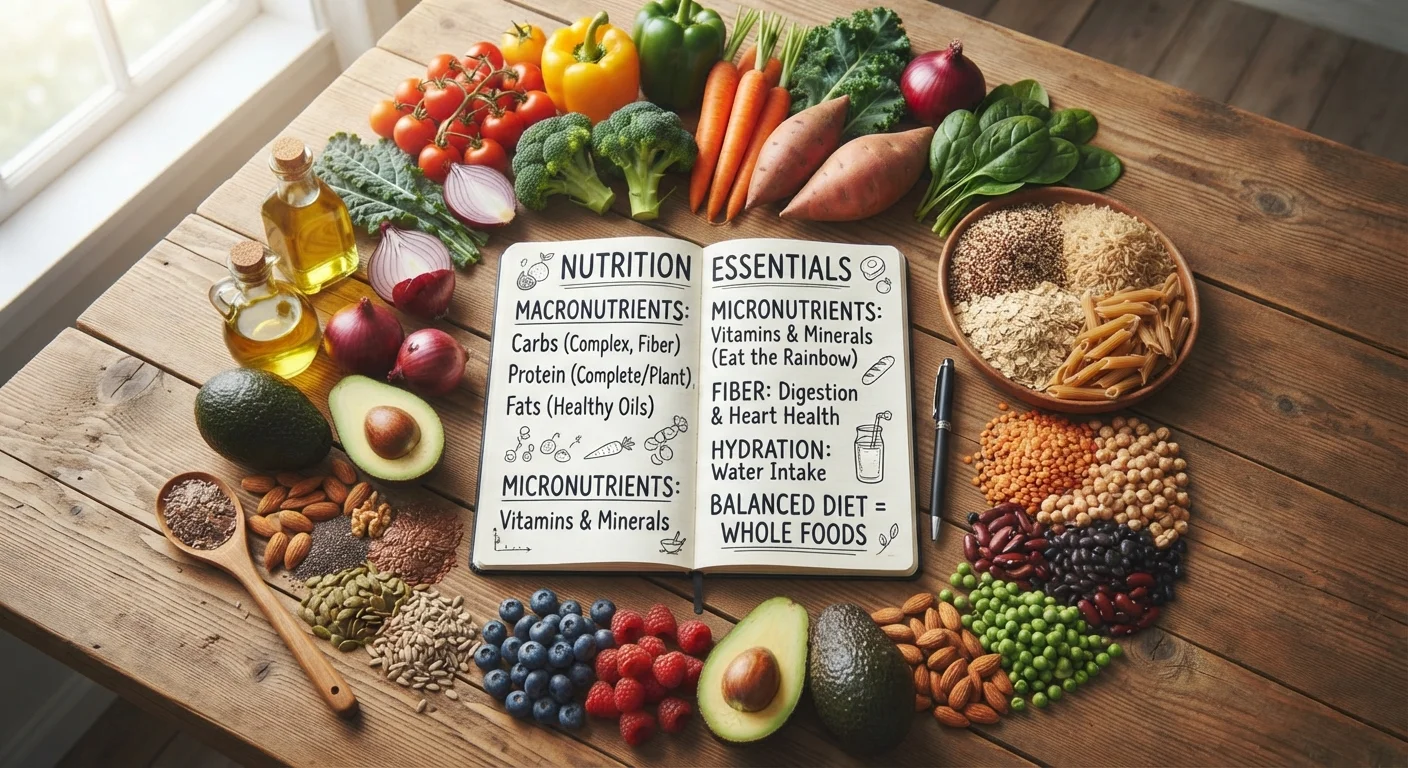
The three main energy-providing nutrients: carbohydrates, protein, and fat. They are consumed in relatively large amounts and measured in grams on nutrition labels.
Micronutrients
Vitamins and minerals the body needs in smaller quantities but which are essential for growth, immune function, and metabolism. Deficiencies can have significant health consequences.
Dietary Fiber
A type of carbohydrate found in plant foods that the body cannot fully digest. It supports digestive health, helps regulate blood sugar, and contributes to feelings of fullness.
Glycemic Index (GI)
A scale from 0 to 100 ranking how quickly a carbohydrate-containing food raises blood glucose compared to pure glucose. Lower scores indicate a slower, more gradual rise.
Dietary Pattern
The combination of foods and beverages consumed habitually over time. Nutrition researchers increasingly study patterns rather than single nutrients because they better reflect real eating behavior.
Whole Foods
Foods that are minimally processed and as close to their natural state as possible, such as whole grains, fresh vegetables, legumes, and unprocessed meats.
Ultra-Processed Foods
Industrially manufactured food products containing ingredients rarely used in home cooking - such as certain emulsifiers, flavor enhancers, or colorings. Examples include packaged snacks, soft drinks, and reconstituted meat products.
Nutrient Density
A measure of how many beneficial nutrients a food provides relative to its calorie content. Foods like leafy greens and legumes are nutrient-dense; foods high in calories but low in vitamins or minerals are not.
Saturated Fat
A type of fat found mainly in animal products and some plant oils (such as coconut and palm oil) that is solid at room temperature. Dietary guidelines generally recommend limiting intake.
Phytonutrients
Naturally occurring compounds in plants - including flavonoids and carotenoids - that may support health. They are not classified as essential nutrients but are associated with reduced disease risk in observational research.
Bioavailability
The proportion of a nutrient that is absorbed and used by the body after eating. Bioavailability can vary depending on the food source, preparation method, and individual digestive factors.
Energy Balance
The relationship between calories consumed through food and beverages and calories expended through metabolism and physical activity. It is one - though not the only - factor in body weight over time.
When you encounter these terms in the context of specific eating styles - from DASH to Mediterranean to plant-based - our companion piece on popular eating patterns and the science behind each one provides factual, research-grounded context for each approach.
These Terms Are a Starting Point, Not a Prescription
Understanding nutrition vocabulary helps you read labels, evaluate claims, and have more informed conversations with healthcare providers - but it does not replace personalized guidance. If you have specific health concerns or dietary needs, consult a registered dietitian or your primary care provider. This article is general health education, not medical advice.
Knowing these concepts can also help when you suspect your diet might be falling short. Signs your eating pattern may be missing key nutrients explains what to look for and when to seek professional guidance. And once you feel confident with the terminology, the next practical step is learning to read a nutrition label without getting lost - where these concepts show up in real food choices every day.
90%+
Americans not meeting fiber recommendations
The Dietary Guidelines Advisory Committee has consistently identified dietary fiber as a nutrient of public health concern in the US.
57%
Of US adult calories from ultra-processed foods
According to analysis published in BMJ Open, more than half of American adult caloric intake comes from ultra-processed food products.
13
Essential vitamins the body requires
The National Institutes of Health identifies 13 vitamins as essential, meaning the body cannot produce them in adequate amounts without dietary intake.
This article is for general informational purposes only and does not constitute medical or dietary advice. Always consult a qualified healthcare professional for guidance tailored to your individual health needs.