

Key Takeaways
Start here
What Is COPD?
Understand the causes
Causes and Risk Factors
Know the signs
Recognizing the Symptoms
Learn how it's confirmed
How COPD Is Diagnosed
Look ahead
Living With COPD: What to Expect
What Is COPD?
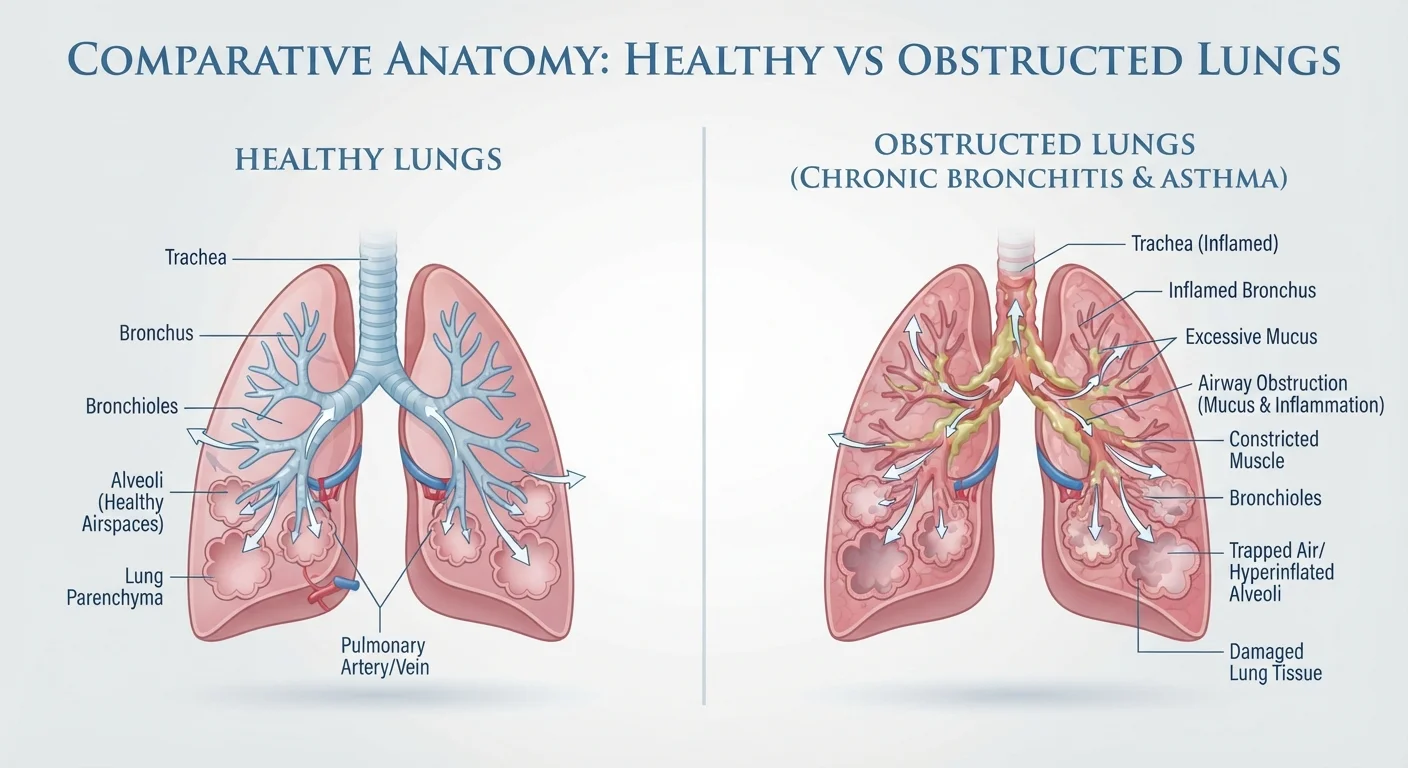
Chronic Obstructive Pulmonary Disease - commonly known as COPD - is a long-term lung condition in which airflow in and out of the lungs becomes progressively obstructed. The term is an umbrella that primarily covers two overlapping conditions: emphysema, which damages the tiny air sacs (alveoli) where oxygen exchange occurs, and chronic bronchitis, which involves persistent inflammation and narrowing of the airways.
The result is lungs that struggle to move air efficiently. Over time, less oxygen reaches the bloodstream, making even ordinary activities - climbing stairs, carrying groceries - feel effortful. COPD is considered a progressive condition, meaning it tends to worsen gradually without treatment.
It is one of the leading causes of illness and death worldwide. In the United States, tens of millions of adults are estimated to have COPD, and many more are believed to have the condition without knowing it. Familiarity with key chronic condition terminology can help you navigate conversations with your care team with greater confidence.
Airflow obstruction
A narrowing or blockage in the airways that makes it harder to breathe air out of the lungs completely.
Emphysema
Damage to the tiny air sacs (alveoli) in the lungs, reducing the surface area available for oxygen to pass into the bloodstream.
Chronic bronchitis
Ongoing inflammation of the airways that causes a daily productive cough lasting at least three months in two consecutive years.
Spirometry
A standard breathing test that measures how much air you can exhale and how fast, used to detect and grade airflow obstruction.
Exacerbation
A sudden, significant worsening of COPD symptoms - often triggered by infection - that may require urgent medical attention.
Pulmonary rehabilitation
A supervised program of exercise, education, and breathing strategies designed to improve physical capacity and quality of life for people with lung disease.
Causes and Risk Factors
Cigarette smoking is by far the most significant cause of COPD, responsible for the majority of cases. Tobacco smoke triggers chronic inflammation in the airways and destroys alveolar tissue over years and decades. However, smoking is not the only risk factor.
- Secondhand smoke exposure: Long-term exposure increases risk, particularly during childhood.
- Occupational hazards: Regular inhalation of dust, fumes, or chemicals - common in mining, construction, and agriculture - is a well-established cause.
- Indoor air pollution: In some regions, burning biomass fuels (wood, charcoal) indoors for cooking or heating is a significant contributor.
- Alpha-1 antitrypsin deficiency: A rare inherited condition where the body lacks a protein that protects lung tissue, leading to early-onset emphysema even in non-smokers.
- Childhood respiratory infections: Severe early-life lung infections may impair lung development and raise later COPD risk.
Age is also a factor - most people diagnosed with COPD are over 40 - because cumulative exposure and gradual tissue change take years to manifest.
Recognizing the Symptoms
COPD symptoms develop slowly, which is why many people dismiss early warning signs as simply "getting older" or "smoker's cough." Understanding what to look for can prompt earlier evaluation.
Common Symptoms
- Chronic cough: Often the first noticeable sign, present most days. It may produce mucus (called a productive cough).
- Breathlessness (dyspnea): Initially only during exertion, later occurring with minimal effort or at rest in advanced stages.
- Wheezing: A high-pitched whistling sound when breathing, caused by narrowed airways.
- Chest tightness: A feeling of pressure or constriction in the chest.
- Frequent respiratory infections: Colds and chest infections that take longer than usual to resolve.
If you have a cough that has lasted more than a few weeks, our persistent cough symptom guide explores the full range of causes and when to seek care.
Don't Dismiss Breathlessness as Normal Aging
Gradually worsening breathlessness during everyday activities is not an inevitable part of getting older. It is a recognized symptom that warrants medical evaluation. If breathlessness comes on suddenly or is severe, seek emergency care immediately, as this can indicate a serious event requiring urgent treatment.
How COPD Is Diagnosed
Diagnosis requires more than a description of symptoms. The cornerstone test is spirometry - a simple, non-invasive breathing test in which you exhale forcefully into a device that measures how much air you can move and how quickly. Spirometry results help confirm airflow obstruction and determine its severity.
A healthcare provider will typically also review your full medical and smoking history, conduct a physical examination, and may order additional tests such as a chest X-ray or CT scan to rule out other conditions and assess lung structure.
Because early-stage COPD produces mild or no symptoms, people at risk - particularly long-term smokers or those with occupational exposures - are sometimes offered screening spirometry even before symptoms appear. Early detection gives more time to slow progression.
After receiving a diagnosis, preparing thoughtful questions is essential. See our guide on questions to ask your doctor after a chronic condition diagnosis for a practical starting point.
Ask About Spirometry if You're at Risk
If you are over 40 with a significant smoking history or long-term exposure to occupational dust or fumes, ask your doctor about spirometry testing - even if your breathing feels normal. COPD is often well established before symptoms become obvious, and earlier detection allows earlier action.
Living With COPD: What to Expect
A COPD diagnosis is life-changing, but it is not the end of an active life. Treatment focuses on symptom relief, slowing progression, preventing complications, and maintaining quality of life. No single treatment reverses COPD; instead, management is typically multifaceted.
Core Treatment Approaches
- Bronchodilator inhalers: The most common medications for COPD, these relax and widen the airways to make breathing easier.
- Pulmonary rehabilitation: A structured program combining supervised exercise, education, and breathing techniques - shown in research to meaningfully improve function and well-being.
- Smoking cessation: The single most impactful action for anyone with COPD who still smokes. It is the only intervention proven to slow disease progression significantly.
- Vaccinations: Annual influenza and pneumococcal vaccines help prevent respiratory infections that can trigger dangerous exacerbations.
- Supplemental oxygen: For people with low blood-oxygen levels, prescribed oxygen therapy supports daily function.
Living with a chronic condition also affects mental health. Anxiety and depression are common alongside COPD. Our article on managing chronic illness and mental health together explores why addressing both is important. Similarly, making sustainable lifestyle adjustments needn't be overwhelming - gradual, evidence-informed change is achievable with the right support.
This article is for general informational and educational purposes only and does not constitute medical advice. Always consult a qualified healthcare professional for diagnosis, treatment, and any decisions related to your health.