

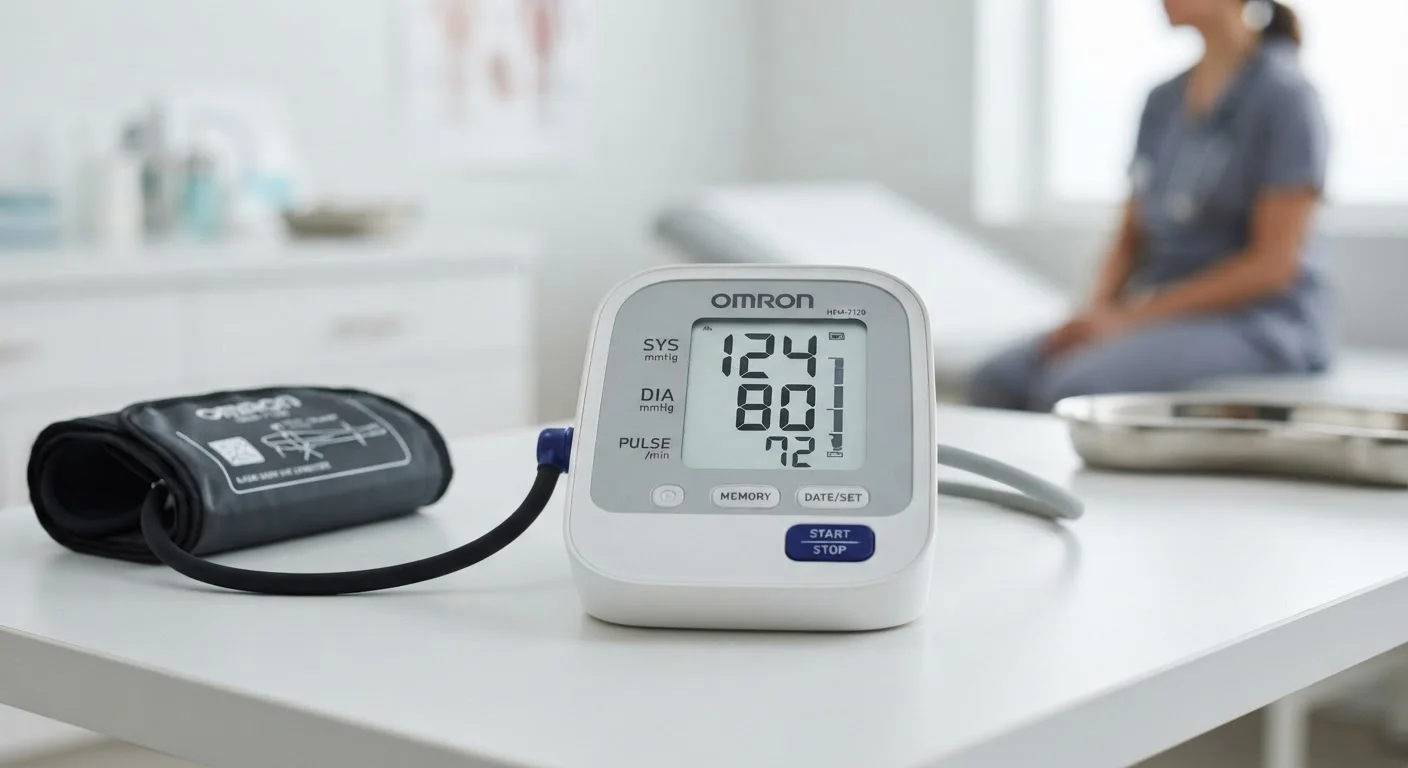
| Normal Blood Pressure | Less than 120/80 mmHg (American College of Cardiology / American Heart Association guidelines) |
| Hypertension Stage 1 Threshold | 130/80 mmHg (ACC/AHA 2017 Hypertension Guidelines) |
| Units of Measurement | mmHg (millimeters of mercury) |
| Hypertensive Crisis Level | Above 180/120 mmHg (Requires immediate medical attention) |
| Top Number Measures | Systolic - pressure during heartbeat |
| Bottom Number Measures | Diastolic - pressure between beats |
What Do the Two Numbers Mean?
Every blood pressure reading produces two numbers displayed as a fraction - for example, 120/80 mmHg. Each number tells a different part of the same story about how hard your heart is working to circulate blood.
The top number is the systolic pressure: the force your blood exerts against artery walls when your heart beats and pumps blood out. The bottom number is the diastolic pressure: the force between beats, when your heart is at rest and refilling.
The unit mmHg stands for millimeters of mercury - the standard measurement used in blood pressure monitoring worldwide. Both numbers matter independently, though elevated systolic pressure tends to be the stronger predictor of cardiovascular risk in adults over 50.
| Normal Blood Pressure | Less than 120/80 mmHg (American College of Cardiology / American Heart Association guidelines) |
| Hypertension Stage 1 Threshold | 130/80 mmHg (ACC/AHA 2017 Hypertension Guidelines) |
| Units of Measurement | mmHg (millimeters of mercury) |
| Hypertensive Crisis Level | Above 180/120 mmHg (Requires immediate medical attention) |
| Top Number Measures | Systolic - pressure during heartbeat |
| Bottom Number Measures | Diastolic - pressure between beats |
The Five Official Blood Pressure Categories
The American College of Cardiology and American Heart Association classify blood pressure into five ranges. Knowing which range your reading falls into helps you and your healthcare provider determine whether - and how urgently - to act.
| Category | Systolic (mmHg) | Diastolic (mmHg) |
|---|---|---|
| Normal | Less than 120 | Less than 80 |
| Elevated | 120-129 | Less than 80 |
| Hypertension Stage 1 | 130-139 | 80-89 |
| Hypertension Stage 2 | 140 or higher | 90 or higher |
| Hypertensive Crisis | Higher than 180 | Higher than 120 |
A single high reading does not automatically indicate hypertension. Clinicians typically confirm a diagnosis across multiple readings taken on separate occasions. A hypertensive crisis - readings above 180/120 - requires immediate medical attention, especially if accompanied by chest pain, shortness of breath, or vision changes.
Systolic Pressure
The top number in a blood pressure reading, representing the force blood exerts against artery walls when the heart beats. It is measured in millimeters of mercury (mmHg).
Diastolic Pressure
The bottom number in a blood pressure reading, reflecting arterial pressure between heartbeats when the heart is at rest. Elevated diastolic pressure also contributes to cardiovascular risk.
Hypertension
A chronic condition in which blood pressure remains consistently elevated above normal levels. It is typically defined as a sustained reading of 130/80 mmHg or higher according to current US clinical guidelines.
mmHg
Millimeters of mercury - the unit used to measure blood pressure. The term originates from mercury-filled manometers once used in clinical measurement, though modern devices are digital.
White Coat Hypertension
A phenomenon where a person's blood pressure reads higher in a clinical setting than in everyday life, often due to anxiety or stress associated with medical appointments.
Hypertensive Crisis
A severe spike in blood pressure, typically above 180/120 mmHg, that requires urgent medical evaluation. It may signal serious risk to the heart, kidneys, or brain.
Why Blood Pressure Fluctuates - and What That Means for Your Readings
Blood pressure is not a fixed number. It rises during physical activity, stress, and caffeine consumption, and falls during sleep and relaxation. This is entirely normal physiology. What matters clinically is your average level over time, not any single snapshot.
Several factors can temporarily skew a reading:
- White coat hypertension: Blood pressure that spikes in a clinical setting due to anxiety but is normal at home.
- Masked hypertension: The opposite - readings appear normal in clinic but are elevated in daily life.
- Measurement technique: Talking, crossing your legs, or having a full bladder during the reading can artificially elevate results.
Home monitoring with a validated cuff, taken in a quiet seated position, gives a more representative picture. Always share home readings with your healthcare provider rather than adjusting any treatment independently.
Hypertension often shares metabolic risk factors with other chronic conditions. Our article on how type 2 diabetes develops in the body explores how insulin resistance and cardiovascular risk often overlap.
One Reading Isn't a Diagnosis
Blood pressure naturally varies throughout the day based on activity, stress, and even posture. Clinicians generally require elevated readings across two or more separate visits before confirming a hypertension diagnosis. If your reading concerns you, speak with a healthcare provider rather than drawing conclusions from a single measurement.
What You Can Do With This Information
A blood pressure reading is a starting point, not a verdict. Even readings in the elevated or Stage 1 range may be addressed with lifestyle changes before medication becomes necessary - though that decision always belongs to a qualified clinician.
Dietary approaches are among the most studied lifestyle interventions. Our overview of the DASH diet and blood pressure evidence examines what the clinical research genuinely supports.
Key questions to ask your provider after receiving results include:
- Is this reading typical of my pattern, or was it an outlier?
- Should I be monitoring at home, and if so, how often?
- What lifestyle factors are most relevant to my situation?
- At what point would medication be considered?
Understanding your numbers is one part of managing cardiovascular health. Knowing what other symptoms may warrant attention is another - our symptoms and signs hub covers common warning signals and when they deserve professional evaluation.
This article is for general informational purposes only and does not constitute medical advice. Always consult a qualified healthcare professional for diagnosis, treatment, or questions about your individual health.