

Key Takeaways
Option A
Crohn's Disease
The wide-ranging, deep-tissue inflammatory condition.
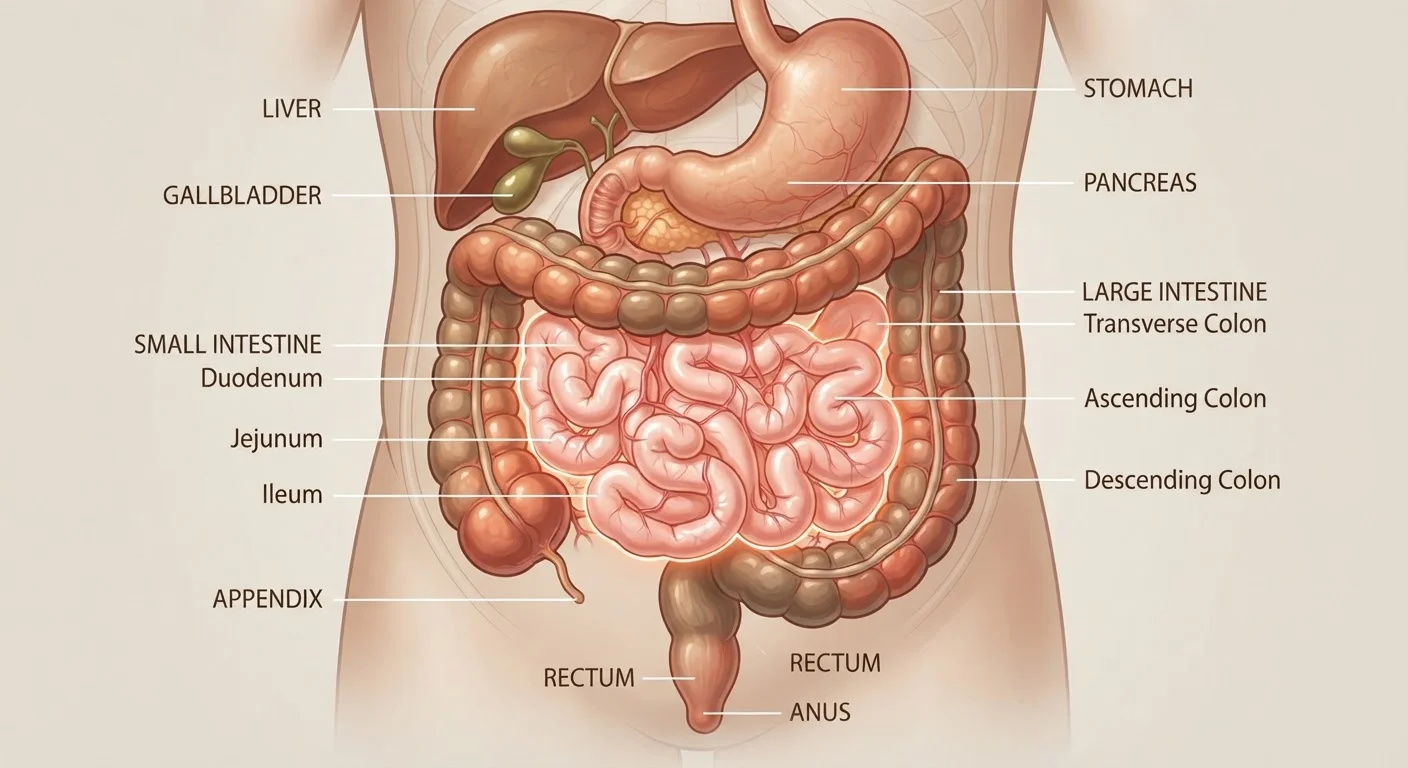
Best for: Understanding a condition that can affect any part of the GI tract, from mouth to anus, with inflammation penetrating all layers of the bowel wall.
Option B
Ulcerative Colitis
The colon-specific, surface-level inflammatory condition.
Best for: Understanding a condition confined to the large intestine (colon) and rectum, where inflammation affects only the innermost lining.
If you experience diarrhea mixed with blood and rectal urgency
Ulcerative Colitis
Bloody diarrhea and rectal urgency are hallmark symptoms of ulcerative colitis, which causes continuous inflammation beginning at the rectum. A gastroenterologist can confirm this with colonoscopy.
If you have abdominal pain, weight loss, and symptoms in multiple GI regions
Crohn's Disease
Crohn's disease can affect any segment of the GI tract and often presents with cramping, weight loss, and fatigue. Patchy inflammation across different regions is a distinguishing feature.
If you are trying to understand long-term surgical risk
Crohn's Disease
Crohn's carries a higher lifetime risk of requiring multiple surgeries due to complications like strictures and fistulas, whereas ulcerative colitis surgery (colectomy) can be curative.
If you want to understand which condition responds to colectomy
Ulcerative Colitis
Surgical removal of the colon (colectomy) effectively cures ulcerative colitis. No equivalent curative surgery exists for Crohn's disease.
What Is Inflammatory Bowel Disease?
Inflammatory bowel disease (IBD) is an umbrella term for chronic conditions characterized by abnormal immune-mediated inflammation in the gastrointestinal (GI) tract. The two primary forms are Crohn's disease and ulcerative colitis (UC). While both share a common label and cause significant disruption to daily life, they behave differently in the body - and those differences matter for diagnosis, treatment, and long-term management.
IBD affects an estimated 3 million adults in the United States, according to the Centers for Disease Control and Prevention. The exact cause remains unclear, but research points to a combination of genetic susceptibility, immune system dysfunction, and environmental triggers, including gut microbiome changes.
3M+
U.S. adults living with IBD
According to the Centers for Disease Control and Prevention, over 3 million U.S. adults have been diagnosed with inflammatory bowel disease.
~70%
Crohn's patients needing surgery within 10 years
Research published in gastroenterology literature suggests a significant proportion of Crohn's patients require at least one surgery within a decade of diagnosis.
50%
IBD patients with extraintestinal symptoms
Studies estimate that roughly half of people with IBD experience symptoms outside the gut, including joint, skin, and eye involvement.
This article is for general health education only and does not constitute medical advice. Consult a qualified healthcare professional for diagnosis or treatment guidance.
How Crohn's and Ulcerative Colitis Differ
The most fundamental distinction lies in where inflammation occurs and how deeply it penetrates the bowel wall.
| Criterion | Crohn's Disease | Ulcerative Colitis |
|---|---|---|
| Location in GI tract | Anywhere from mouth to anus | Colon and rectum only |
| Inflammation pattern | Patchy (skip lesions) | Continuous from rectum upward |
| Depth of inflammation | All layers of bowel wall (transmural) | Inner mucosal lining only |
| Blood in stool | Less common | Very common |
| Fistulas / abscesses | Common complication | Rare |
| Nutrient malabsorption | Frequent (small intestine involved) | Less common |
| Curative surgery available | No | Yes (colectomy) |
| Colorectal cancer risk | Elevated (especially with colon involvement) | Elevated with long-standing disease |
Crohn's disease can appear anywhere along the GI tract - from the mouth to the anus - though it most commonly affects the end of the small intestine (the terminal ileum) and the beginning of the colon. Critically, Crohn's inflammation is transmural, meaning it extends through all layers of the bowel wall. This explains why Crohn's is more prone to serious complications like fistulas (abnormal tunnels between organs), abscesses, and strictures (narrowings that can block the bowel).
Ulcerative colitis, by contrast, is confined to the colon and rectum. Its inflammation is continuous - starting at the rectum and extending upward - and affects only the innermost mucosal lining. This pattern gives UC a different complication profile, with a heightened risk of toxic megacolon and, over time, colorectal cancer.
IBD vs. IBS: An Important Distinction
Inflammatory bowel disease (IBD) is frequently confused with irritable bowel syndrome (IBS). They are not the same condition. IBS is a functional gut disorder - meaning no visible inflammation or structural damage occurs - while IBD involves measurable, immune-driven inflammation. A proper diagnosis from a gastroenterologist is essential, as the two conditions are managed very differently.
Symptoms, Diagnosis, and Treatment Approaches
Symptom overlap between the two conditions is substantial, which is why diagnosis requires endoscopy, imaging, and biopsy rather than symptom assessment alone.
Shared symptoms include persistent diarrhea, abdominal cramping, fatigue, unintended weight loss, and reduced appetite. Both can cause extraintestinal (outside the gut) manifestations, including joint pain, skin rashes, and eye inflammation.
Distinguishing features:
- Blood in stool is more consistently present in UC, due to surface-level mucosal ulceration.
- Crohn's is more likely to cause perianal complications such as fissures and fistulas.
- Crohn's patients more often experience significant malnutrition and nutrient deficiencies due to small intestine involvement affecting absorption.
Treatment for both conditions focuses on reducing inflammation, achieving remission, and preventing flares. Medications used include aminosalicylates, corticosteroids, immunomodulators, and biologic therapies (such as anti-TNF agents). The choice of therapy depends on disease location, severity, and individual patient factors - always determined by a gastroenterologist.
Surgery plays a different role in each condition. For UC, a total colectomy removes all diseased tissue and is considered curative. For Crohn's, surgery addresses specific complications but does not eliminate the disease, and recurrence after surgery is common.