

Key Takeaways
Our Verdict
Hypothyroidism and hyperthyroidism are essentially opposite in how they affect the body, but both are well-understood, diagnosable, and treatable conditions. Recognizing the distinct symptom patterns of each helps readers know when to seek evaluation. A blood test - not self-diagnosis - is always the required next step.
| Best for | Recommended |
|---|---|
| Those experiencing unexplained fatigue, weight gain, or cold sensitivity | Hypothyroidism evaluation |
| Those noticing rapid heartbeat, unintended weight loss, or heat intolerance | Hyperthyroidism evaluation |
| Anyone with a family history of thyroid disease or autoimmune conditions | Routine thyroid screening discussion with a healthcare provider |
What the Thyroid Does - and Why It Matters
The thyroid is a small, butterfly-shaped gland sitting at the front of the neck. Despite its modest size, it produces hormones - primarily thyroxine (T4) and triiodothyronine (T3) - that regulate how quickly cells use energy. This influences heart rate, body temperature, weight, digestion, mood, and even cognitive sharpness.
When the thyroid produces too little or too much hormone, the ripple effects are felt system-wide. These two failure modes - hypothyroidism and hyperthyroidism - are among the most common endocrine disorders in the United States, affecting tens of millions of people. Because thyroid dysfunction overlaps symptomatically with many other conditions, it is frequently underdiagnosed or misattributed.
Understanding the distinction between the two conditions is an important step toward recognizing when something may be worth discussing with a healthcare provider. Much like type 2 diabetes, thyroid disorders illustrate how a single hormonal imbalance can affect nearly every system in the body.
Hypothyroidism: When the Thyroid Underperforms
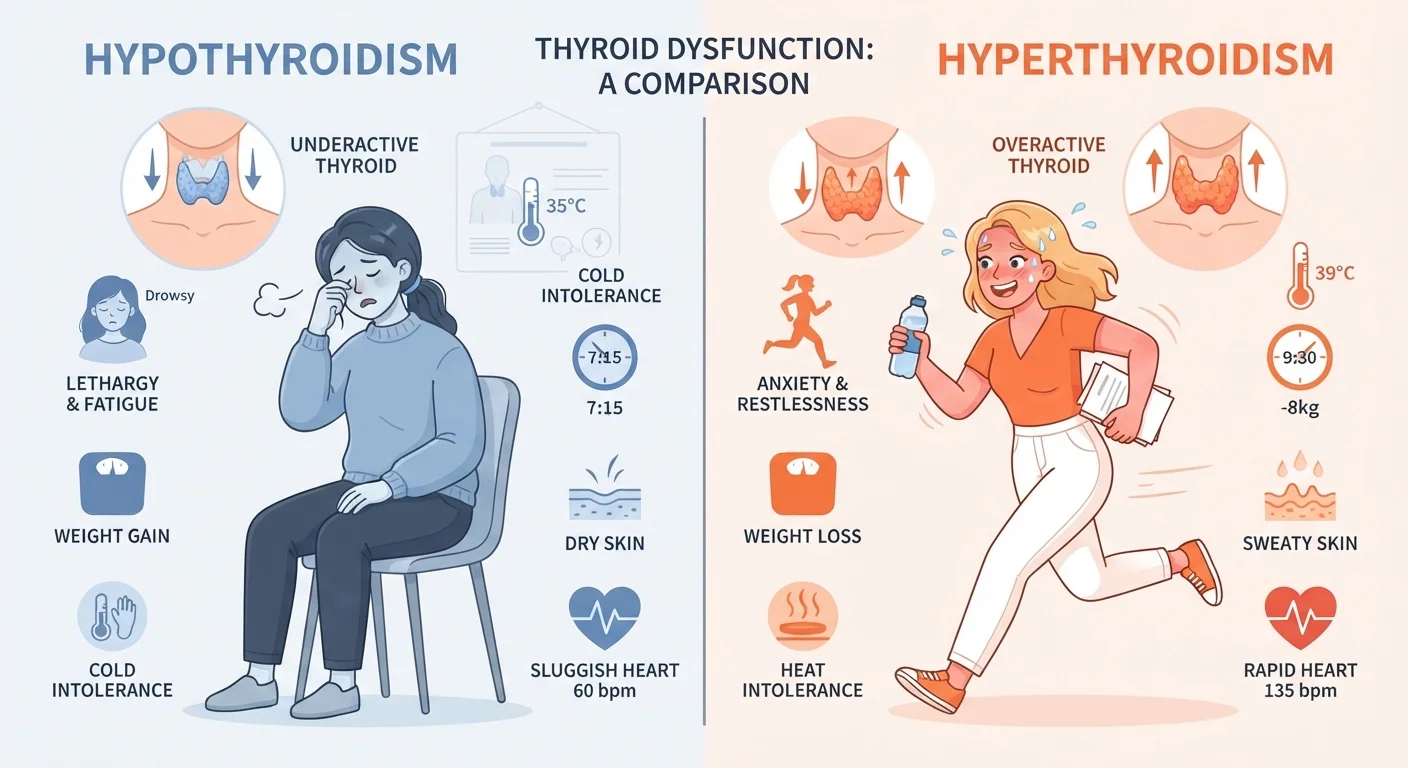
Hypothyroidism occurs when the thyroid produces insufficient hormone, causing the body's metabolic processes to slow down. The most common cause in the US is Hashimoto's thyroiditis, an autoimmune condition in which the immune system gradually damages thyroid tissue.
Common signs include:
- Persistent fatigue and low energy despite adequate sleep
- Unexplained weight gain or difficulty losing weight
- Sensitivity to cold temperatures
- Dry skin, brittle nails, and hair thinning
- Constipation and slowed digestion
- Brain fog, depression, and slowed reflexes
- Irregular or heavier menstrual periods
Symptoms typically develop gradually, which is why many people attribute them to aging or stress. The emotional toll can be significant - persistent low mood and cognitive sluggishness often accompany the physical changes. For a broader view of how chronic illness intersects with mental health, see how chronic conditions affect mental health.
Track Symptoms Before Your Appointment
Because thyroid symptoms often develop slowly and overlap with everyday complaints, keeping a brief log of changes - energy levels, weight shifts, temperature sensitivity, mood - can be very helpful for your healthcare provider. Even a two-week record gives a clearer clinical picture than memory alone. Share it openly at your appointment.
Hyperthyroidism: When the Thyroid Overperforms
Hyperthyroidism results from excessive thyroid hormone production, pushing body systems into overdrive. Graves' disease - another autoimmune condition - accounts for the majority of cases. Thyroid nodules that independently produce hormone are another recognized cause.
Common signs include:
- Rapid or irregular heartbeat (palpitations)
- Unintended weight loss despite normal or increased appetite
- Heat intolerance and excessive sweating
- Tremors, particularly in the hands
- Difficulty sleeping and restlessness
- Anxiety, irritability, and mood instability
- Frequent bowel movements
- Muscle weakness
In Graves' disease, some individuals also develop a characteristic bulging of the eyes (known as Graves' ophthalmopathy). The heightened metabolic state can put significant strain on the cardiovascular system, making prompt diagnosis especially important. Note that some symptoms - fatigue, mood changes, disrupted sleep - can superficially resemble overtraining syndrome, underscoring the value of clinical testing over symptom-matching alone.
Don't Self-Diagnose Based on Symptoms Alone
The symptoms of both hypothyroidism and hyperthyroidism are shared by many other conditions, including anxiety disorders, depression, anemia, and cardiac arrhythmias. Attempting to self-diagnose - or self-treat - based on symptom matching risks missing the actual cause. A simple blood test ordered by a healthcare provider can confirm or rule out thyroid dysfunction definitively.
Diagnosis, Treatment, and What to Expect
Both conditions are diagnosed primarily through a blood test measuring thyroid-stimulating hormone (TSH), with additional T3 and T4 levels assessed as needed. TSH is produced by the pituitary gland to signal the thyroid; elevated TSH suggests hypothyroidism (the pituitary is working harder to stimulate an underperforming gland), while suppressed TSH suggests hyperthyroidism.
| Feature | Hypothyroidism | Hyperthyroidism | |
|---|---|---|---|
| Thyroid activity | Underactive | Overactive | |
| Metabolic effect | Slowed metabolism | Accelerated metabolism | |
| Weight change | Weight gain | Weight loss | |
| Energy levels | Fatigue, low energy | Restlessness, insomnia | |
| Temperature sensitivity | Cold intolerance | Heat intolerance | |
| Heart rate | Slower than normal | Rapid or irregular | |
| Most common cause | Hashimoto's thyroiditis | Graves' disease | |
| Primary diagnostic test | Elevated TSH blood test | Suppressed TSH blood test |
Treatment approaches differ considerably. Hypothyroidism is typically managed with a daily synthetic hormone replacement (levothyroxine), and most people achieve stable hormone levels with appropriate dosing. Hyperthyroidism may be treated with anti-thyroid medications, radioactive iodine therapy, or in some cases, surgery - the right approach depends on the underlying cause, severity, and individual health profile. Decisions about treatment are always made in partnership with a healthcare provider; there is no one-size-fits-all protocol.
Regular monitoring through blood tests is standard for both conditions, as hormone levels and medication needs can shift over time. Both conditions are associated with increased risks if left unmanaged - hypothyroidism raises cardiovascular risk through elevated cholesterol, while prolonged hyperthyroidism can affect bone density and heart rhythm.
This article is for general informational purposes only and does not constitute medical advice. If you are experiencing symptoms described here, please consult a qualified healthcare professional for an accurate diagnosis and appropriate care.