

Key Takeaways
Chronic Kidney Disease (CKD)
Chronic kidney disease is a long-term condition in which the kidneys gradually lose their ability to filter waste products and excess fluid from the blood. It develops slowly over months or years and is classified into five stages based on how well the kidneys are functioning. Because the kidneys can compensate for lost function for a long time, most people have no noticeable symptoms until the disease is well advanced.
CKD is defined clinically by a glomerular filtration rate (GFR) below 60 mL/min/1.73m² or markers of kidney damage - such as protein in the urine - persisting for more than three months.
Why Kidneys Can Stay Quiet While Damage Accumulates
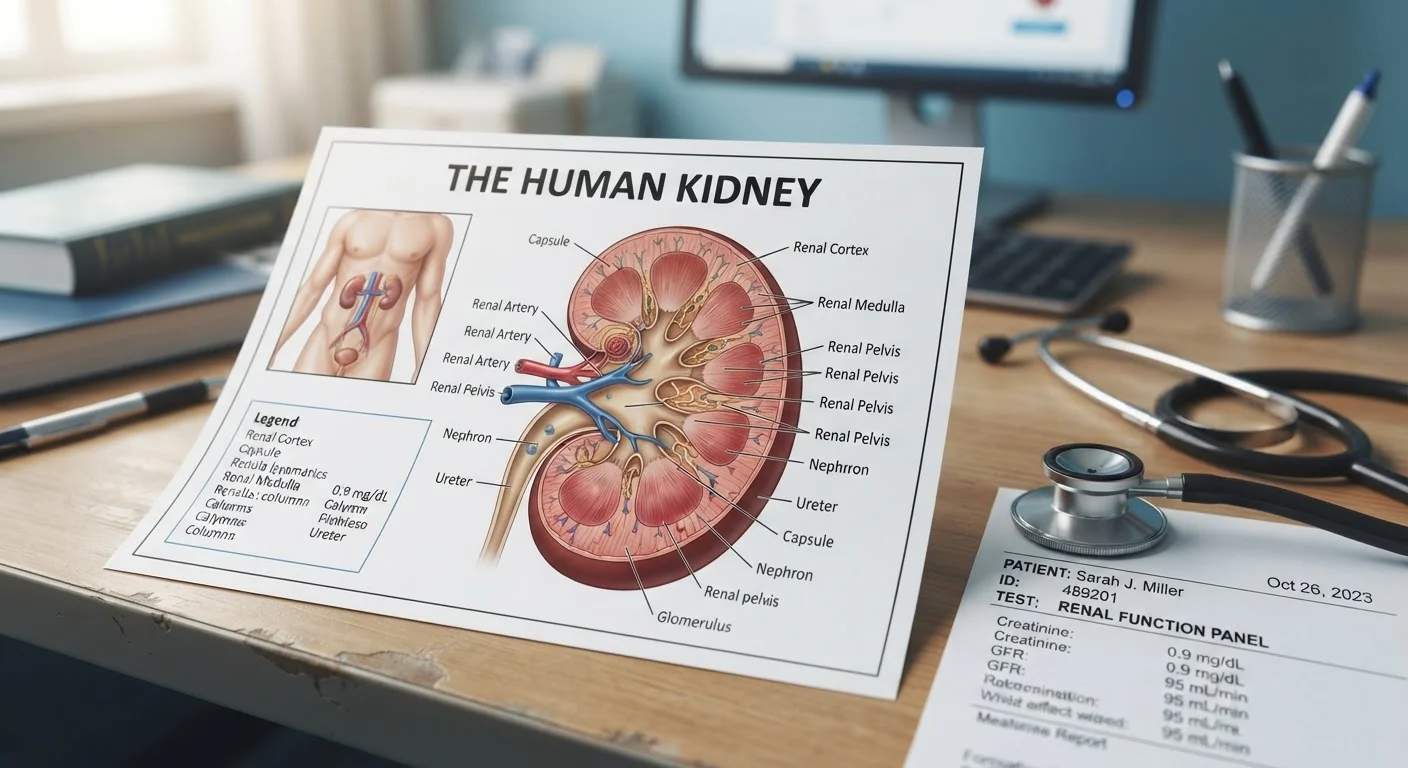
The kidneys are remarkably adaptable organs. Healthy kidneys contain roughly one million filtering units called nephrons, and when some are lost or damaged, the remaining nephrons increase their workload to compensate. This built-in redundancy is protective - but it also means the body can mask significant kidney damage for years, producing no warning signals that would prompt most people to seek care.
This is the central reason CKD is so often caught late. By the time symptoms such as fatigue, swelling, or changes in urination become noticeable, kidney function may already be reduced by half or more. The condition shares this characteristic with several other chronic diseases - a pattern explored in our article on common symptoms and when they deserve attention.
CKD Stages and What They Mean
CKD is classified into five stages based on eGFR values. Stages 1 and 2 reflect mild kidney damage with near-normal function; Stages 3a and 3b indicate moderate decline; Stage 4 is severe reduction; and Stage 5 represents kidney failure. Staging helps clinicians tailor monitoring frequency and treatment intensity. Being in an early stage does not mean progression to Stage 5 is inevitable.
The Risk Factors That Drive Most CKD Cases
While CKD can stem from genetic conditions or direct kidney injury, two conditions account for the majority of cases in the U.S.: type 2 diabetes and high blood pressure (hypertension). Elevated blood sugar damages the small blood vessels within the kidneys, reducing their filtering efficiency over time. High blood pressure exerts mechanical stress on those same vessels, accelerating deterioration.
Additional risk factors include:
- A family history of kidney disease or kidney failure
- Older age - kidney function naturally declines after middle age
- Obesity and metabolic syndrome
- Recurrent urinary tract infections or kidney infections
- Long-term use of certain pain medications (always discuss medication concerns with a healthcare provider)
- Autoimmune conditions such as lupus
37 million
Americans estimated to have CKD
According to the National Kidney Foundation, approximately 37 million U.S. adults are estimated to have chronic kidney disease.
~90%
Adults with early CKD unaware of their condition
The CDC estimates that roughly 9 in 10 adults with CKD do not know they have it, reflecting the condition's lack of early symptoms.
1 in 3
Adults with diabetes likely to develop CKD
The National Institute of Diabetes and Digestive and Kidney Diseases notes that about 1 in 3 people with diabetes develops chronic kidney disease.
Understanding your personal risk profile is one of the most actionable steps you can take. Like heart disease, CKD's silent progression means risk factor awareness often precedes any symptom-based alert - a dynamic also relevant to common misconceptions around heart failure.
What Testing Reveals That Symptoms Cannot
Because CKD rarely announces itself through early symptoms, laboratory testing is the primary detection tool. Two routine tests form the backbone of kidney screening:
- Estimated GFR (eGFR): A blood test measuring creatinine levels, which the kidneys filter out. The result is used to estimate the glomerular filtration rate - how well the kidneys are cleaning the blood. An eGFR below 60 sustained over three months signals CKD.
- Urine albumin-to-creatinine ratio (uACR): A urine test that detects albumin, a protein that healthy kidneys keep in the blood. Elevated albumin in urine (albuminuria) is an early marker of kidney damage, often appearing before GFR declines significantly.
These tests are inexpensive, widely available, and can be ordered during a routine check-up. For anyone with diabetes, high blood pressure, or other risk factors, discussing regular kidney screening with a clinician is a straightforward, potentially consequential step.
Ask About Kidney Screening at Your Next Check-Up
If you have diabetes, high blood pressure, or a family history of kidney disease, ask your healthcare provider whether an eGFR blood test and urine albumin test are part of your routine monitoring. These two simple tests are the most reliable way to detect CKD before symptoms appear. Proactive conversations with your care team are one of the most effective tools you have.
Living With a CKD Diagnosis: What Comes Next
Receiving a CKD diagnosis - especially when it arrives unexpectedly after a routine blood test - can be disorienting. It is important to understand that an early or moderate-stage diagnosis is not the same as kidney failure, and that meaningful management options exist.
A healthcare team may focus on controlling blood pressure, managing blood sugar in people with diabetes, addressing other cardiovascular risk factors, and in some cases prescribing medications shown in clinical studies to slow CKD progression. Lifestyle factors such as diet, physical activity, and avoiding nephrotoxic (kidney-harming) substances are also typically discussed - though any changes should be guided by a professional familiar with your individual situation.
If you have recently received a chronic condition diagnosis, our practical guide on questions to bring to your doctor after diagnosis can help you make the most of your clinical appointments. It is also worth recognizing that managing a long-term condition has psychological dimensions; the link between chronic illness and mental health is well-documented and worth addressing alongside physical care.
This article is for general informational and educational purposes only and does not constitute medical advice. Always consult a qualified healthcare professional for questions about your health, symptoms, or treatment options.