

Key Takeaways
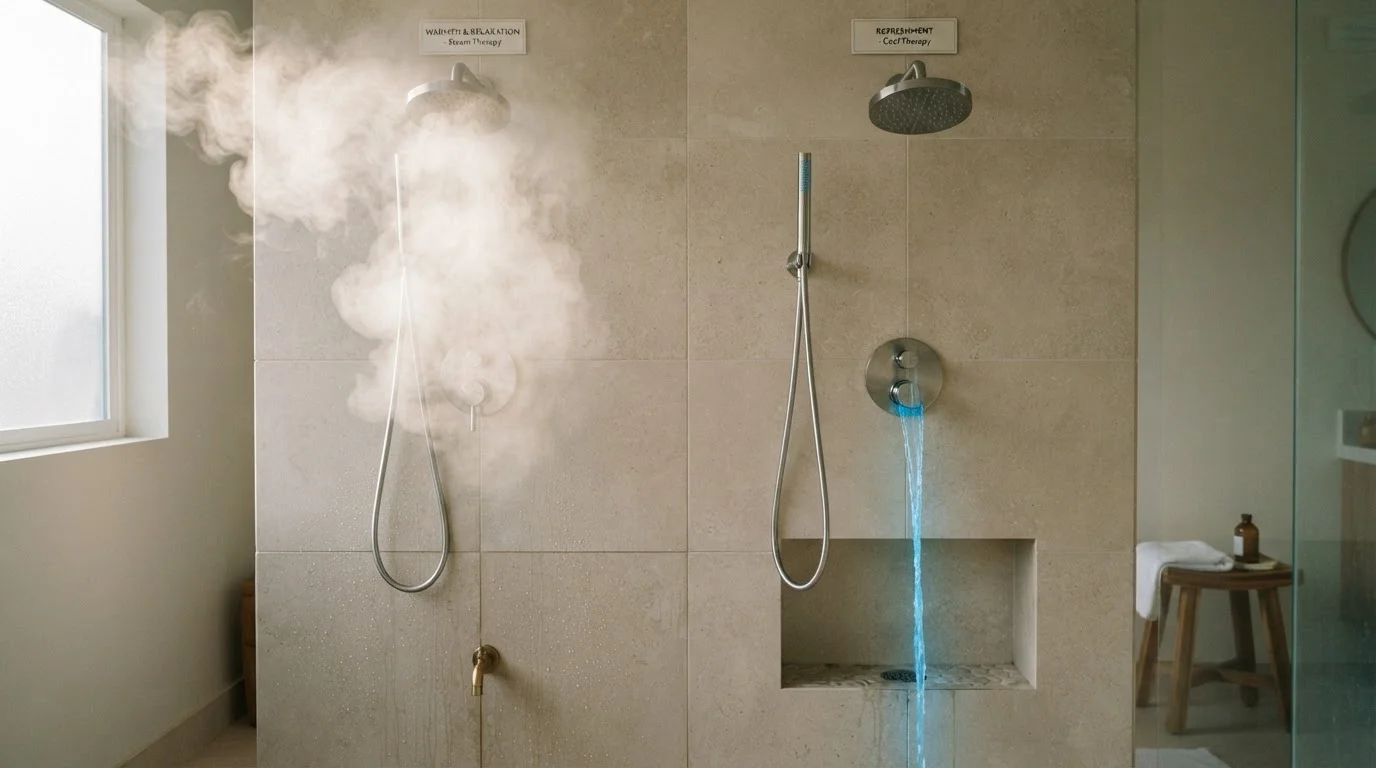
Option A
Hot Showers
The warming, muscle-relaxing classic.
Best for: Best for relieving muscle tension, supporting relaxation before sleep, and easing stiff joints.
Option B
Cold Showers
The invigorating, circulation-stimulating alternative.
Best for: Best for post-exercise alertness, reducing exercise-related inflammation, and boosting perceived energy.
If you want to unwind and prepare for better sleep
Hot Showers
Warm water raises skin temperature and promotes the drop in core body temperature that signals sleep onset, potentially improving sleep quality.
If you're looking to reduce post-workout muscle soreness
Cold Showers
Cold water immersion has research support for reducing delayed-onset muscle soreness, making it a useful recovery tool after vigorous exercise.
If you have chronic skin conditions like eczema or dry skin
Hot Showers
Lukewarm-to-warm showers are generally gentler, though very hot water can strip natural skin oils - keeping duration short is advisable.
If you need a morning energy boost without caffeine
Cold Showers
Cold water exposure activates the sympathetic nervous system, increasing alertness and norepinephrine levels, which many people experience as an energy lift.
If you have cardiovascular concerns or are elderly
Hot Showers
Cold water can cause sudden blood pressure spikes; always consult a qualified healthcare professional before changing your shower habits if you have a heart condition.
How Temperature Affects the Body
When hot water contacts the skin, blood vessels near the surface dilate - a process called vasodilation. This draws blood toward the skin, reduces muscle tension, and creates the familiar sensation of warmth spreading through the body. Research published in peer-reviewed sleep journals has found that warming the skin through a warm bath or shower before bed can accelerate the natural drop in core body temperature that precedes sleep onset.
Cold water triggers the opposite response: vasoconstriction, where blood vessels narrow and blood is redirected toward the body's core. The sympathetic nervous system activates, heart rate briefly increases, and the body releases norepinephrine - a hormone associated with alertness and focus. This is why a cold shower often feels jarring at first but energizing afterward.
These physiological responses are well-established. What's less settled is whether either consistently produces meaningful health outcomes beyond comfort and short-term sensation.
| Criterion | Hot Showers | Cold Showers |
|---|---|---|
| Primary physiological effect | Vasodilation, muscle relaxation | Vasoconstriction, alertness boost |
| Best timing | Before sleep or after sedentary periods | After exercise or in the morning |
| Muscle soreness relief | Moderate via relaxation | Stronger evidence for DOMS reduction |
| Sleep quality | Supported by meta-analyses | No established benefit |
| Skin impact | Can dry skin if too hot or prolonged | Generally less drying |
| Cardiovascular caution | Low to moderate risk | Sudden BP spike risk; consult a doctor |
| Strength training adaptation | No known interference | May blunt muscle growth signals |
What the Evidence Says About Each
Hot showers have the strongest support for relaxation, sleep preparation, and easing muscle stiffness. A 2019 meta-analysis in Sleep Medicine Reviews found that passive body heating - including warm baths and showers taken one to two hours before bed - was associated with faster sleep onset and better sleep quality. Hot water also helps loosen tight connective tissue temporarily, which many people find helpful after sitting for long periods.
That said, very hot water can strip the skin's natural lipid barrier, worsening dryness or eczema in susceptible individuals. Keeping showers warm rather than scalding, and limiting duration, tends to mitigate this.
Cold showers have a growing - though still mixed - body of evidence. Studies on cold water immersion, including a widely cited 2016 trial in the British Journal of Sports Medicine, found that cold water immersion after exercise reduced delayed-onset muscle soreness (DOMS) compared to passive recovery. However, some exercise science researchers have noted that repeated cold exposure after strength training may blunt long-term muscle adaptation, since some inflammation is part of the growth signal. Context matters significantly here.
Cold shower advocates also point to potential mood benefits. Some studies suggest links between cold water exposure and increased norepinephrine and endorphin activity, though this evidence is still emerging and should not be overstated. For recovery context, see our evidence-based look at popular recovery tools for a broader perspective.
10 min
Optimal pre-sleep warm shower window
Research in Sleep Medicine Reviews suggests a warm shower 1-2 hours before bed, lasting around 10 minutes, may meaningfully improve sleep onset speed.
~20%
Reduction in DOMS reported
A 2016 British Journal of Sports Medicine trial found cold water immersion reduced muscle soreness scores by roughly 20% compared to passive rest.
300%
Norepinephrine increase with cold exposure
Preliminary research has noted norepinephrine levels can rise substantially during cold water exposure, though findings are from small studies and require further replication.
Practical Guidance: Making an Informed Choice
The honest takeaway is that neither shower type is universally better. The right choice depends on your specific goal, timing, and health status.
- For sleep: A warm shower 60-90 minutes before bed may help you fall asleep faster.
- After intense exercise: A brief cold shower or cool-down may ease next-day soreness, though it may not be ideal before strength-training sessions where muscle growth is the primary goal.
- For skin health: Lukewarm water and shorter durations are generally recommended by dermatologists, regardless of preference.
- Contrast showers - alternating briefly between hot and cold - have shown some promise in small studies for reducing fatigue and improving subjective recovery, but the evidence base remains limited.
If you have cardiovascular disease, high blood pressure, Raynaud's disease, or are pregnant, speak with a qualified healthcare professional before experimenting with cold showers or very hot water. Sudden temperature extremes can cause rapid changes in blood pressure and heart rate that may not be safe for everyone.
This article is for general informational purposes only and does not constitute medical advice. Always consult a qualified healthcare professional before making changes to your health routine, particularly if you have an existing medical condition.