

Key Takeaways
Pre-Sleep Stretching
Pre-sleep stretching refers to gentle, deliberate movements performed in the evening to lengthen muscles, reduce tension, and prepare the body for rest. Unlike vigorous exercise, these stretches are low-intensity and typically held for 20-60 seconds. The practice supports not just sleep onset, but also joint health, posture, and muscular recovery over time.
Most pre-sleep stretches fall into the "static" category - where a position is held without movement - which is associated with reduced muscle stiffness and improved range of motion when performed consistently.
More Than a Sleep Hack
Evening stretching has earned a reputation almost exclusively as a tool for falling asleep faster. While that benefit is real, it represents only a fraction of what a consistent pre-bed routine can do for your body. The physical effects of stretching - on your muscles, joints, connective tissue, and nervous system - accumulate over weeks and months, quietly contributing to how your body feels and moves long after the lights go out.
This article breaks down the full picture of what evening stretching actually does, so you can approach it as an intentional practice rather than a drowsiness shortcut.
Stretching Is Not the Same as Warming Up
Evening stretching is fundamentally different from a pre-workout warm-up. Pre-exercise movement should be dynamic - keeping muscles warm and active. Bedtime stretching is static and calming by design. Mixing these up - for example, doing intense dynamic stretching right before sleep - can actually elevate heart rate and make it harder to settle. For a clear breakdown, see our overview of static vs dynamic stretching.
What Happens to Your Muscles During the Day
Whether your day involves sitting at a desk, standing for long shifts, or physical labor, your muscles are subject to sustained tension and repetitive loading patterns. Over hours, this accumulates as tightness - particularly in the hip flexors, hamstrings, neck, and shoulders. Left unaddressed, this tension can contribute to poor posture, reduced range of motion, and even discomfort during sleep.
Static stretching in the evening works directly against this accumulation. Holding a stretch for 20-60 seconds allows the muscle and its surrounding connective tissue to gradually lengthen, relieving the mechanical load built up throughout the day. This isn't just about feeling looser - it's about actively managing the structural stress your body absorbs over time.
Target the Muscles You Use Most
Focus your evening stretches on the areas most taxed by your typical day. For sedentary workers, that's usually the hip flexors, hamstrings, and upper back. For those on their feet all day, calves and the lower back deserve priority. Tailoring the routine to your actual demands makes it more effective and sustainable.
The Nervous System Connection
One reason stretching supports sleep is its effect on the autonomic nervous system. Slow, intentional movement signals the parasympathetic branch - often called the "rest and digest" system - to become more active, counteracting the elevated state your sympathetic nervous system maintains during waking hours. Heart rate slows, breathing deepens, and the physiological conditions for sleep become easier to reach.
This nervous system shift is also relevant to recovery. When the body is in a parasympathetic-dominant state, it's better positioned to carry out repair processes - including the muscle recovery that occurs during sleep. If you're curious about how that recovery interacts with physical training, our article on sleep and exercise performance explores that relationship in depth.
10 min
Minimum effective evening stretch duration
Multiple studies on flexibility training suggest even brief, consistent sessions produce measurable improvements in range of motion over weeks.
5×/week
Frequency linked to flexibility gains
Research published in sports science literature indicates that stretching at least five days per week yields significantly greater flexibility improvements than less frequent practice.
30%
Reduction in muscle stiffness with regular stretching
Studies on passive muscle stiffness suggest regular static stretching can measurably reduce resistance in muscles, easing movement and reducing injury risk.
Long-Term Benefits: Flexibility, Joints, and Mobility
Flexibility is often dismissed as a fitness goal reserved for yogis or dancers, but it has direct, practical relevance for everyday physical wellbeing. Joints that move through a full range of motion are better protected against injury. Muscles that retain elasticity place less stress on tendons and ligaments during sudden movements.
Consistent evening stretching - done five or more times per week - has been shown in multiple studies to improve both static flexibility and functional mobility over time. This matters most as we age: maintaining range of motion in the hips, spine, and ankles is closely tied to balance, fall prevention, and independent movement. The Sleep & Recovery hub covers related habits that support this kind of long-term physical maintenance.
“Flexibility is not a luxury - it's a functional necessity. The ability to move joints through their full range of motion underpins everything from athletic performance to daily independence as we age.”
— American College of Sports Medicine, Leading authority on exercise science and physical activity guidelines
Building It Into Your Routine
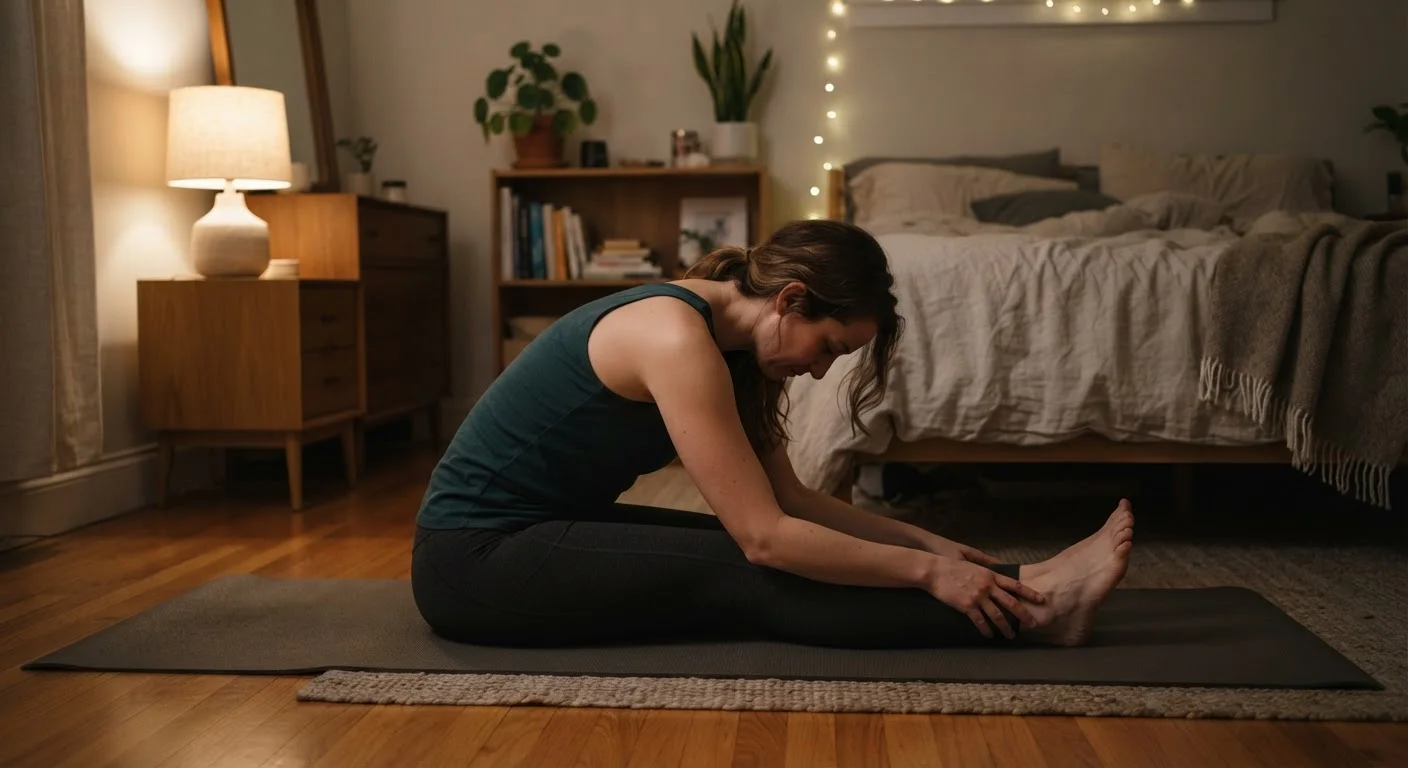
The barrier to evening stretching is low. You don't need equipment, a large space, or significant time. A focused 10-minute routine targeting the major muscle groups - calves, hamstrings, hip flexors, chest, and shoulders - is sufficient to produce cumulative benefit. The key variable is consistency, not intensity.
Pair your stretching with a broader wind-down ritual. Dimmed lighting, a consistent end time, and reduced screen exposure all reinforce the parasympathetic shift that stretching initiates. For a structured approach, our guide to building a sleep routine explains how to align these habits with your natural body clock.
This article is for general informational purposes only and does not constitute medical advice. Always consult a qualified healthcare professional before beginning a new exercise or stretching routine, particularly if you have existing injuries, joint conditions, or other health concerns.