

Key Takeaways
Start here
What Are Movement Snacks?
Understand the why
Why Short Bursts of Activity Work
Get practical
Easy Movement Snack Ideas for Any Schedule
Make it stick
How to Build Movement Snacks Into Your Routine
Stay informed
What to Keep in Mind
What Are Movement Snacks?
A movement snack is a short, deliberate burst of physical activity - typically lasting anywhere from 2 to 10 minutes - slotted into your day wherever a gap appears. Think of it as the movement equivalent of a quick healthy snack between meals: small, frequent, and surprisingly satisfying.
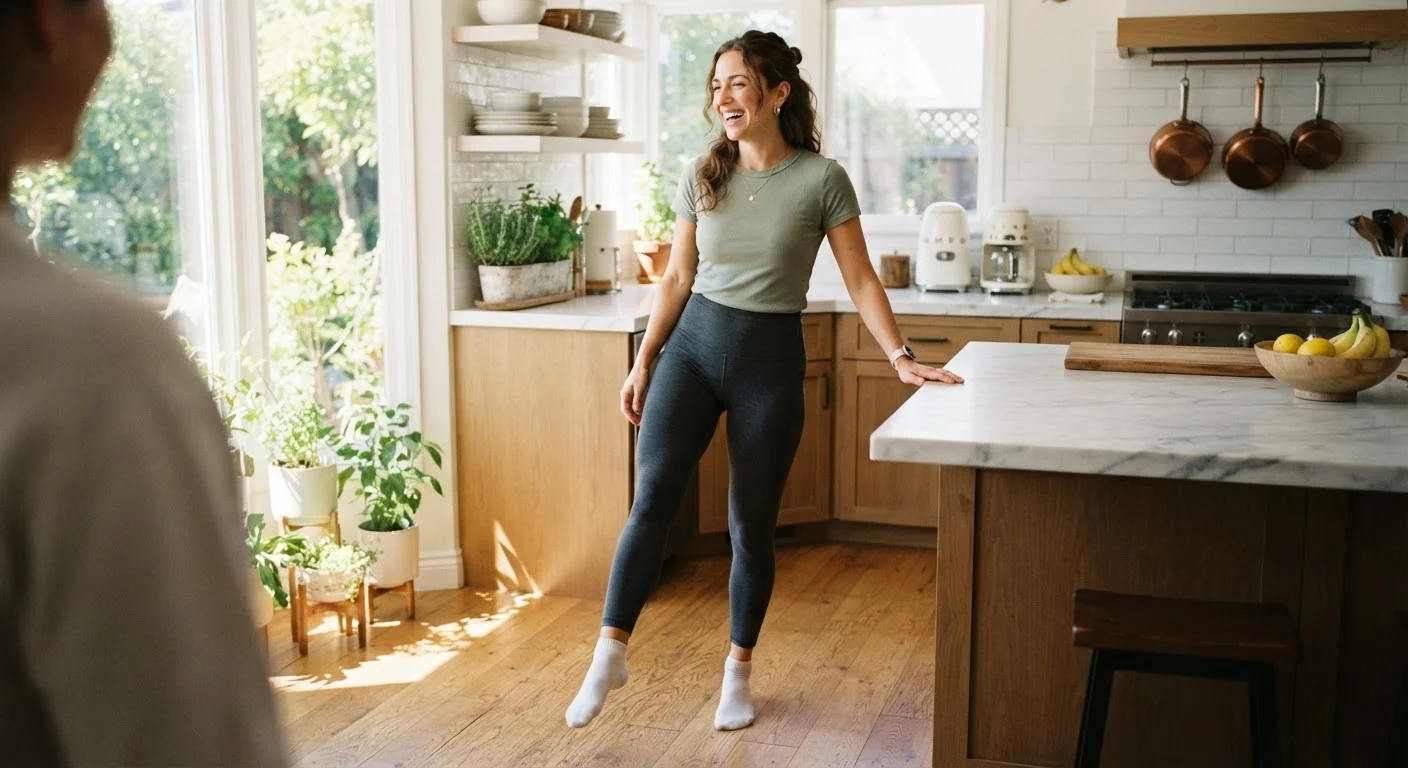
Unlike a scheduled workout, movement snacks don't require a gym, workout clothes, or a dedicated time block. They happen in your kitchen while the coffee brews, at your desk between video calls, or in the hallway outside a meeting room. The concept recognizes a straightforward truth: most people aren't sedentary because they dislike movement - they're sedentary because long, uninterrupted blocks of time are hard to find.
Understanding the difference between incidental movement and true sedentary time is a useful first step before building this habit.
Movement snack
A short, intentional burst of physical activity - usually 2-10 minutes - built into everyday gaps in your schedule rather than set aside as a formal workout.
Sedentary behavior
Time spent with very low energy expenditure while sitting or lying down, not including sleep. Prolonged unbroken sitting is associated with a range of health risks.
Habit stacking
A behavioral strategy where a new habit is linked to an existing one, making it easier to remember and repeat consistently.
Incidental movement
Physical activity that occurs as a by-product of daily tasks - like walking to a store or climbing stairs - rather than planned exercise.
Blood glucose regulation
The body's process of keeping blood sugar levels stable. Brief activity breaks after meals may help the body manage this process more effectively.
Why Short Bursts of Activity Work
For a long time, the dominant advice was that exercise had to accumulate in continuous bouts of at least 10 minutes to count. That view has shifted. Emerging evidence suggests that shorter, fragmented movement distributed across the day can meaningfully support cardiovascular health, blood sugar regulation, and energy levels - especially for people who are otherwise largely sedentary.
Breaking up prolonged sitting appears to be independently beneficial, separate from total exercise volume. Research published in health and physiology journals has found that brief activity breaks can blunt the blood glucose and insulin spikes associated with long periods of sitting. For practical purposes, this means standing up and walking for a few minutes every hour may help your body manage energy more effectively throughout the day.
For a deeper look at what the evidence says specifically in workplace settings, see what the science says about active breaks at work.
Set a Simple Movement Reminder
If you find it easy to lose track of time at your desk, a recurring timer set every 45-60 minutes can serve as a reliable cue. When it goes off, stand up and do anything physical for 2-3 minutes before resetting it. Over time, the cue becomes automatic and the timer becomes less necessary.
Easy Movement Snack Ideas for Any Schedule
The best movement snack is the one you'll actually do. Below are options organized by context so you can match them to your day:
At your desk or workspace
- Stand up and do 10-15 slow calf raises while reading an email
- Walk to the far bathroom or kitchen instead of the nearest one
- Do a set of seated torso twists or shoulder rolls between tasks
- Take a 3-minute walk outside before your next meeting starts
At home
- Do a set of squats while waiting for something to heat up
- Walk up and down the stairs a few extra times during chores
- Stretch during TV ad breaks or between streaming episodes
On the go
- Get off public transport one stop early and walk the rest
- Take the stairs instead of the lift when carrying only light items
- Walk and talk during phone calls rather than sitting
Turning everyday tasks into movement opportunities covers this approach in much more depth.
How to Build Movement Snacks Into Your Routine
Habit research consistently shows that new behaviors are easier to sustain when they're attached to something already established - a concept sometimes called habit stacking. Movement snacks lend themselves perfectly to this approach.
- Anchor them to existing cues. Stand up every time you finish a video call. Do a short walk after lunch. Stretch when you pour your morning coffee.
- Start smaller than you think you need to. Two minutes is enough to begin. The goal in the first week is simply building the habit, not fitness gains.
- Remove friction. Keep comfortable shoes accessible. Put a sticky note on your monitor. Set a recurring timer if needed.
- Track loosely. A simple end-of-day check-in - even a mental one - helps you notice patterns. A daily movement reset checklist is a useful tool for this.
You don't need to overhaul your day. Even adding three deliberate movement breaks where none existed before is a genuine improvement.
No Single 'Right' Way to Do This
Movement snacks are flexible by design. There is no official protocol you need to follow, and what works well for one person may not suit another's schedule or physical ability. The guiding principle is simply to move briefly and often, in whatever way feels manageable and sustainable for you.
What to Keep in Mind
Movement snacks are an excellent entry point into a more active lifestyle, but a few important points are worth keeping in mind:
- They complement, not replace, structured exercise. Most adults benefit from both regular moderate aerobic activity and muscle-strengthening movements each week. Movement snacks help fill the gaps but shouldn't be the whole picture for most people.
- Intensity matters less than consistency. Light-to-moderate intensity is perfectly appropriate, especially if you're just getting started. The priority is regularity.
- Special populations should consult a professional. If you are pregnant, managing a chronic health condition, recovering from injury, or are an older adult with mobility concerns, speak with a qualified healthcare provider before changing your activity habits.
For a broader strategy on weaving movement into daily life without relying on gym time, moving more without a gym offers practical, evidence-grounded guidance.
This article is for informational purposes only and is not a substitute for professional medical advice. Always consult a qualified healthcare provider for guidance tailored to your individual health needs.