

Key Takeaways
Muscle Recovery
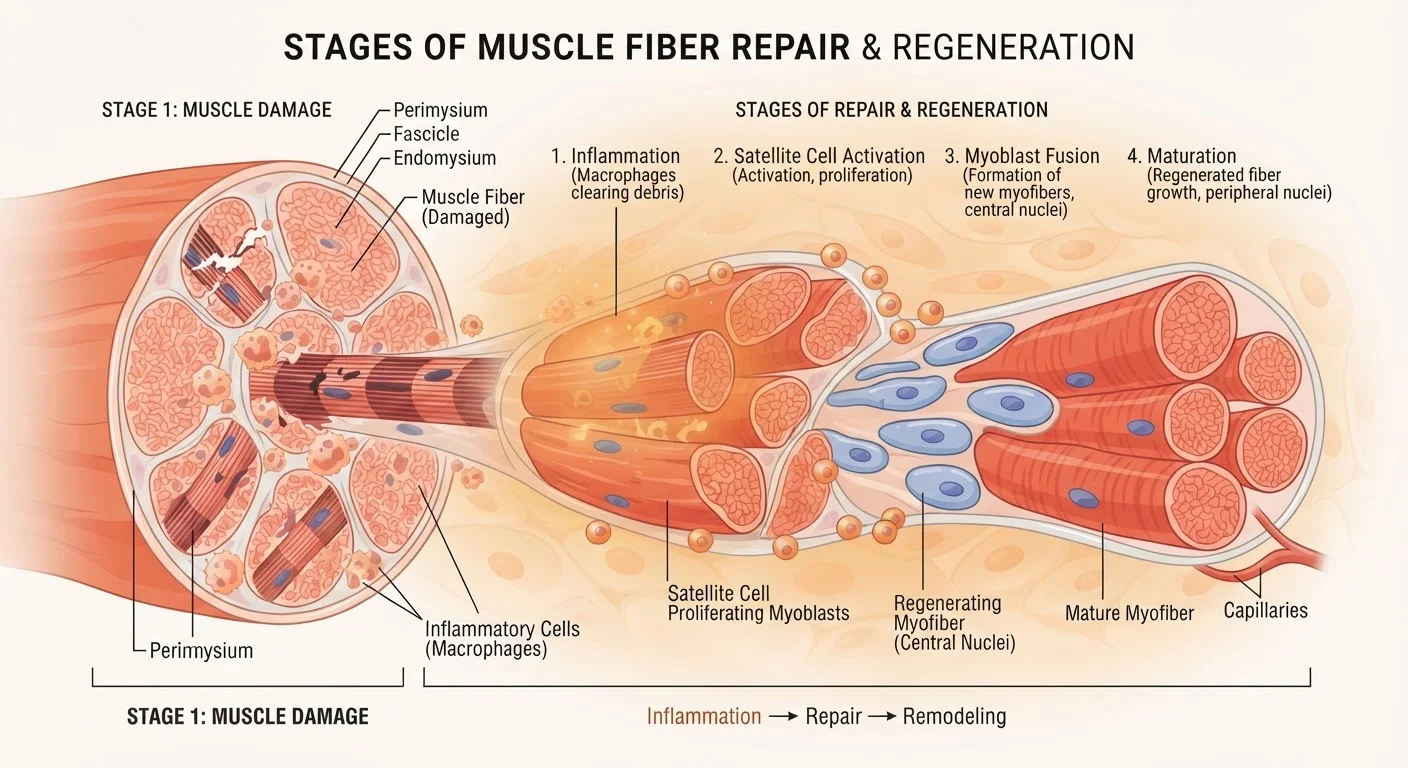
Muscle recovery is the physiological process by which your body repairs microscopic damage caused by physical exertion, restores energy reserves, and adapts tissues to handle future demands. It involves a coordinated sequence of inflammation, cellular repair, and protein synthesis. Far from being passive, recovery is when the actual gains in strength and endurance take place.
At the cellular level, satellite cells (muscle stem cells) are activated during recovery to fuse with damaged muscle fibers, contributing to hypertrophy and structural repair.
The First Response: Inflammation Isn't the Enemy
When you exercise hard, you create microscopic tears in muscle fibers. Within minutes, your immune system launches an inflammatory response - flooding the damaged tissue with white blood cells and signaling molecules called cytokines. This is the body's repair crew arriving on site.
Many people associate inflammation with injury and try to suppress it aggressively with ice baths or anti-inflammatory medications immediately after every workout. Current evidence suggests this may actually blunt the repair process. Controlled inflammation is not a malfunction - it's the essential first signal that kicks off everything that follows.
Over the next 24-48 hours, this inflammatory phase gives way to a proliferative phase where satellite cells - specialized muscle stem cells - are recruited to the site. They multiply, fuse with damaged fibers, and begin depositing new structural proteins. This is the biological foundation of getting stronger.
On Anti-Inflammatory Strategies After Exercise
Routine use of non-steroidal anti-inflammatory drugs (NSAIDs) or aggressive cold immersion immediately after every workout is a topic of ongoing research debate. Some evidence suggests these strategies may reduce the inflammatory signals needed for adaptation. Unless directed by a healthcare provider, blanket use of these methods after normal training sessions may not be necessary.
The Hormonal Engine Behind Rebuilding
Recovery isn't just a local event happening in your muscle tissue - it's orchestrated by hormones circulating throughout your body. Two are central to the process: human growth hormone (HGH) and testosterone.
HGH stimulates protein synthesis and fat metabolism, and its release is strongly tied to sleep. The largest pulse of HGH occurs during deep, slow-wave sleep - which is why consistently shortchanging your rest has measurable effects on how well your muscles rebuild. Testosterone similarly promotes muscle protein synthesis and is suppressed by elevated cortisol, the stress hormone that rises with overtraining and chronic sleep deprivation.
Cortisol itself isn't inherently harmful - it spikes during exercise to mobilize energy. The problem arises when it stays elevated because recovery time is insufficient. High cortisol over time shifts the body into a catabolic state, breaking down muscle rather than building it.
48 hrs
Duration of elevated muscle protein synthesis post-exercise
Research published in sports physiology literature consistently shows MPS remains elevated for up to 48 hours following resistance training in healthy adults.
70%
Of daily growth hormone released during deep sleep
Endocrinology research indicates the majority of daily human growth hormone secretion occurs during slow-wave (deep) sleep stages.
~20%
Increased injury risk with insufficient recovery
Sports medicine studies suggest that athletes who sleep fewer than 8 hours per night face meaningfully higher injury rates than those with adequate sleep.
For a broader look at how sleep and recovery interact, see the Sleep & Recovery hub for practical guidance.
Protein Synthesis: The Actual Rebuilding Work
Muscle protein synthesis (MPS) is the process where your cells manufacture new proteins to repair and reinforce damaged fibers. It's initiated by mechanical stress (the workout itself) and sustained by available amino acids - the building blocks found in dietary protein.
MPS can remain elevated for up to 48 hours after a resistance training session. This is why what you eat in the hours and days after exercise matters as much as the workout itself. Without adequate protein intake, the repair machinery runs without enough raw material.
Carbohydrates also play a role: they replenish glycogen (stored glucose) in muscles, which fuels subsequent training sessions and supports the energy demands of repair. Skimping on carbohydrates during recovery can leave muscles under-fueled and slow the overall process.
For a detailed look at what to eat to support this process, visit Foods That Support Muscle Recovery After Exercise.
Time Your Protein Intake Strategically
Consuming a protein-containing meal or snack within a few hours of exercise supports muscle protein synthesis while the repair window is most active. Including a variety of protein sources - such as eggs, legumes, dairy, or lean meats - throughout the day keeps amino acid availability consistent, which is important since MPS remains elevated for up to 48 hours.
Why Downtime Deserves Respect
Rest days are often framed as something to earn or justify. The biology tells a different story: adaptation - the process by which your body becomes stronger, faster, or more resilient - happens during recovery, not during the workout itself. Training provides the stimulus; rest delivers the result.
Consistently training without adequate recovery keeps the body in a state of breakdown rather than building. Over time, this leads to overtraining syndrome, characterized by declining performance, disrupted sleep, mood changes, and increased susceptibility to illness and injury.
Active recovery - light movement like walking, stretching, or yoga on rest days - promotes blood flow and helps clear metabolic byproducts without adding significant stress to the tissues. It's a practical middle ground for people who find complete rest difficult to embrace.
To understand how to structure rest into a sustainable training plan, the complete guide to training smarter covers evidence-based approaches to scheduling recovery. You can also find foundational information in the Rest and Recovery guide for everyday people.
This article is for general informational purposes only and is not a substitute for professional medical advice. Consult a qualified healthcare provider for guidance specific to your health needs.