

Key Takeaways
Nutrient Density
Nutrient density describes how much nutritional value - vitamins, minerals, fiber, and other beneficial compounds - a food provides relative to the number of calories it contains. A food is considered nutrient-dense when it delivers a high amount of these beneficial components without excessive calories. This concept shifts the focus from simply counting calories to evaluating the quality of those calories.
In nutrition science, nutrient density is sometimes quantified using scoring systems that calculate the ratio of beneficial nutrients to energy content per standardized serving, though no single universal index is universally adopted.
Why Calories Alone Don't Tell the Full Story
Most people learn to think about food through a calorie lens - how many calories does this have, and how does that fit my day? While energy balance matters, this framework misses something fundamental: two foods can contain identical calories and deliver vastly different nutritional value to your body.
Consider 200 calories of plain potato chips versus 200 calories of cooked lentils. The lentils provide substantial protein, dietary fiber, iron, folate, and potassium. The chips offer minimal micronutrients and little fiber. Same energy, very different nutrition. This is precisely what the concept of nutrient density is designed to capture.
Understanding this distinction helps explain why nutrition researchers and dietitians consistently emphasize food quality alongside energy intake. For a broader vocabulary to navigate these conversations, the glossary of key nutrition terms is a useful starting reference.
~90%
Americans falling short of vegetable intake recommendations
According to the Dietary Guidelines for Americans, roughly 90% of Americans do not meet recommended daily vegetable intake - one of the most nutrient-dense food groups.
Top 3
Nutrient gaps most commonly under-consumed in US diets
Dietary fiber, vitamin D, and potassium are consistently identified as shortfall nutrients in US dietary surveys, all of which are abundant in nutrient-dense whole foods.
How Nutrient Density Works in Practice
Nutrient density is not a score printed on a food label - it's a mental framework you apply when evaluating your choices. The core question is: what does this food deliver relative to the calories it contributes?
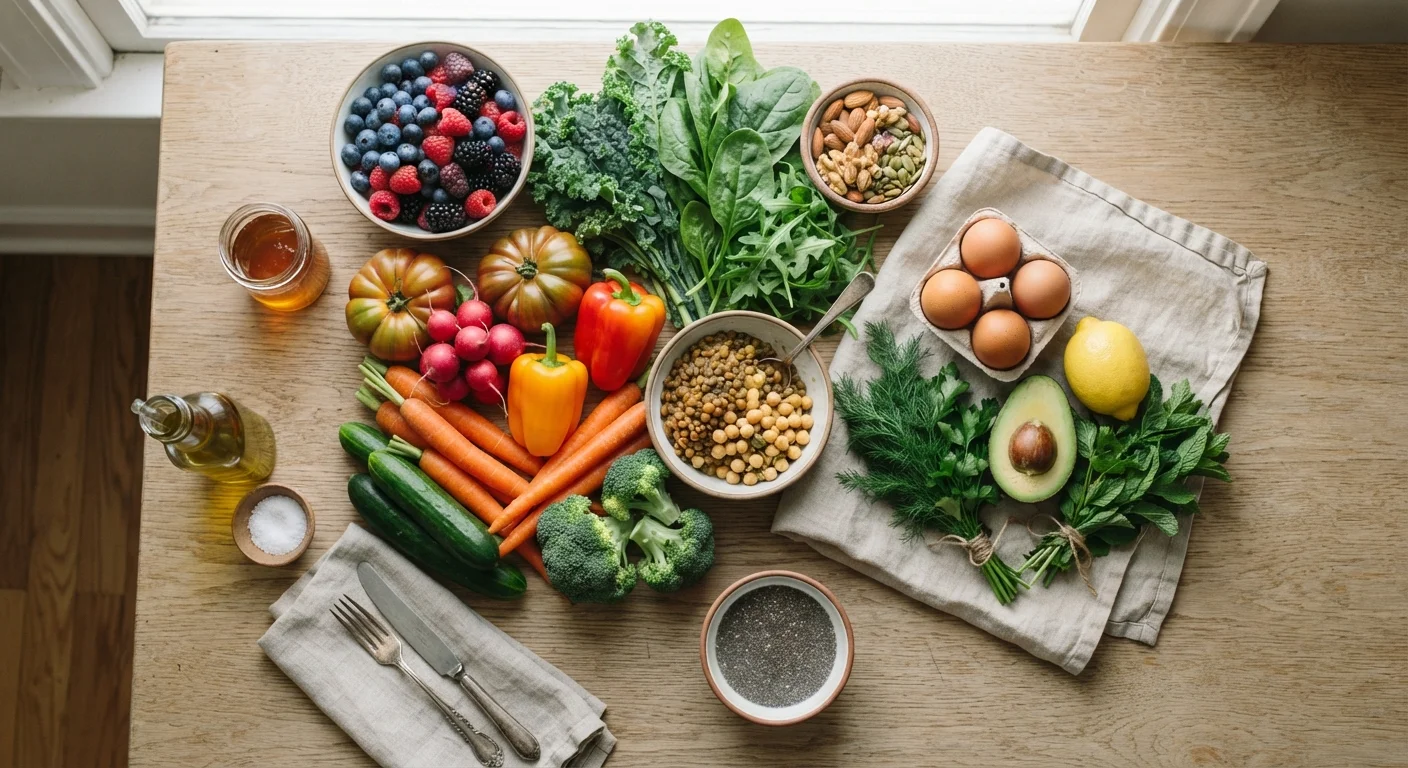
Foods that consistently rank high on nutrient density include leafy green vegetables, cruciferous vegetables like broccoli, legumes such as beans and lentils, whole grains, eggs, fatty fish, and most fresh fruits. These foods pack multiple vitamins, minerals, antioxidants, and often fiber or beneficial fats into a modest calorie load.
Processed foods with added sugars, refined starches, and minimal fiber tend toward lower nutrient density - sometimes called "empty calories" - because they contribute energy without proportional nutritional benefit. That said, nutrient density is best understood as a spectrum, not a binary. Most foods fall somewhere in between.
Learning to read a nutrition label supports this thinking directly. The guide to reading nutrition labels explains how to decode daily values and ingredient lists at a glance.
Applying the Concept Without Labeling Foods as Good or Bad
One of the more useful aspects of nutrient density is that it reframes dietary decisions without requiring rigid restriction. Rather than classifying foods as forbidden, the concept encourages you to ask whether your overall diet - viewed across a day or a week - is delivering consistent nutritional value.
Build Density Into Meals You Already Make
You don't need to overhaul your diet to increase nutrient density. Start by adding one or two nutrient-rich ingredients - beans, leafy greens, seeds - to meals you already prepare regularly. Small additions compound over time without requiring a complete change in eating habits.
This perspective aligns closely with how nutrition science actually evaluates diet quality: through patterns, not individual meals. As explored in the article on dietary patterns and why they matter, research consistently shows that overall eating habits predict health outcomes more reliably than any single food choice.
Practically speaking, emphasizing nutrient-dense foods most of the time leaves natural room for less nutrient-dense choices without undermining overall dietary quality. This is the foundation of a balanced approach to enjoyment and nutrition that is sustainable long-term.
If you have specific health conditions, are pregnant, are managing a chronic disease, or are setting goals around body composition, consult a registered dietitian before making significant dietary changes. General principles like nutrient density are informative, but personal nutritional needs vary considerably.
This article is for general informational and educational purposes only and does not constitute medical or dietary advice. Always consult a qualified healthcare professional before making changes to your diet, especially if you have a health condition or specific nutritional needs.