

Key Takeaways
Start here
What the Mediterranean Diet Actually Is
Next
Core Foods: What Goes on the Plate
Dig deeper
What the Research Says
Clear up confusion
Common Misconceptions
Take action
How to Start Eating This Way
What the Mediterranean Diet Actually Is
The Mediterranean diet is not a branded meal plan or a set of rigid rules. It is a traditional eating pattern observed across Mediterranean-bordering countries - including Greece, Italy, and Spain - and formalized as a research framework in the mid-20th century. Nutrition scientist Ancel Keys and colleagues documented the dietary habits of populations in this region that showed notably low rates of coronary heart disease relative to Western counterparts.
Today, researchers use the term to describe a broadly consistent pattern: an abundance of plant foods, olive oil as the primary fat source, moderate fish and seafood consumption, limited red meat, and meals eaten socially and without excess. It is less a prescription and more a philosophy about how to relate to food. For a wider look at how this pattern compares with other studied approaches, see popular eating patterns and the science behind each one.
Omega-3 fatty acids
A type of healthy unsaturated fat found in oily fish, walnuts, and flaxseeds. Research associates adequate omega-3 intake with heart and brain health.
Legumes
The seed family that includes lentils, chickpeas, black beans, and split peas. They are high in fiber, plant protein, and micronutrients.
Extra-virgin olive oil
The least processed grade of olive oil, extracted without chemicals or heat. It retains the highest concentration of beneficial polyphenols (natural plant compounds).
Polyphenols
Naturally occurring compounds found in plants - including fruits, vegetables, and olive oil - that have been studied for potential antioxidant and anti-inflammatory properties.
Observational study
A type of research that tracks what people eat and what health outcomes occur, without directly controlling participants' diets. These studies show associations, not proof of cause and effect.
Core Foods: What Goes on the Plate
Understanding the Mediterranean diet starts with understanding its food hierarchy - not a pyramid of restrictions, but a guide to frequency and proportion.
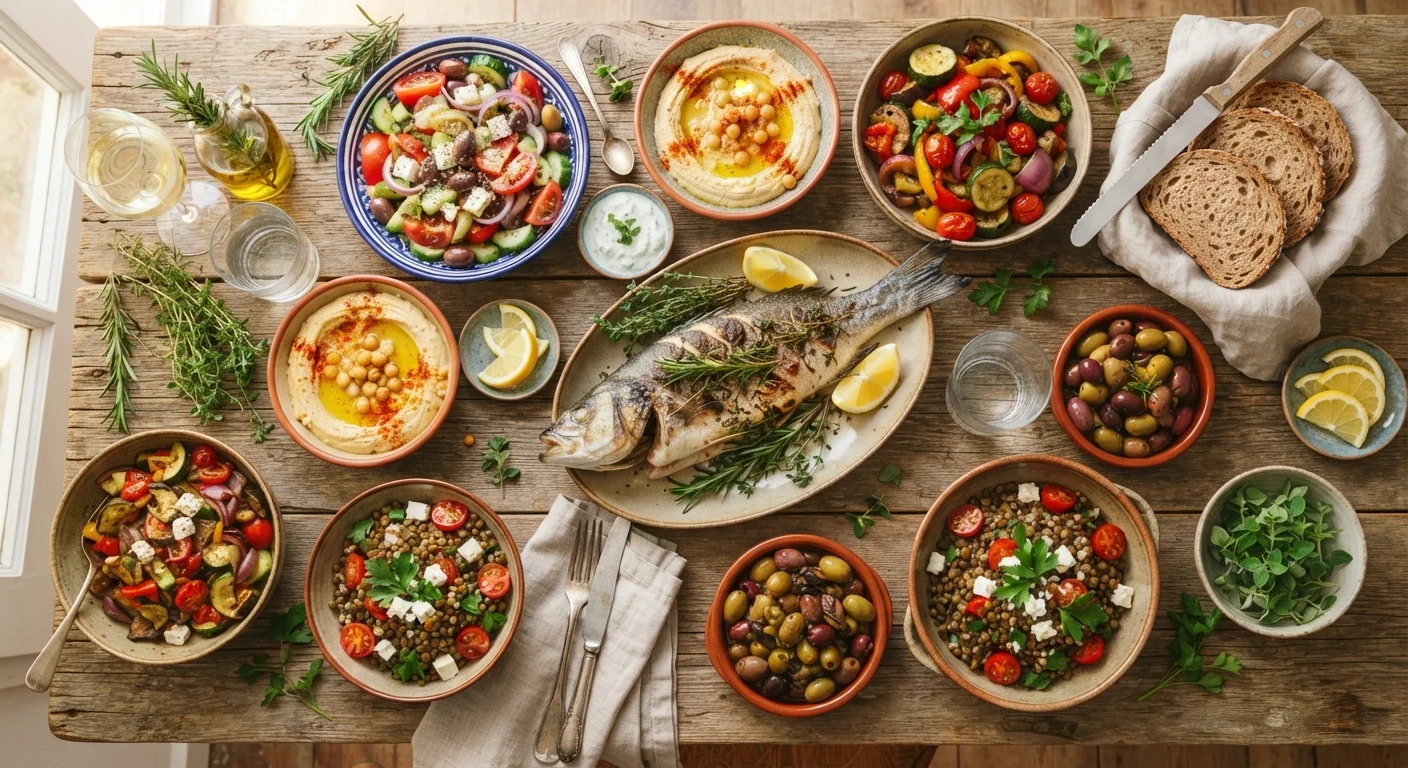
- Foundation (eat daily): Vegetables, fruits, whole grains (such as farro, barley, and whole-wheat bread), legumes (lentils, chickpeas, beans), nuts, seeds, and extra-virgin olive oil.
- Moderate frequency (a few times per week): Fish and seafood - particularly oily fish rich in omega-3 fatty acids. Eggs, poultry, and dairy (especially fermented forms like yogurt and cheese) are included in smaller amounts.
- Occasional (infrequent): Red meat, sweets, and highly processed foods are not forbidden but are reserved for special occasions rather than routine consumption.
Water is the primary beverage. Coffee and tea are common. Moderate wine - typically red - is traditional in some Mediterranean cultures, though it is neither a health recommendation nor appropriate for everyone. Speak with a healthcare provider about alcohol if you have any concerns.
Build the Plate Around Plants First
A practical starting point is the "half-plate" approach: fill at least half your plate with vegetables or legumes before adding any other component. This naturally shifts the proportion of your meal toward the Mediterranean pattern without requiring you to measure or count anything.
What the Research Says
The Mediterranean diet is among the most extensively studied dietary patterns in nutritional epidemiology. Key findings come primarily from large observational studies and some randomized controlled trials.
The PREDIMED trial (Prevención con Dieta Mediterránea), a large Spanish randomized trial published in 2013, found that participants assigned to a Mediterranean diet supplemented with olive oil or nuts had a significantly lower incidence of major cardiovascular events compared with a control low-fat diet group. While the trial had methodological corrections applied in a 2018 re-analysis, the directional findings remained broadly consistent.
Observational studies also associate higher adherence to Mediterranean-style eating with reduced markers of inflammation, lower risk of type 2 diabetes, and some evidence of slower cognitive decline. Researchers consistently note that these associations do not establish definitive cause and effect, and that diet is one factor among many influencing health outcomes.
For context on shared principles across evidence-backed dietary patterns, see what most evidence-based diets have in common.
Nutrition Research Has Real Limitations
Most dietary research - including Mediterranean diet studies - relies on self-reported food intake, which is inherently imprecise. Observational studies also cannot fully separate diet from other lifestyle factors like physical activity, social connection, and sleep. The strength of evidence here is meaningful but not absolute. Treat findings as informative patterns, not guarantees of personal outcomes.
Common Misconceptions
Several myths follow this eating pattern around. Here are the most common ones, clarified.
- "It's just a Greek salad and pasta."
- The pattern encompasses a wide variety of cuisines and regional food traditions. Falafel, tabbouleh, grilled fish with herbs, and bean soups are all equally representative examples.
- "Carbs are discouraged."
- Whole grains and legumes are cornerstones of this pattern. Refined carbohydrates - white bread, pastries - are the foods eaten less frequently, not carbohydrates as a category.
- "Olive oil is a free food you can use in unlimited amounts."
- Olive oil is the preferred fat source, but it is still calorie-dense. The pattern emphasizes using it in place of less healthful fats, not adding it to every food indiscriminately.
For a broader look at what balanced eating actually involves, see what a balanced diet actually looks like.
How to Start Eating This Way
Transitioning to a Mediterranean-style eating pattern does not require an overnight overhaul. Small, consistent shifts tend to be more sustainable than wholesale changes.
- Swap butter for extra-virgin olive oil in cooking and dressings.
- Build meals around a vegetable or legume base rather than treating them as side dishes.
- Choose whole grains - oats, barley, whole-wheat - over their refined versions where possible.
- Include fish or seafood two to three times per week in place of red meat.
- Keep a bowl of fruit or a handful of nuts accessible for between-meal hunger.
- Reduce ultra-processed snacks, fast food, and added sugars - not by counting grams but by crowding them out with whole-food alternatives.
If you have a chronic health condition, are pregnant, or are managing specific nutritional needs, consult a registered dietitian before significantly changing your eating pattern. Older adults in particular may benefit from tailored guidance - our article on Mediterranean eating patterns for older adults explores this further.
This article is for general informational and educational purposes only and does not constitute medical or dietary advice. Consult a qualified healthcare professional for guidance specific to your health situation.
Popular Eating Patterns and the Science Behind Each One
A factual overview of widely studied dietary patterns - including Mediterranean, DASH, and flexitarian - with a clear-eyed look at what research currently supports for each.
Mediterranean vs. DASH: Two Well-Studied Diets Compared
A direct, evidence-based comparison of two of the most researched dietary patterns, covering where they agree, where they differ, and which goals each may be better suited to.
Eating for Long-Term Health: Principles Most Evidence-Based Diets Share
Explores the common dietary habits that most science-backed eating patterns agree on - a useful foundation regardless of which specific approach you follow.