

Key Takeaways
Option A
Mediterranean Eating Pattern
The regionally rooted, research-backed dietary tradition.
Best for: Older adults seeking a well-studied, flexible framework that emphasizes flavor, variety, and long-term heart and brain health.
Option B
General Healthy Eating Advice
The broad, accessible foundation of evidence-based nutrition.
Best for: Adults who want practical, universal guidelines that apply across diverse food preferences, budgets, and cultural backgrounds.
If you want a deeply researched framework with proven cardiovascular and cognitive benefits
Mediterranean Eating Pattern
Decades of research consistently associate Mediterranean-style eating with reduced heart disease risk and slower cognitive decline in older adults.
If you prefer flexible, culturally inclusive guidance without a specific cuisine focus
General Healthy Eating Advice
Federal dietary guidelines are designed to be adaptable across diverse food traditions, budgets, and health needs - making them accessible to more people.
If you're managing cardiovascular risk or interested in brain health as you age
Mediterranean Eating Pattern
Its emphasis on anti-inflammatory foods like fatty fish, olive oil, and nuts maps closely onto nutrients linked to heart and brain protection.
If you're just starting to improve your diet and need a simple entry point
General Healthy Eating Advice
Basic principles - more vegetables, less ultra-processed food, adequate protein - are a manageable and effective starting point before adopting a more specific pattern.
What Each Approach Actually Involves
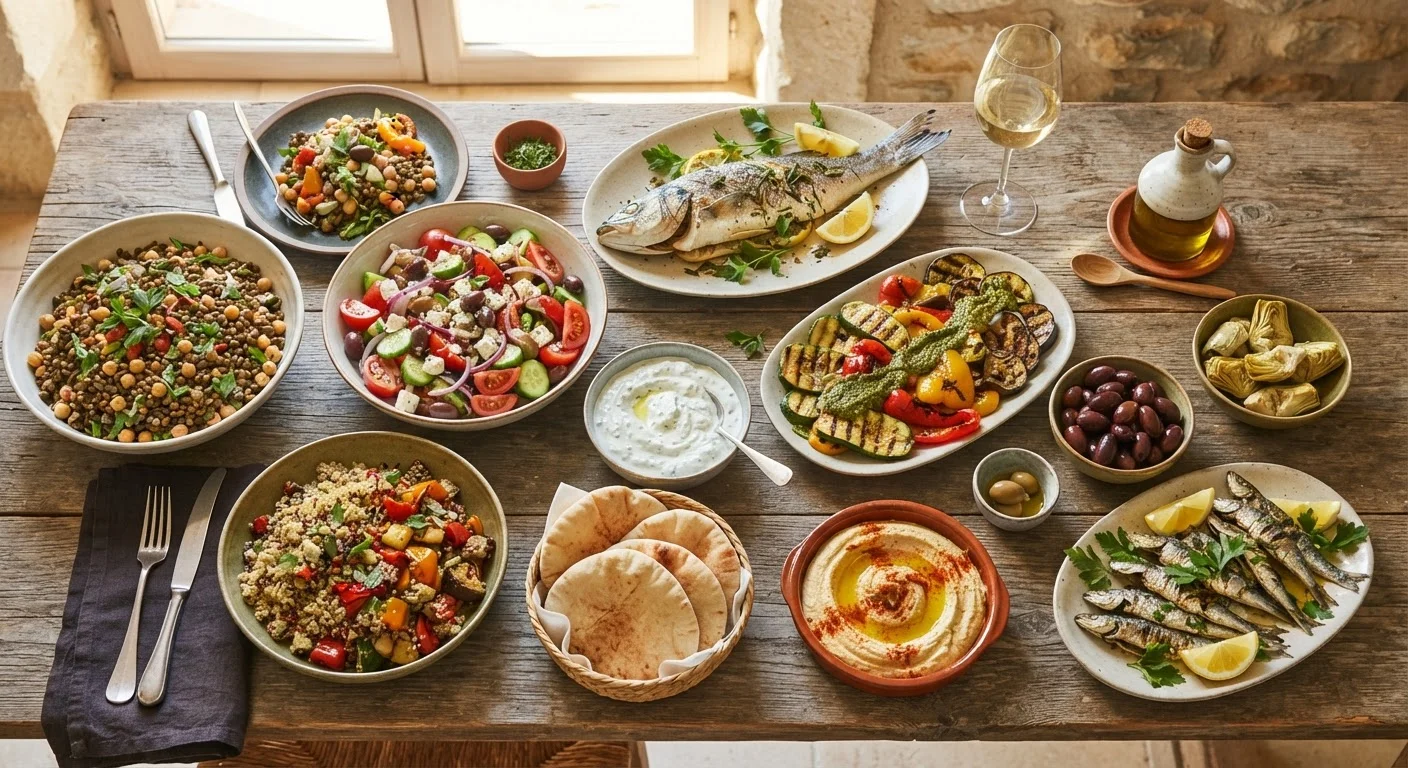
The Mediterranean eating pattern draws from traditional food cultures of countries bordering the Mediterranean Sea - Greece, Italy, and Spain among them. It centers on abundant vegetables, fruits, whole grains, legumes, nuts, and extra-virgin olive oil, with moderate fish and seafood, limited red meat, and modest amounts of dairy and wine (typically red, and always optional). It is less a rigid diet than a recognizable way of eating built around minimally processed, plant-forward foods.
General healthy eating advice - as represented by frameworks like the U.S. Dietary Guidelines for Americans - takes a broader approach. It emphasizes balance across food groups, limiting saturated fat, added sugars, and sodium, and encourages a variety of nutrient-dense foods. Crucially, it is designed to accommodate many different cultural cuisines and personal preferences, making it more of an adaptable scaffold than a defined pattern.
Both share a foundation: whole foods over processed ones, adequate protein, plenty of fiber. The difference lies in specificity, cultural grounding, and depth of targeted research. For a broader look at how dietary patterns compare to focusing on individual foods, see eating patterns vs. single superfoods.
| Criterion | Mediterranean Eating Pattern | General Healthy Eating Advice |
|---|---|---|
| Core focus | Plant-forward, olive oil, fish, legumes | Balanced food groups, nutrient density |
| Cultural specificity | Rooted in Mediterranean traditions | Designed to be culturally flexible |
| Research depth in older adults | Extensive targeted evidence | Broad population evidence, less age-specific |
| Heart health evidence | Strong; associated with reduced cardiovascular events | Supported; targets sodium and saturated fat |
| Brain health evidence | Growing; linked to slower cognitive decline | Less specific; general nutrient focus |
| Ease of adoption | Moderate; specific food emphasis required | High; broad principles, easier starting point |
| Protein guidance for aging | Fish and legumes as primary sources | Explicit guidance on adequate protein intake |
| Flexibility | Moderate; structured around specific foods | High; fits most cuisines and preferences |
Evidence and Aging: Where the Research Points
The Mediterranean pattern has one of the most robust bodies of nutritional research behind it. Large observational studies - including the landmark PREDIMED trial conducted in Spain - have associated Mediterranean-style eating with reduced cardiovascular events, lower risk of type 2 diabetes, and slower cognitive decline. For adults over 50, these outcomes are especially meaningful, since heart disease and cognitive aging are primary health concerns in this life stage.
~30%
Reduced major cardiovascular event risk
The PREDIMED study found Mediterranean diet supplemented with olive oil or nuts was associated with roughly 30% lower cardiovascular risk compared to a low-fat control diet.
2x/week
Fish intake recommended by Mediterranean pattern
Regular fatty fish consumption - a hallmark of Mediterranean eating - is associated with higher omega-3 intake, linked to heart and brain health in older adults.
~10%
Lower dementia incidence in some cohort studies
Observational research has associated higher Mediterranean diet adherence with modestly reduced dementia risk, though causality has not been definitively established.
General dietary guidelines are also evidence-based, but they are designed for broad population health across all age groups rather than optimized specifically for older adults. That said, they incorporate guidance particularly relevant to aging - such as adequate calcium, vitamin D, and protein intake - which becomes increasingly important as muscle mass and bone density naturally decline with age.
If cognitive health is a priority for you, the connection between dietary patterns and brain function is worth exploring further. Our article on eating for your brain examines which patterns the evidence most consistently supports.
Practical Considerations for Adults Over 50
Adopting a Mediterranean-style pattern doesn't require a cultural overhaul. Small, consistent shifts - swapping butter for olive oil, eating fish twice a week, adding more legumes - can meaningfully shift your intake toward this pattern over time. Its flexibility is one of its strengths for older adults who may have long-established food preferences.
General healthy eating guidelines are similarly adaptable and may feel less prescriptive for those new to thinking carefully about diet. They're also easier to apply when cooking for a family with varied preferences or when food budgets are tight, since they don't emphasize specific ingredients like extra-virgin olive oil.
Both approaches share a critical limitation: they work best when sustained over years, not weeks. Older adults managing chronic conditions - diabetes, kidney disease, cardiovascular conditions - should consult a registered dietitian before making significant dietary changes, as individual needs may differ from population-level guidance. You may also want to consider how eating patterns fit alongside physical activity; our Active Aging hub covers how movement and nutrition work together to support healthy aging.
For those curious about other structured approaches, it's worth knowing how Mediterranean eating compares to other well-researched frameworks. See Mediterranean vs. DASH for a direct comparison of two widely studied patterns, or explore the full Healthy Eating Patterns hub for broader context.
A Note on Supplement Use and Older Adults
Neither the Mediterranean pattern nor general dietary guidelines rely on supplements as a primary strategy. However, older adults are more likely to have clinically relevant deficiencies - particularly in vitamin D, vitamin B12, and calcium - that diet alone may not fully address. A healthcare provider can assess whether targeted supplementation is appropriate for your individual situation.
This article is for general informational purposes only and does not constitute medical or nutritional advice. Always consult a qualified healthcare professional or registered dietitian for guidance tailored to your individual health needs.