

Key Takeaways
Simple vs. Complex Carbohydrates
Carbohydrates are one of the three main macronutrients your body uses for energy. Simple carbohydrates are made of one or two sugar molecules that digest quickly, causing a rapid rise in blood sugar. Complex carbohydrates are longer chains of sugar molecules that take more time to break down, delivering energy more gradually.
The distinction maps roughly onto monosaccharides and disaccharides (simple) versus polysaccharides and oligosaccharides (complex), though fiber - itself a complex carb - is largely indigestible and serves a different physiological role.
What Carbohydrates Actually Are
Carbohydrates are molecules made of carbon, hydrogen, and oxygen - and they are your body's primary energy source. Despite years of low-carb diet trends, nutrition science consistently supports their role in a balanced diet. The confusion arises not from carbs themselves, but from the enormous variety they encompass, from table sugar to lentils to broccoli.
Understanding carbs starts with structure. Simple carbohydrates contain one sugar unit (monosaccharides like glucose and fructose) or two linked together (disaccharides like sucrose and lactose). Complex carbohydrates are long chains of sugar molecules, including starches and dietary fiber. That structural difference drives very different effects inside your body. For a broader look at how carbs fit alongside protein and fat, see our macronutrients overview.
Simple Carbohydrates: Fast Energy With Trade-offs
Simple carbs are digested and absorbed quickly. Because there is little structural complexity to break down, glucose enters the bloodstream rapidly, triggering an insulin response to shuttle that energy into cells. This fast-acting quality is useful in certain contexts - athletes often use simple sugars during intense exercise for quick fuel replenishment.
The problem is context. When simple sugars arrive in large quantities without accompanying fiber, protein, or fat, the blood sugar spike can be steep and the subsequent drop noticeable - leaving some people feeling tired or hungry sooner. Added sugars, found in sodas, candies, and many packaged foods, fall squarely into this category and contribute calories with minimal nutritional value.
Natural sources of simple sugars, however, tell a different story. Fruit contains fructose, but also fiber, water, vitamins, and phytonutrients that slow absorption and add genuine nutritional value. The source matters significantly. You can learn more about how blood sugar responses connect to chronic disease risk in our article on type 2 diabetes and insulin resistance.
90%
Americans not meeting daily fiber recommendations
According to the Dietary Guidelines for Americans, fiber is identified as a nutrient of public health concern due to widespread under-consumption.
17 tsp
Average daily added sugar intake in the US
Research published in the American Journal of Clinical Nutrition estimated average US adult added sugar intake well above the recommended limit of about 6-9 teaspoons per day.
45-65%
Recommended share of calories from carbohydrates
The Dietary Reference Intakes established by the National Academies of Medicine recommend that carbohydrates make up 45-65% of total daily calorie intake for adults.
Complex Carbohydrates: Sustained Energy and Beyond
Complex carbohydrates require more digestive work to break down into usable glucose. That slower process translates into a more gradual rise in blood sugar and a longer-lasting energy supply - which is why whole grains, legumes, and starchy vegetables are consistently highlighted in evidence-based dietary guidelines.
Dietary fiber - a non-digestible complex carbohydrate - plays a separate but equally important role. Soluble fiber dissolves in water and forms a gel-like substance that slows digestion and can help manage cholesterol levels. Insoluble fiber adds bulk to stool and supports regular bowel movements. Most Americans fall short of the recommended daily fiber intake, making whole food sources of complex carbs an important dietary priority.
A Simple Rule for Better Carb Choices
When choosing grain-based foods, look for 'whole grain' as the first ingredient on the label. Products labeled 'multigrain' or 'made with whole grain' may still be primarily refined flour. Checking the fiber content per serving - aim for 3 grams or more - gives you a quick, reliable signal of a more nutritious option.
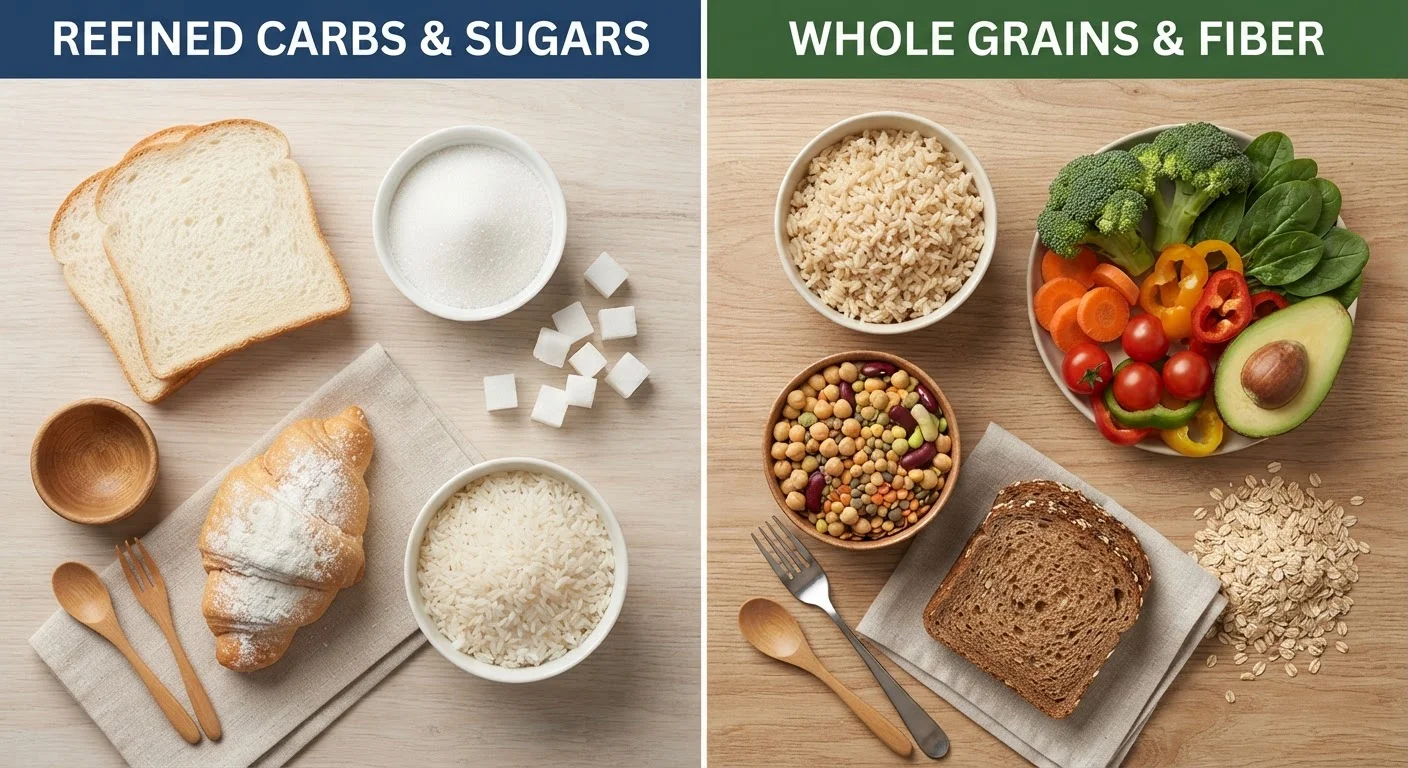
It is worth noting that not all complex carb foods are equally nutritious. Refined starches - like white flour or white rice - have had much of their fiber and nutrient content stripped away during processing, leaving behind a product that behaves more like a simple carb in terms of blood sugar response. Whole grain versions retain the bran and germ, preserving fiber, B vitamins, and minerals.
Making Sense of Carbs in Your Diet
Carbohydrate quality matters more than the simple-versus-complex label alone. A useful practical approach: favour whole, minimally processed sources most of the time - vegetables, whole grains, legumes, and whole fruit - and treat refined and added-sugar foods as occasional rather than staple choices.
Pairing carbohydrates with protein, healthy fat, or fiber also moderates blood sugar response, which is why a bowl of plain white rice affects blood sugar differently than the same rice served with beans, vegetables, and olive oil. Context and combination are everything. To put this into practice, learning to read nutrition labels helps you identify added sugars and whole grain content at a glance. And if you have encountered advice insisting all carbs are harmful, our piece on persistent diet myths addresses that claim directly with the evidence.
This article is for general informational purposes only and is not a substitute for professional medical or dietary advice. If you have specific health conditions or concerns about your carbohydrate intake, please consult a registered dietitian or qualified healthcare provider.