

Key Takeaways
Hydration and Nutrition
Hydration refers to maintaining adequate fluid levels in the body, while nutrition encompasses the intake of foods and nutrients that sustain health. Together, they form a closely linked system: water is required for virtually every process through which the body digests food, absorbs nutrients, and uses them for energy and repair. Treating hydration as separate from diet overlooks how fundamentally water shapes what your food actually does inside your body.
Water acts as the solvent for most biochemical reactions and is integral to nutrient transport across cell membranes, enzyme function, and metabolic processes including glycolysis and protein synthesis.
Why Water Belongs in Every Nutrition Conversation
Nutrition discussions tend to center on macronutrients, vitamins, and minerals - yet water, the most abundant compound in the human body, rarely gets the same attention. This is a significant gap. Water is not simply something you drink alongside food; it is actively involved in how your body processes everything you eat.
Digestion begins with saliva, which is predominantly water, and continues through the stomach and intestines, where water-based secretions break down food into usable compounds. Without sufficient fluid, this process slows and becomes less efficient. Nutrients that your diet provides cannot be properly extracted, transported, or utilized without adequate hydration. Understanding this connection is a foundational step in applying nutrition knowledge effectively. Our article on nutrient density explores how food quality matters - but hydration is what allows your body to actually access that quality.
~60%
Of the adult human body is water
The U.S. Geological Survey estimates that water makes up approximately 60% of adult body weight, underscoring its foundational role in all physiological functions.
20-30%
Of daily fluid intake comes from food
According to the European Food Safety Authority, a significant portion of total daily water intake in adults comes from moisture in solid foods rather than beverages alone.
1-2%
Body water loss linked to cognitive decline
Research published in nutrition and physiology journals suggests that a water deficit of just 1-2% of body weight may impair concentration, mood, and short-term memory.
How Water Supports Nutrient Absorption and Transport
Once digested, nutrients must travel from the intestinal lining into the bloodstream and then to cells throughout the body. Water is the primary medium for this transport. Blood, which is roughly 90% water, carries glucose, amino acids, vitamins, and minerals to tissues and organs. Water-soluble vitamins - such as vitamin C and the B-complex group - dissolve in water and depend on adequate fluid levels to move efficiently through the body.
Fat-soluble vitamins (A, D, E, and K) require bile for absorption, and bile itself is largely water-based. Even minerals like sodium, potassium, and magnesium are electrolytes that function in water-based solutions inside and outside cells. Dehydration disrupts these electrochemical balances and can affect muscle function, nerve signaling, and cardiac rhythm - processes that depend on nutrition and hydration working together.
Pair Water-Rich Foods With Meals
Including a salad, broth-based soup, or fresh fruit alongside your main meal adds both nutrients and fluid in a single step. This approach naturally boosts hydration without requiring you to track water intake separately. It also supports the nutrient absorption process by ensuring the digestive environment has adequate fluid available.
Food as a Source of Hydration
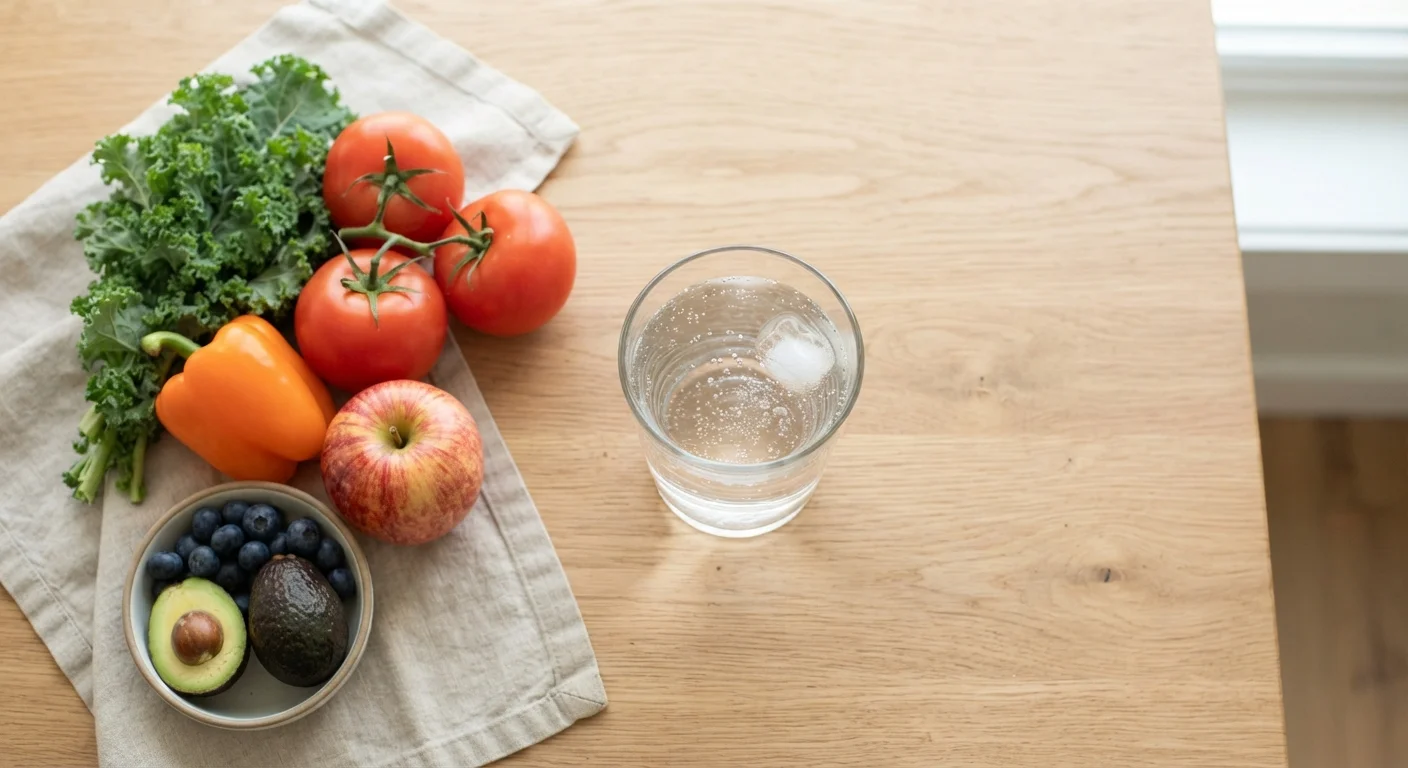
Many people underestimate how much fluid comes from food. Fruits and vegetables with high water content - including cucumbers (approximately 96% water), tomatoes, oranges, and leafy greens - contribute meaningfully to daily fluid intake. Soups, broths, yogurt, and even cooked grains contain significant moisture. Estimates suggest that food typically accounts for 20-30% of total daily water intake in adults who eat a varied, whole-food diet.
This means that dietary quality and hydration are intertwined in a practical sense as well. A diet rich in whole, minimally processed foods tends to deliver more water alongside its nutrients. Conversely, diets heavy in ultra-processed, dry, or salty foods may increase fluid needs while delivering fewer hydrating foods. For a closer look at how to build consistent fluid intake into your routine, see our article on hydration throughout the day.
Practical Ways to Align Hydration With Your Diet
Integrating better hydration into your diet does not require major overhauls. Small, consistent habits make a meaningful difference over time. Drinking water at meals supports digestion and makes it easier to reach daily fluid goals without additional effort. Choosing whole fruits and vegetables over processed snacks adds both nutrients and water content simultaneously.
Activity level, body size, heat exposure, and health conditions all influence how much fluid each person needs. The eight-glasses-per-day guideline is a rough heuristic rather than a scientific prescription - our article Hydration and the Body: Beyond the Eight-Glasses Rule explains what actually drives individual needs. For those who exercise regularly, water is also a critical part of recovery - see how nutrition supports post-exercise recovery for the full picture.
This article is for general informational purposes only and does not constitute medical or dietary advice. Consult a qualified healthcare professional for guidance tailored to your individual health needs.