

Key Takeaways
Barriers to Daily Activity
Barriers to daily activity are the social, environmental, and structural factors that make it harder for people to move regularly throughout their day. These go well beyond personal motivation and include things like neighbourhood design, workplace culture, access to safe outdoor spaces, and social norms around movement. Understanding these barriers helps explain why activity levels vary so dramatically between communities - and what can actually be done about it.
In public health research, these are often categorised as 'built environment' factors and 'social determinants of physical activity' - distinct from individual-level psychological barriers like motivation or self-efficacy.
Why Willpower Alone Doesn't Explain Activity Levels
When people aren't moving enough, the default explanation is often personal - lack of motivation, poor discipline, or competing priorities. But decades of public health research tell a more complicated story. Activity levels are powerfully shaped by the environments people inhabit, the social groups they belong to, and the structural conditions of their daily lives.
This matters because it changes where solutions actually live. If the barriers are largely structural, individual willpower-based advice has limited reach. Understanding what's genuinely in the way is the first step toward realistic, lasting change.
For a broader look at your current movement patterns, the daily movement audit is a useful place to start.
Activity Isn't Only About Exercise
Public health researchers distinguish between structured exercise (planned workouts) and total daily physical activity, which includes all movement throughout the day. For long-term health outcomes, consistent daily movement - walking, stair climbing, light household tasks - contributes independently of formal exercise. Both matter, but neglecting incidental activity is a common and consequential gap.
The Built Environment: How Neighbourhood Design Determines Movement
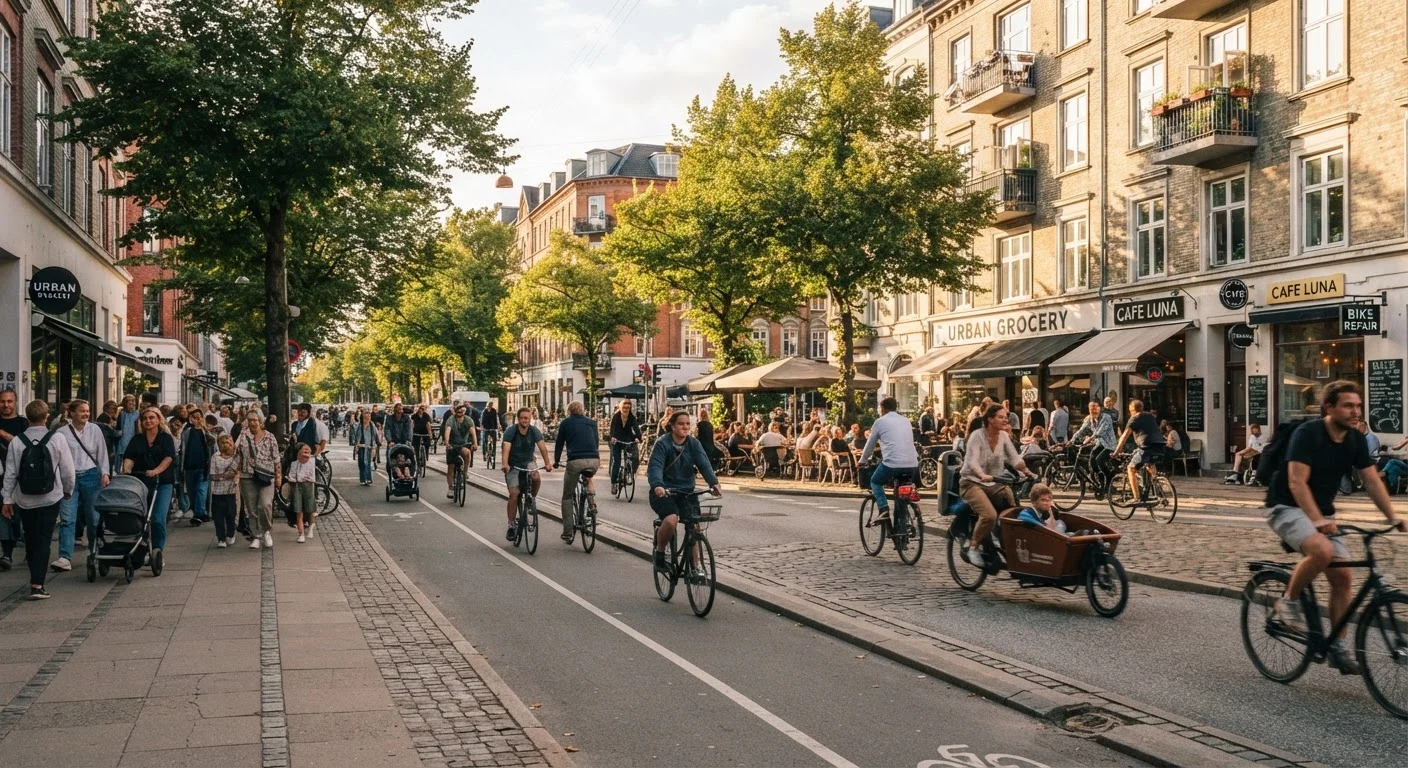
One of the most consistently documented predictors of daily activity is neighbourhood walkability - a measure of how easy and safe it is to travel on foot. Walkable areas typically feature connected sidewalks, mixed land use (so destinations are close together), lower vehicle speeds, and visible foot traffic. Residents of walkable neighbourhoods tend to accumulate significantly more daily steps than those in car-dependent areas, often without intentional exercise.
Access to green space matters too. Parks, trails, and recreational areas lower the practical and psychological cost of outdoor activity. When they are absent, poorly maintained, or perceived as unsafe, physical barriers to movement become very real.
25%
Adults who meet physical activity guidelines in the US
According to the CDC, only about 1 in 4 US adults meets recommended aerobic and muscle-strengthening activity levels.
6-8 hrs
Average daily sitting time for US office workers
Research published in occupational health journals estimates most desk-based employees spend 6 to 8 hours per day seated during working hours alone.
2x
Higher activity likelihood in walkable neighbourhoods
Studies in the American Journal of Preventive Medicine have found residents of highly walkable areas are roughly twice as likely to meet weekly activity recommendations compared to those in car-dependent areas.
Urban density, public transit quality, and street lighting all interact with these factors. A neighbourhood that feels unsafe after dark, or requires a car to reach any destination, structures daily life around sitting - regardless of individual preferences.
Work Culture, Commuting, and Sedentary Time
The modern workplace is one of the primary drivers of prolonged sitting. Office and knowledge-work roles often require six to nine hours of desk time daily, and long commutes - particularly by car or public transit - add further sedentary hours before and after work.
Workplace culture compounds this. In environments where stepping away from a desk signals low commitment, or where walking meetings feel unusual, movement is quietly discouraged even when space and time theoretically exist. This is sometimes called a sedentary norm - an implicit expectation that staying seated equals staying productive.
Research consistently finds that breaking up sitting time - even briefly - is associated with better metabolic markers, regardless of overall exercise volume. Turning routine tasks into movement opportunities is one practical way to reclaim some of that lost activity within an otherwise constrained workday.
Use 'Activity Anchors' at Work
An activity anchor links a movement habit to something that already happens reliably in your day - making coffee, joining a call, finishing a meeting. Standing or pacing during phone calls, for instance, requires no extra time and no change to your schedule. Over a full workday, these micro-habits can add up to meaningful additional movement.
Social Norms and the People Around You
Humans are social animals, and activity behaviour is no exception to social influence. Studies examining household and peer group patterns consistently find that people's activity levels tend to cluster - those surrounded by active friends, family members, or colleagues are more likely to be active themselves. The reverse is equally true.
This isn't about peer pressure in any deliberate sense. It's subtler: the activities your social environment normalises become easier to pursue, while those it doesn't normalise require extra individual effort. If weekend plans in your social circle consistently involve sitting - at restaurants, in front of screens - active alternatives feel like a harder sell.
“Physical activity is not just a matter of personal choice. The environments in which people live, work, and play are powerful determinants of how active they can realistically be.”
— World Health Organization, Global health authority, Physical Activity and Sedentary Behaviour guidelines
Social isolation also plays a role. People who lack social support for physical activity - whether a walking partner, a sports league, or simply encouragement - report lower activity levels. This is especially relevant for older adults, where social barriers to activity and healthy aging intersect closely.
Moving Forward: Working With, Not Against, Your Environment
Recognising environmental and social barriers is not an invitation to fatalism - it's a more accurate map of the problem. With a clearer picture, it becomes easier to identify which barriers are genuinely fixed and which can be modified.
At the home level, the way a living space is arranged can quietly encourage or discourage movement. Designing your home environment to prompt activity draws on behavioural science to make movement the path of least resistance.
For those beginning from a very low baseline - perhaps due to years of sedentary work or a car-dependent neighbourhood - starting an active lifestyle after years of inactivity offers a grounded, low-pressure framework for building sustainable daily habits.
The goal isn't to overcome your environment through sheer effort - it's to understand it well enough to make movement the easier, more natural choice.
This article is for general informational and educational purposes only. It is not a substitute for professional medical advice, diagnosis, or treatment. Consult a qualified healthcare provider before making significant changes to your activity level, especially if you have an existing health condition.