

Key Takeaways
Our Verdict
Both bodyweight training and gym equipment can produce meaningful fitness gains when programmed consistently. Bodyweight training wins on accessibility and convenience, while equipment-based training provides a more structured path to progressive overload and muscle-specific development. For most beginners, starting with bodyweight movements to build form and confidence - then layering in equipment as needed - is a practical, low-barrier approach.
| Best for | Recommended |
|---|---|
| Those working within tight budget or schedule constraints | Bodyweight Training |
| Those seeking measurable strength progression and variety | Gym Equipment |
| Beginners building movement confidence before committing to a gym | Bodyweight Training |
| Older adults or those managing specific muscle imbalances | Gym Equipment |
What Each Approach Actually Involves
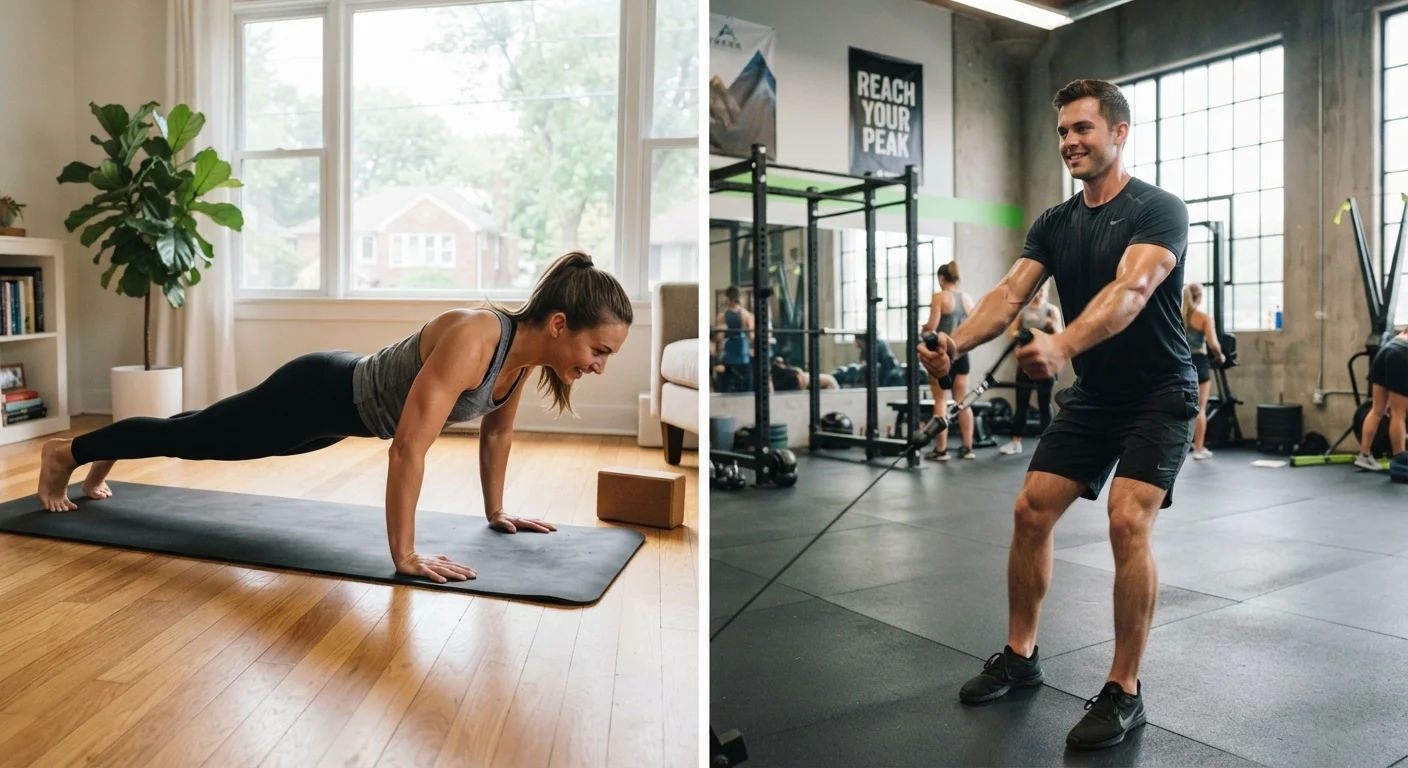
Bodyweight training uses your own body as resistance - think push-ups, squats, lunges, planks, and pull-ups. No equipment is required, making it one of the most accessible forms of exercise available. Gym equipment training, by contrast, uses external tools - free weights, cable machines, resistance machines, and barbells - to create and precisely control load.
Both approaches target the same physiological goal: applying enough mechanical stress to muscle tissue to stimulate adaptation. Where they differ is in how that stress is applied, and how easy it is to increase it over time. For a deeper look at what drives effective exercise regardless of method, see the core principles behind any effective workout.
Head-to-Head: Key Differences at a Glance
The comparison below covers the criteria that matter most to beginners making an informed choice about where and how to start training.
| Bodyweight Training | Gym Equipment Training | |
|---|---|---|
| Cost | Free - no equipment needed | Membership or purchase fees apply |
| Accessibility | Anywhere, anytime | Requires gym or home setup |
| Progressive Overload | Possible but less intuitive | Easy, measurable, and precise |
| Skill Curve | Low - familiar movements | Moderate - form coaching helpful |
| Muscle Targeting | Full-body, movement-based | Isolated or compound options |
| Injury Risk | Lower at beginner level | Higher under heavy loads without guidance |
| Long-Term Ceiling | High with advanced progressions | Very high with structured programming |
As the table shows, no single approach dominates across every dimension. Your living situation, budget, and fitness goals all influence which makes more sense right now.
The Case for Bodyweight Training
Bodyweight movements are highly functional - they train your body to move as a coordinated unit rather than isolating individual muscles. Exercises like squats, push-ups, and hip hinges mirror real-world movement patterns, which makes them especially valuable for beginners building a foundation.
The barrier to entry is minimal: no commute, no membership fee, no waiting for equipment. Research consistently shows that bodyweight resistance is sufficient to build muscle and improve strength, particularly for those new to exercise. The challenge comes when you need to progressively overload - continually increasing the challenge to keep improving. Without added weight, this requires modifying leverage (e.g., elevated push-ups to archer push-ups) or volume, which can feel less intuitive.
Mastering Progression Without Weights
To continue challenging your muscles with bodyweight-only training, focus on changing leverage and tempo rather than volume alone. Slowing the lowering phase of a push-up or squat (a technique called a 'tempo' or 'eccentric' focus) significantly increases muscular demand without adding any equipment. Unilateral movements - single-leg squats, single-arm rows using a table - are another effective step up in difficulty.
The Case for Gym Equipment
The primary advantage of gym equipment is measurable progression. Adding 2.5 lbs to a barbell or moving a pin one slot on a weight stack is a concrete, trackable form of progressive overload - one of the most well-supported drivers of strength and muscle development in exercise science.
Equipment also allows more targeted training. If you want to address a specific weakness or follow a structured program, machines and free weights give you precise control. That said, equipment variety can be overwhelming for beginners, and poor form under heavy load carries real injury risk. Comparing compound and isolation exercises can help you understand which equipment-based movements to prioritize first.
Form Before Load - Always
One of the most common mistakes beginners make with gym equipment is increasing weight before mastering movement mechanics. Adding load to a poorly executed squat or row amplifies the risk of joint strain or injury. Spend your first sessions learning the movement pattern with minimal or no added weight. If a gym has trainers available for an introductory session, that guidance is worth taking up.
Making the Choice That Fits Your Life
The most effective training method is the one you'll actually do consistently. If gym access is inconvenient or cost-prohibitive, a well-structured bodyweight routine will outperform a gym membership you rarely use. If you thrive on measurable progress and structured sessions, equipment training may sustain your motivation more reliably.
For those interested in exploring a middle path, resistance bands and free weights each build strength differently - and simple tools like resistance bands can bridge the gap between pure bodyweight work and a full gym setup. Adults over 50 may find additional context in strength training after 50, which addresses how to apply these principles safely at any fitness level.
This article is for general informational purposes only and does not constitute medical or personal fitness advice. Consult a qualified healthcare or fitness professional before beginning any new exercise program, especially if you have an existing health condition or injury.