

Key Takeaways
Our Verdict
For most beginners, compound movements deliver greater overall strength, coordination, and efficiency gains per session. Isolation exercises earn a place in a well-rounded routine - especially once foundational movement patterns are established - but they should not replace compound work as the programme's core.
| Best for | Recommended |
|---|---|
| Beginners building an efficient, time-effective routine | Compound Movements |
| Addressing a specific muscle weakness or imbalance | Isolation Exercises |
| Older adults or those with mobility considerations | Compound Movements (modified) with professional guidance |
| Intermediate trainees refining physique or correcting gaps | Compound + Isolation combined |
Understanding the Two Approaches
Before comparing them, it helps to know exactly what each term means.
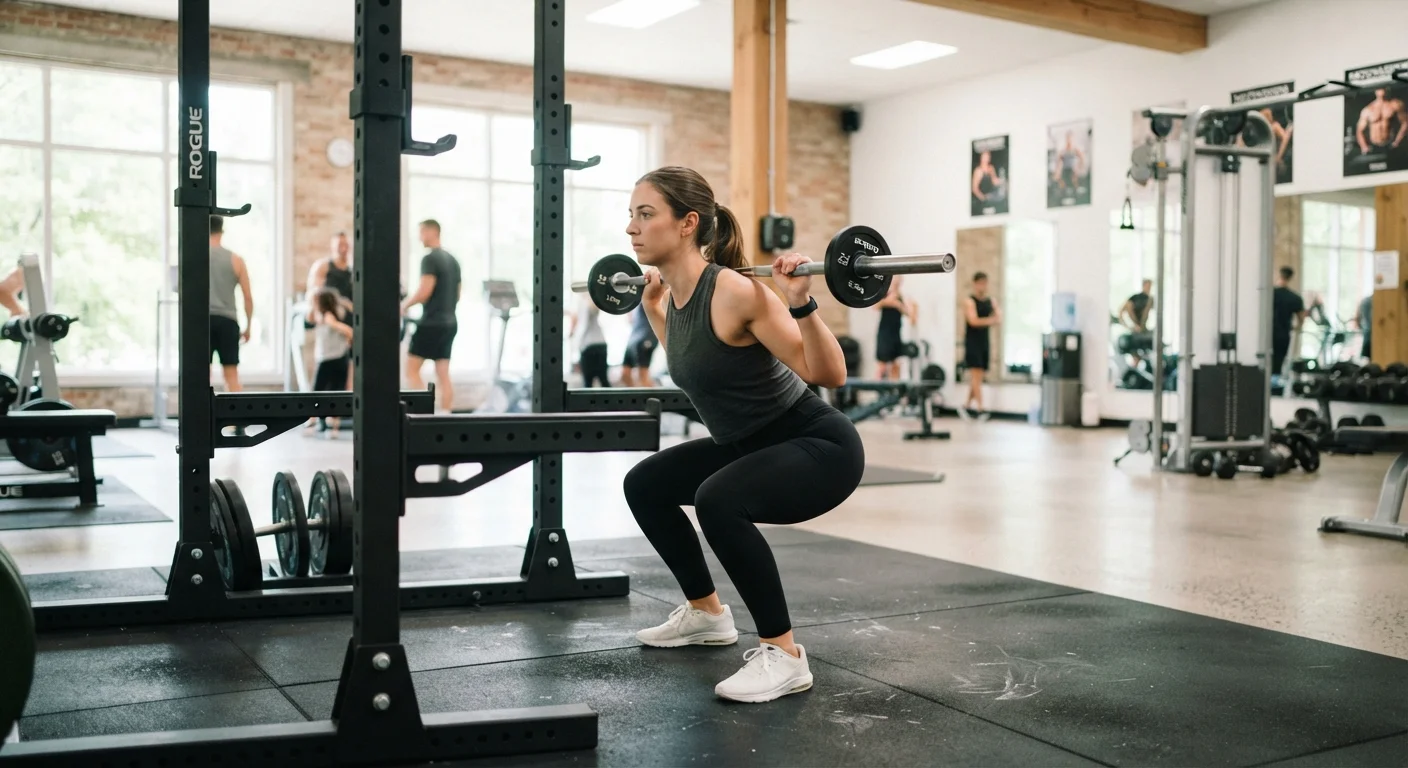
Compound movements are exercises that engage two or more joints and recruit multiple muscle groups at the same time. A squat, for example, involves your hips, knees, and ankles while activating your quads, glutes, hamstrings, and core. Other classic examples include deadlifts, push-ups, rows, and overhead presses.
Isolation exercises move through a single joint and target one primary muscle. A bicep curl bends only the elbow, focusing almost exclusively on the biceps brachii. Leg extensions, tricep kickbacks, and lateral raises follow the same principle.
Neither approach is inherently dangerous or wrong. The question is which one serves a beginner's goals most effectively - and why. See our guide to the building blocks of any effective workout for the broader principles that frame this choice.
How They Compare Across Key Criteria
Looking at both approaches side by side makes the differences - and the overlaps - much clearer.
| Compound Movements | Isolation Exercises | |
|---|---|---|
| Muscles worked per exercise | Multiple groups simultaneously | One primary muscle |
| Time efficiency | High - more work per set | Low - one muscle at a time |
| Technical difficulty | Moderate to high | Generally low |
| Functional carryover | Strong - mirrors real movement | Limited to targeted muscle |
| Beginner priority | Core of any programme | Supplementary role |
| Injury rehabilitation use | Varies by movement | Commonly used for targeted rehab |
| Calorie expenditure per session | Higher overall | Lower overall |
As the table shows, compound movements score particularly well on time efficiency and functional carryover. Isolation exercises offer precision that compounds simply cannot replicate, which is why they retain value - just not as a starting point for most beginners.
Why Compound Movements Take Priority for Beginners
Exercise science consistently supports leading beginner programmes with compound movements, and the reasoning is straightforward.
- Greater hormonal response. Multi-joint exercises under meaningful load stimulate a stronger anabolic (muscle-building) hormonal response than single-joint work, partly because they involve more total muscle tissue.
- Faster strength transfer. Compound lifts build what researchers call functional strength - the ability to produce force in real-world movement patterns like pushing, pulling, hinging, and carrying.
- More efficient sessions. A squat trains quads, glutes, hamstrings, and core simultaneously. Replicating that with isolation exercises would take four or five separate movements.
- Motor learning. Beginners benefit enormously from practising full-body coordination. Compound movements demand it from the very first rep, accelerating neurological adaptation.
Start Light, Learn the Pattern
Before adding any significant load to a compound lift, practise the movement with bodyweight or a very light implement. The goal in early sessions is to train your nervous system to coordinate the pattern correctly - not to test your strength limits. A few weeks of deliberate technique work pays dividends in both safety and long-term progress.
It is worth reviewing preparation essentials before starting any new programme - particularly if you have existing health considerations that may affect which movements are appropriate for you.
Where Isolation Exercises Still Add Value
Dismissing isolation exercises entirely would be a mistake. They serve a genuine purpose when used strategically.
If a beginner notices that one muscle consistently lags - for instance, weak hip abductors causing the knees to cave during squats - a targeted isolation exercise can address that imbalance directly. Similarly, rehabilitation programmes often rely on isolation work to safely load a healing structure without stressing surrounding tissue.
Isolation exercises also carry a lower technical barrier. A seated leg extension involves far less coordination than a barbell squat, which can make it a confidence-builder for someone who feels intimidated by complex movement patterns.
Do Not Skip Professional Guidance
Compound movements performed with poor form can place excessive stress on the spine, knees, and shoulders. If you are new to resistance training, at least a session or two with a certified personal trainer or physical therapist can be invaluable for establishing safe technique. This is especially important for individuals with a history of joint pain, back problems, or balance difficulties.
For older adults beginning to exercise, building a gradual weekly movement routine is especially important. Some compound movements may require modification based on joint health or balance - always consult a qualified professional before programming these independently.
Building a Beginner-Friendly Routine
A practical beginner approach keeps compound movements at the core and uses isolation exercises selectively.
- Choose three to four compound movements that cover the fundamental patterns: a squat, a hip hinge (like a Romanian deadlift), a push (push-up or press), and a pull (row or lat pulldown).
- Prioritise learning correct form before increasing load. Poor mechanics under heavy weight is a common cause of early injury.
- Add one or two isolation exercises only after your compound work is complete - and only if a specific weakness warrants it.
- Pair your training with appropriate recovery. The right stretching strategy before and after sessions supports both performance and injury prevention.
If you are exploring options without gym equipment, our comparison of bodyweight and gym-based training can help you adapt these principles to your available resources.
This article is for general informational purposes only and does not constitute medical or professional fitness advice. Always consult a qualified healthcare or exercise professional before beginning a new exercise programme, particularly if you have any existing health conditions or injuries.