

Key Takeaways
Option A
Static Stretching
The hold-and-release approach for flexibility and cooldown.
Best for: Best for post-workout cooldowns, improving long-term flexibility, and calming the body after exercise.
Option B
Dynamic Stretching
The movement-based warm-up that primes muscles for action.
Best for: Best for pre-workout preparation, activating muscles, and gradually raising heart rate before training.
If you are warming up before a run, strength session, or sport
Dynamic Stretching
Dynamic movements increase blood flow, activate the neuromuscular system, and prepare joints for load - all without the temporary strength reduction associated with prolonged static holds.
If you are cooling down after a workout and want to improve flexibility
Static Stretching
Muscles are warm and pliable post-exercise, making this the ideal window to hold stretches that lengthen tissue and support long-term range of motion.
If you stretch before bed to support relaxation and joint health
Static Stretching
Slow, held stretches activate the parasympathetic nervous system, aiding relaxation. See why evening stretching benefits more than sleep for more.
If you are older or have limited mobility and need a safe movement warm-up
Dynamic Stretching
Gentle controlled movements such as leg swings or arm circles improve joint lubrication and range of motion without the risk of overstretching cold muscles.
What Each Type of Stretching Actually Does
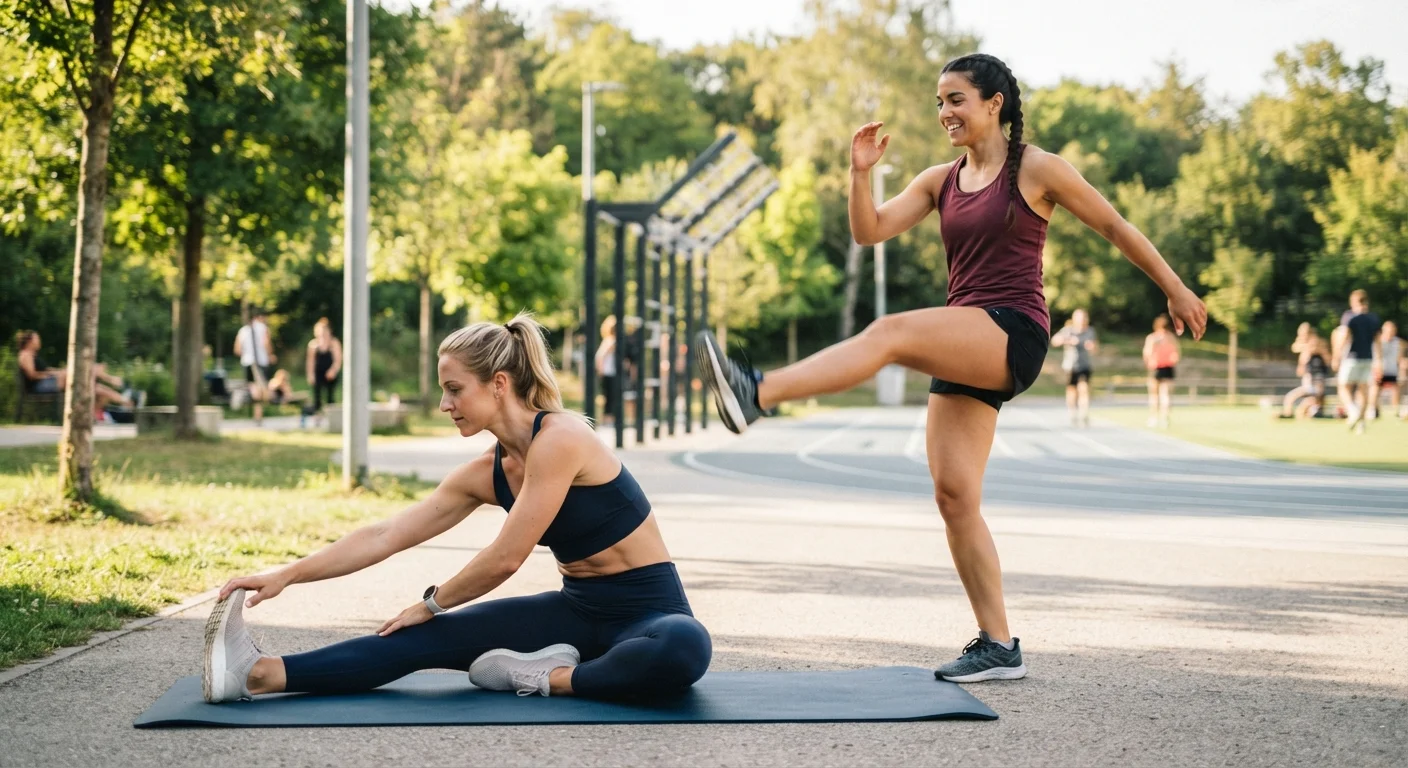
Static stretching involves moving a muscle to the end of its comfortable range and holding that position - typically for 20 to 60 seconds. Think of a seated hamstring stretch or a standing quad hold. The goal is to lengthen the muscle tissue over time and signal the nervous system to release tension.
Dynamic stretching uses controlled, repetitive movements that take joints and muscles through their full range of motion without holding at the end point. Leg swings, hip circles, arm rotations, and walking lunges are common examples. Rather than lengthening tissue, dynamic stretching wakes muscles up, increases blood flow, and rehearses the movement patterns you are about to perform.
Both approaches improve mobility, but they do so through different mechanisms and at different points in a workout. Understanding that difference is the foundation of smarter training.
| Criterion | Static Stretching | Dynamic Stretching |
|---|---|---|
| Movement type | Held, stationary position | Controlled, repetitive movement |
| Best timing | Post-workout cooldown | Pre-workout warm-up |
| Primary benefit | Improves long-term flexibility | Activates muscles, raises heart rate |
| Effect on performance | May temporarily reduce power if held pre-workout | Maintains or slightly improves performance |
| Skill level required | Beginner-friendly | Beginner-friendly with guidance |
| Examples | Hamstring hold, quad stretch, chest opener | Leg swings, arm circles, walking lunges |
The Timing Problem Most People Get Wrong
For years, static stretching before exercise was standard advice. The science has shifted. Multiple studies now indicate that prolonged static holds before activity can temporarily reduce muscle strength, power output, and reaction time - effects that can last up to an hour. This is sometimes called stretch-induced strength loss, and while it is modest, it is worth avoiding before a strength session, sprint, or competitive event.
Dynamic stretching before a workout, on the other hand, has been shown to maintain or even slightly improve athletic performance when compared to no warm-up at all. It raises muscle temperature, increases heart rate gradually, and activates the motor pathways you will use during exercise.
~5-8%
Reduction in muscle strength from pre-workout static stretching
A 2013 meta-analysis published in the Scandinavian Journal of Medicine & Science in Sports found prolonged static stretching reduced muscle strength by around 5-8% when performed immediately before exercise.
30-60 sec
Optimal static stretch hold duration for flexibility gains
Exercise science guidelines generally recommend holding static stretches for 30 to 60 seconds per muscle group to achieve meaningful flexibility improvements over time.
The practical rule is simple: dynamic before, static after. Reserve long static holds for your post-workout cooldown, when muscles are already warm and receptive to lengthening. For more on how movement fits into recovery, see active recovery vs. complete rest.
Building Both Into Your Routine
A well-structured session looks like this:
- Pre-workout (5-10 minutes): Dynamic stretching targeting the muscle groups you will use. If you are squatting, include hip circles, leg swings, and bodyweight squats. If you are running, try high knees, ankle rolls, and walking lunges.
- Post-workout (5-10 minutes): Static stretching for the muscles worked. Hold each stretch for 30-60 seconds without bouncing, breathing steadily throughout.
This structure applies regardless of your fitness level. Beginners, in particular, benefit from the consistency - it builds the habit of warming up and cooling down, which pays dividends in long-term joint health and recovery. If you are exploring how workout type affects your approach, compound movements vs. isolation exercises is a useful next read.
For those with existing injuries, joint conditions, or mobility limitations, the type of stretching and the intensity should be guided by a qualified physiotherapist or healthcare provider rather than general recommendations. This is especially relevant for older adults - seated vs. standing exercise formats may also help you find an approach that matches your current ability.
This article is for general informational purposes only and does not constitute medical advice. Always consult a qualified healthcare professional before beginning a new exercise or stretching routine, particularly if you have an existing injury or health condition.