

Key Takeaways
The FITT Principle
FITT stands for Frequency, Intensity, Time, and Type - four variables that define how any workout is structured. By adjusting these four factors, you can design a training plan suited to your current fitness level and goals. It's a foundational framework used by exercise professionals and beginners alike to make workouts deliberate rather than random.
FITT is recognized by the American College of Sports Medicine (ACSM) as a core framework for exercise prescription across cardiorespiratory, muscular, and flexibility training.
What Is the FITT Principle?
When people start exercising without a clear structure, workouts can feel either too easy, too hard, or just aimless. The FITT principle solves this by giving you four concrete variables to work with. Understanding each one - and how they interact - is the first step to training with intention.
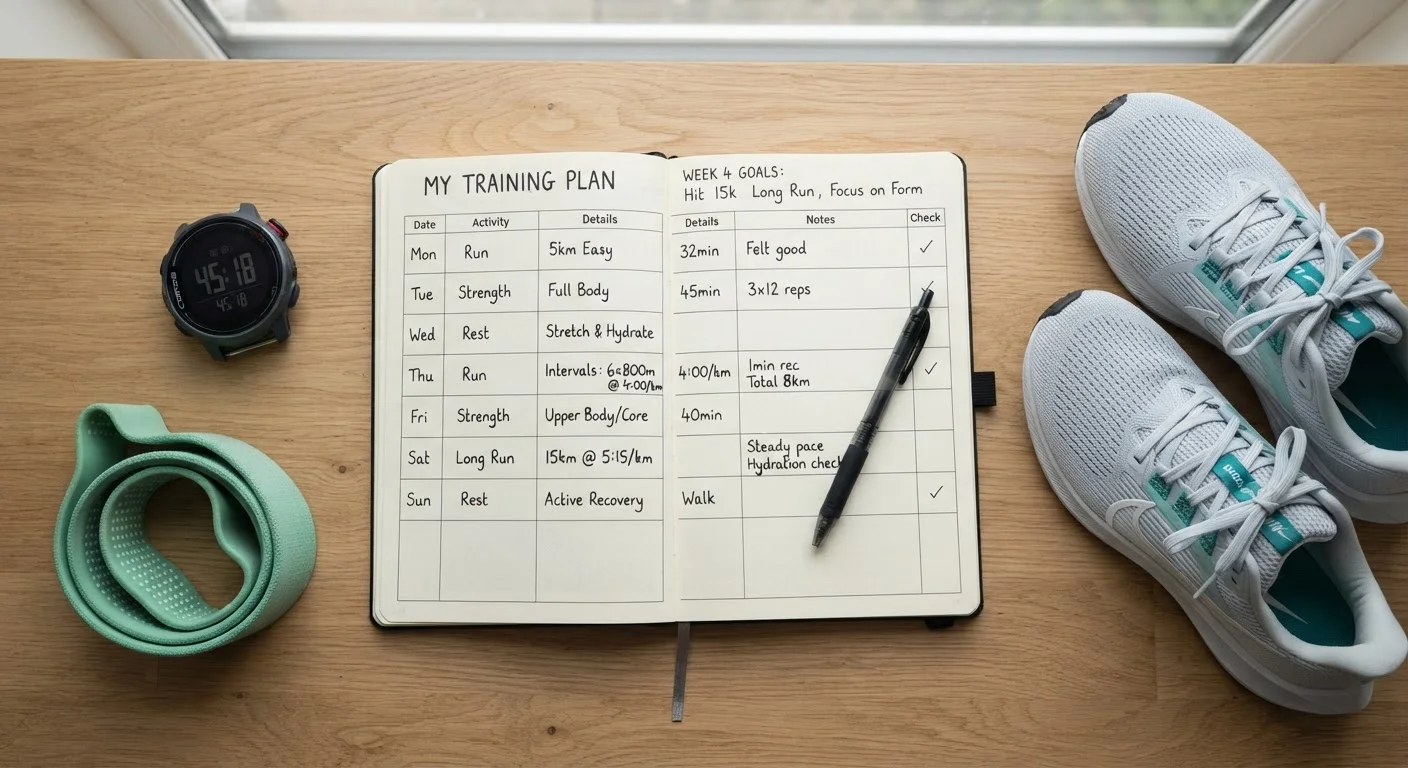
Think of FITT as the blueprint behind any good workout plan. Before diving into the individual components, it helps to see the full picture: these four elements work together, and changing any one of them shifts the overall challenge and purpose of your training. For a broader look at how these fit into effective exercise design, see our article on the building blocks of any effective workout.
150 min
Weekly moderate-intensity activity recommended
According to the U.S. Department of Health and Human Services Physical Activity Guidelines for Americans.
2-3x
Recommended strength training sessions per week
The American College of Sports Medicine recommends working major muscle groups at least two days per week for general health.
Breaking Down Each FITT Variable
Frequency - How Often You Exercise
Frequency refers to how many days per week you work out. For beginners, two to three sessions per week is a reasonable starting point. This allows enough stimulus for adaptation while providing time for recovery - a factor just as important as the workouts themselves.
Intensity - How Hard You Work
Intensity describes the effort level of your exercise. For cardio, this might be measured by heart rate or perceived exertion (how hard it feels on a scale of 1-10). For strength training, intensity typically relates to the amount of weight used relative to your maximum effort. Moderate intensity is generally recommended for beginners - you should be able to speak in short sentences but not hold a full conversation comfortably.
Time - How Long Each Session Lasts
Time (or duration) refers to how long each workout lasts. A 20-minute session can be just as effective as a longer one, depending on the intensity and your goals. Most general health guidelines suggest aiming for at least 150 minutes of moderate-intensity activity spread across the week - but starting smaller and building up is perfectly appropriate.
Type - What Kind of Exercise You Do
Type refers to the mode of exercise: walking, cycling, swimming, resistance training, yoga, and so on. Matching the type to your goals matters. Cardio supports heart health and endurance; strength training builds muscle and bone density; flexibility work improves mobility and reduces injury risk. A well-rounded plan typically includes more than one type.
Start With One Variable at a Time
When adjusting your FITT plan, change only one variable at a time - not all four at once. For example, add a day before you also increase intensity and duration. This makes it much easier to gauge how your body is responding and avoids the risk of overdoing it.
How to Use FITT to Progress Over Time
One of FITT's greatest strengths is that it gives you clear levers to pull when a routine stops feeling challenging. If your current walks feel easy, you might increase frequency (add a day), intensity (pick up the pace), time (extend the session), or type (swap one walk for a light jog). Changing one variable at a time makes it easier to track what's working.
This gradual adjustment is the foundation of progressive overload - the principle that drives long-term fitness gains. Without intentional progression, your body adapts to the same stimulus and results plateau.
If you're just getting started, our first month of exercise framework walks through how to apply FITT week by week in a practical, beginner-friendly way. And for help balancing workouts with adequate rest, our guide on building a weekly training schedule covers how to structure recovery alongside training.
“Exercise is medicine - but like any medicine, the dose matters. The FITT principle is how we determine the right dose for each individual.”
— American College of Sports Medicine, Leading authority on exercise science and physical activity guidelines
This article is for informational purposes only and is not a substitute for professional medical or fitness advice. If you have a health condition or are new to exercise, consult a qualified healthcare provider before beginning a new training program.