

Key Takeaways
Option A
Joint Pain
Pain originating at the connection points between bones.
Best for: Recognizing discomfort that is deep, localized to a specific joint, and may involve swelling or stiffness.
Option B
Muscle Pain
Pain arising from the soft tissue that powers movement.
Best for: Identifying aching, tender, or fatigued feelings spread across a muscle group after activity or strain.
If your pain appeared the morning after a new workout or heavy lifting
Muscle Pain
Delayed onset muscle soreness (DOMS) is a classic post-exercise response. It typically peaks 24-48 hours after activity and resolves with gentle movement and rest.
If you notice stiffness and swelling centered on a specific joint like the knee or knuckle
Joint Pain
Localized joint swelling, warmth, or reduced range of motion suggests involvement of joint structures and merits a conversation with a healthcare provider.
If widespread aching affects multiple muscle groups with no clear physical trigger
Muscle Pain
Diffuse muscle pain without a recent activity cause may suggest conditions like viral illness or fibromyalgia - both worth discussing with a doctor.
If pain has persisted for more than a few weeks and affects daily function
Joint Pain
Chronic or progressive joint discomfort may point to conditions like osteoarthritis or rheumatoid arthritis, which benefit from early clinical assessment.
Why the Distinction Matters
Pain in the limbs, back, or extremities is one of the most common reasons people seek medical guidance - yet it is also one of the most misinterpreted. Describing pain simply as "my knee hurts" or "my shoulder is sore" does not reveal whether the problem originates in the joint itself or in the surrounding muscle tissue. That distinction shapes everything from likely causes to appropriate next steps.
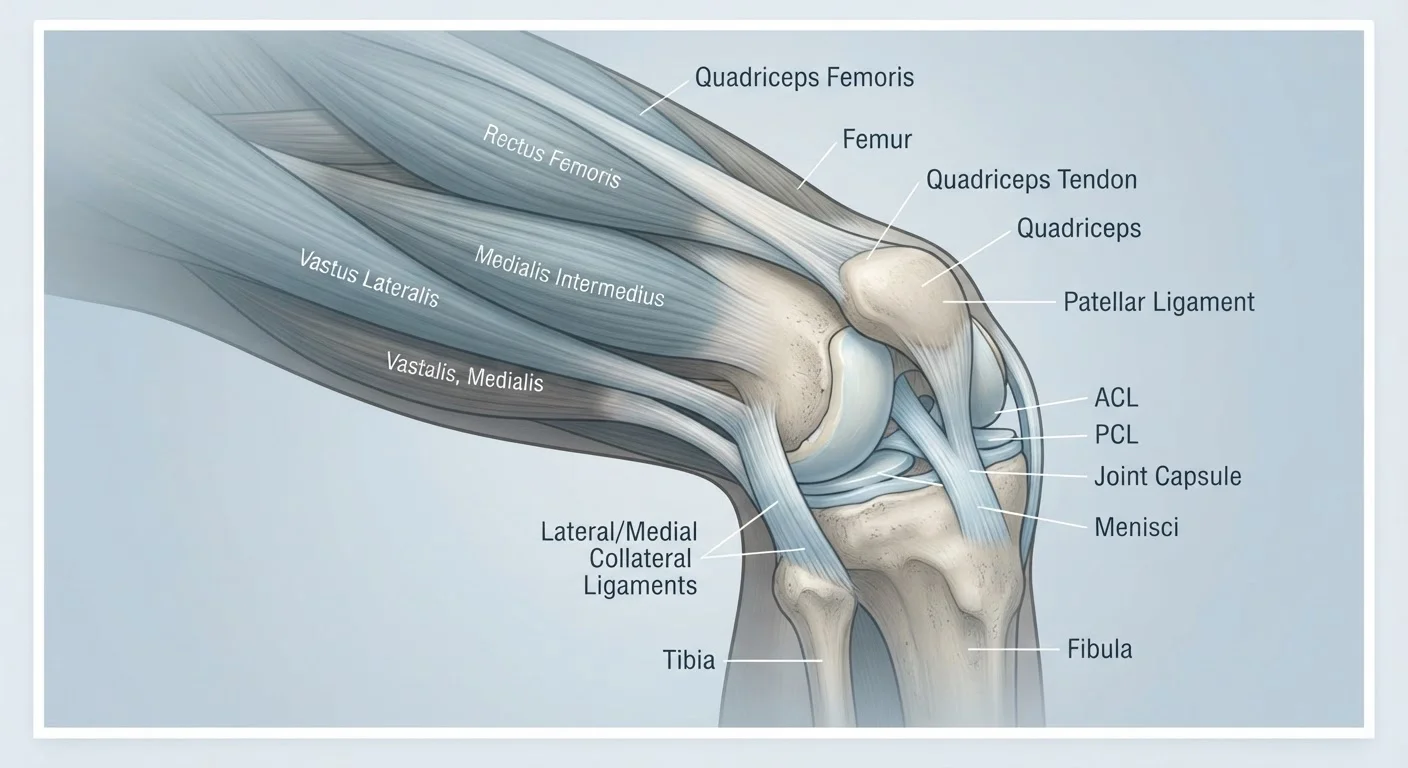
Joint pain (also called arthralgia) involves the structures within or immediately surrounding a joint - the cartilage, synovial membrane, ligaments, or joint capsule. Muscle pain (myalgia) involves the contractile fibers and connective tissue that enable movement. While both can produce an aching, limiting sensation, their origins, patterns, and implications differ in meaningful ways. Much like fatigue differs from ordinary tiredness, two experiences that feel alike are not always the same thing.
This article is for general informational purposes only and is not a substitute for professional medical advice. Always consult a qualified healthcare provider for any symptoms that concern you.
Characteristics of Joint Pain
Joint pain tends to feel deep, fixed, and specific - concentrated in a discrete anatomical location such as the hip socket, the base of a finger, or the inner aspect of the knee. Common features include:
- Morning stiffness that eases gradually with movement - a hallmark of inflammatory joint conditions
- Swelling or warmth around the joint, sometimes visible to the eye
- Reduced range of motion - the joint resists being moved through its full arc
- A clicking, grinding, or locking sensation during movement, which can reflect cartilage changes
Joint pain has a wide range of causes. Acute injuries - such as a sprained ligament - can inflame joint structures suddenly. Chronic conditions like osteoarthritis involve gradual cartilage breakdown, while autoimmune conditions such as rheumatoid arthritis trigger inflammatory episodes. For a detailed comparison of those two conditions, see rheumatoid arthritis vs. osteoarthritis.
| Criterion | Joint Pain | Muscle Pain |
|---|---|---|
| Primary location | Within or around a specific joint | Across muscle belly or fiber groups |
| Quality of sensation | Deep, fixed, often sharp or aching | Diffuse, tender, tight or burning |
| Swelling / warmth | Common in inflammatory forms | Less common; mild in acute strains |
| Morning stiffness | Frequent; eases with movement | Possible after exertion; eases quickly |
| Relation to activity | May worsen with sustained use | Often triggered or follows exertion |
| Typical duration | Can be chronic or recurrent | Often resolves in days with rest |
| Common causes | Arthritis, injury, infection, autoimmune | Overuse, strain, illness, fibromyalgia |
Characteristics of Muscle Pain
Muscle pain typically presents as a broader, more diffuse ache that is tender to the touch and worsens when the affected muscle is contracted or stretched. Key features include:
- Onset linked to activity - appearing hours after exertion (delayed onset muscle soreness, or DOMS) or immediately after an acute strain
- Tenderness on palpation - pressing the muscle produces discomfort directly at the site
- A pulling or tight quality, often described as a cramp or knot
- Improvement with gentle movement and warmth - unlike many joint conditions, which worsen with prolonged use
Common triggers include overexertion, dehydration, poor posture, and minor tears from unaccustomed activity. Some systemic causes - infections, certain medications, and conditions like fibromyalgia - can produce widespread myalgia without a mechanical trigger. If persistent muscle pain is affecting your ability to stay active, low-impact movement strategies may be worth exploring once a healthcare provider has assessed the cause.
~1 in 3
U.S. adults reporting joint pain
The CDC has reported that roughly one in three U.S. adults experiences joint pain at some point, with the knee, shoulder, and hip being the most commonly affected sites.
Up to 48 hrs
Typical DOMS peak onset after exercise
Research consistently shows that delayed onset muscle soreness peaks between 24 and 48 hours after unaccustomed physical activity in most individuals.
When to Seek Professional Evaluation
Neither joint pain nor muscle pain should be dismissed simply because it feels manageable in the moment. Certain signs indicate that a clinical assessment is important:
- Pain that persists beyond two to three weeks without improvement
- Significant swelling, redness, or heat around a joint
- Pain severe enough to limit normal daily activity or disturb sleep
- Pain accompanied by fever, unexplained fatigue, or unintended weight loss
- Recurrent episodes affecting the same joint or muscle group
It is also worth noting that joint and muscle pain can co-exist - arthritis, for example, often involves both joint inflammation and secondary muscle guarding. A healthcare provider can order imaging, blood work, or physical assessments to differentiate the source accurately. Self-diagnosis based on location alone is unreliable. Just as chest tightness requires careful interpretation, pain that seems straightforward may benefit from professional context.
Pain Location Can Be Misleading
The area where pain is felt does not always correspond precisely to its source. Referred pain - discomfort felt at a distance from its origin - occurs in both joint and muscle conditions. For example, hip joint problems frequently manifest as pain in the thigh or groin, while muscle trigger points in the back can produce symptoms in the leg. This is one reason that accurate diagnosis depends on a thorough clinical evaluation rather than location alone.