

Key Takeaways
Why Movement Still Matters When Your Body Pushes Back
For people managing chronic pain, joint conditions, fatigue-related illnesses, or reduced mobility, the conventional message to "just move more" can feel tone-deaf - even discouraging. But the evidence consistently supports a more nuanced truth: gentle, well-chosen movement often helps manage the very conditions that make moving feel hard.
Research on conditions like osteoarthritis, fibromyalgia, and chronic fatigue syndrome suggests that carefully paced physical activity - not rest alone - tends to support better symptom management over time. The key is selecting movements that work with your body's current capacity, not against it.
The activities listed below are designed to be low-impact, adaptable, and accessible - not a push to do more than you're able. If you're building from a sedentary baseline, this guide to starting from scratch may also help frame your approach. For those interested specifically in protecting joints over time, daily habits that support long-term joint health is worth reading alongside this article.
A Note on Chronic Conditions and Medical Guidance
If you are managing a diagnosed condition - such as rheumatoid arthritis, fibromyalgia, chronic fatigue syndrome, heart disease, or significant osteoporosis - individual guidance from a physiotherapist or your healthcare provider is important before beginning any new movement routine. What is appropriate varies considerably based on the nature and severity of your condition, and a qualified professional can help you identify safe starting points and progression strategies.
Low-Impact Activities Worth Trying
Seated stretching and range-of-motion exercises
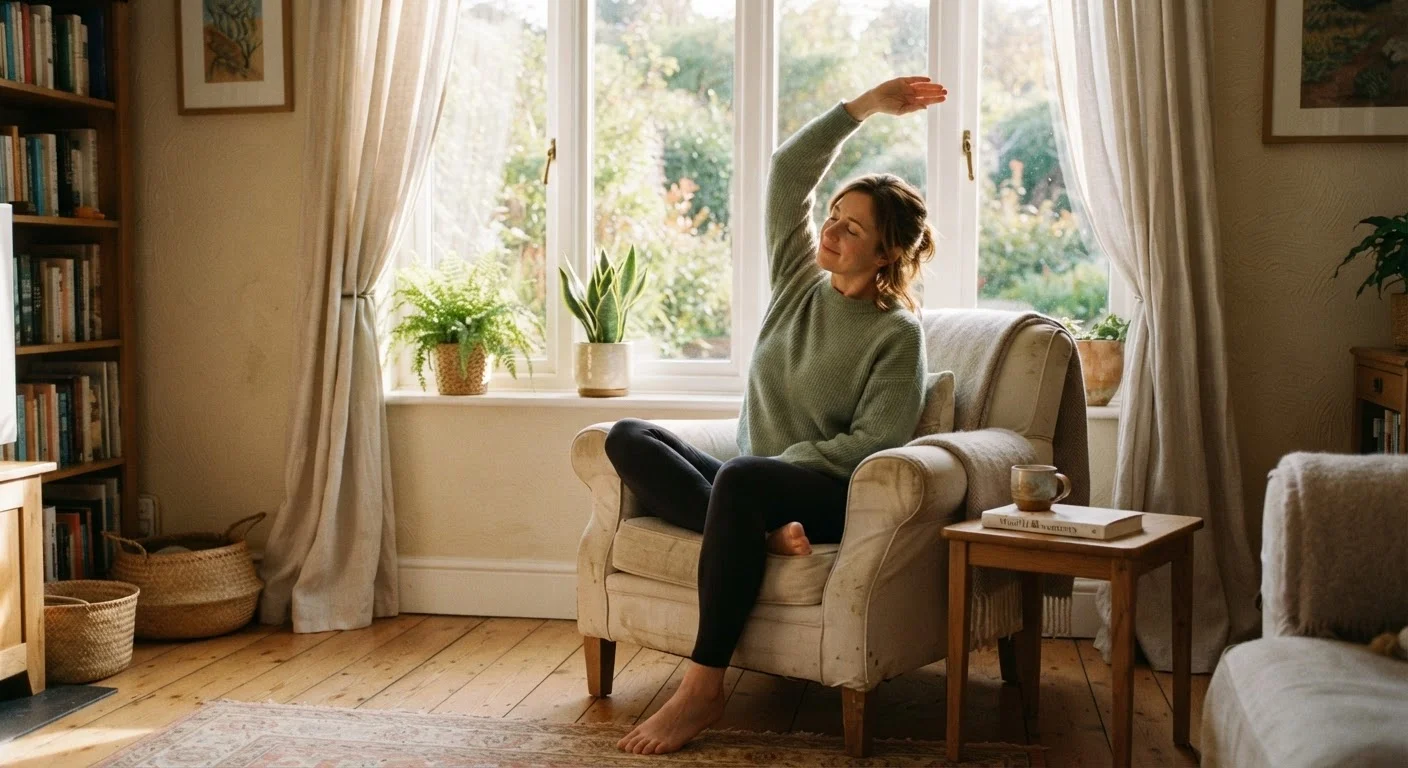
A chair provides enough support to make gentle movement safe and manageable for most people. Simple seated routines - neck tilts, shoulder rolls, wrist circles, ankle pumps - maintain joint mobility without placing load on vulnerable areas. These exercises are particularly useful first thing in the morning when stiffness tends to peak.
Range-of-motion work doesn't build muscle, but it reduces stiffness, maintains circulation, and signals to your nervous system that movement is safe - which can be especially valuable when pain has caused you to guard and restrict motion over time.
Seated stretching reduces stiffness and supports circulation without stressing vulnerable joints.
Water-based movement and aquatic exercise
Water supports roughly 90% of your body weight when you're submerged to the neck, dramatically reducing the load on joints while still allowing meaningful resistance exercise. Swimming, water walking, and aqua aerobics classes are widely used in rehabilitation settings precisely because they let people move with far less pain than land-based alternatives.
Pool-based exercise may be especially worthwhile for people managing osteoarthritis, lower back pain, or significant deconditioning. For a detailed comparison of water versus land-based approaches, aquatic versus land-based training for joint health covers the trade-offs clearly.
Water supports most of your body weight, making pool-based movement one of the gentlest options available.
Gentle yoga or chair yoga
Yoga adapted for limited mobility focuses on slow, deliberate movement coordinated with breath. Chair yoga specifically modifies traditional poses so they can be performed while seated or using the chair as support - eliminating the need to get up and down from a floor mat, which is a significant barrier for many people with joint or balance issues.
Beyond flexibility, breath-focused practices like yoga can activate the parasympathetic nervous system, which may reduce the perception of pain and help manage fatigue-related tension. Look for classes specifically designed for limited mobility or chronic conditions rather than general-fitness yoga.
Chair yoga builds flexibility and calm without requiring floor-level movement or balance demands.
Short, paced walking with rest intervals
Walking is one of the most researched forms of low-impact activity, associated with improvements in cardiovascular health, mood, and joint function. For people with fatigue or pain, the strategy of pacing - alternating movement with planned rest - allows walking without the boom-and-bust cycle of overdoing it and then crashing.
Start with distances and durations that feel easy rather than ambitious. A five-minute walk that you can repeat the next day is more valuable than a thirty-minute walk that exhausts you for two days. Even incidental walking - to the mailbox, around the house - counts. Everyday activity without a gym explores how these small steps add up meaningfully over time.
Paced walking with planned rest breaks helps people with fatigue stay consistent without triggering crashes.
Diaphragmatic breathing and breathwork practices
Structured breathing exercises - particularly diaphragmatic (belly) breathing - are often overlooked as a form of physical practice, but they actively engage the core muscles, support lymphatic circulation, and regulate the autonomic nervous system. For people with severe fatigue or significant pain flares, breathwork may be the only form of movement that is accessible on bad days.
Practices such as box breathing (inhale for four counts, hold for four, exhale for four, hold for four) or slow diaphragmatic breathing have documented effects on stress responses and can serve as a bridge to more active movement on better days. No equipment is required, and it can be done lying down.
On difficult days, structured breathwork is a legitimate and accessible form of gentle physical practice.
Tai chi and qigong
Tai chi and qigong are slow, flowing movement practices rooted in traditional Chinese health traditions. Their clinical value has been studied in Western medical research, with evidence suggesting benefits for balance, fall prevention, and pain management in older adults and people with arthritis. Movements are performed standing or seated, are low-impact by design, and emphasize body awareness over exertion.
Community classes for beginners are widely available, and many instructors have experience adapting practices for people with limited mobility. These disciplines are particularly relevant for anyone interested in active aging - maintaining strength, balance, and coordination with age.
Tai chi improves balance and pain management through slow, deliberate movement that places minimal joint stress.
Start Smaller Than You Think You Should
A common mistake when returning to movement after pain or illness is starting at a level that feels "reasonable" - which is often still too much. Begin with less than you think you need, observe how your body responds over 24-48 hours, and increase gradually from there. This approach, sometimes called the "start low, go slow" principle, is widely recommended in rehabilitation settings and helps prevent discouraging setbacks.
Building a Routine That Lasts
Sustainability matters more than intensity here. Even two to five minutes of gentle movement several times a day can accumulate meaningful benefit. Consider linking movement to existing habits - a few shoulder rolls after waking, a short walk after lunch, ankle circles during a TV show - rather than scheduling formal "exercise sessions" that feel burdensome.
If space is a constraint, small-space movement strategies can help you find options that fit your environment. On days when even light activity feels like too much, understanding the difference between active recovery and complete rest can help you make a more informed call for your body.
The goal isn't performance - it's consistency, comfort, and gradually expanding what feels possible. Work with your healthcare provider or a qualified physiotherapist to tailor any activity plan to your specific needs.
This article is for general informational purposes only and does not constitute medical advice. Always consult a qualified healthcare professional before starting or changing a physical activity routine, particularly if you are managing a health condition, chronic pain, or significant fatigue.