

Key Takeaways
Swollen Lymph Nodes
Swollen lymph nodes - medically called lymphadenopathy - occur when the small, bean-shaped glands of the lymphatic system enlarge in response to infection, injury, or another health trigger. These nodes act as filtering stations, trapping bacteria, viruses, and abnormal cells so immune cells can neutralize them. Swelling is typically a sign that the immune system is actively working, not a condition in itself.
Lymphadenopathy is classified as localized (affecting nodes in one region) or generalized (affecting multiple regions), a distinction that helps clinicians narrow down underlying causes.
What Lymph Nodes Actually Do
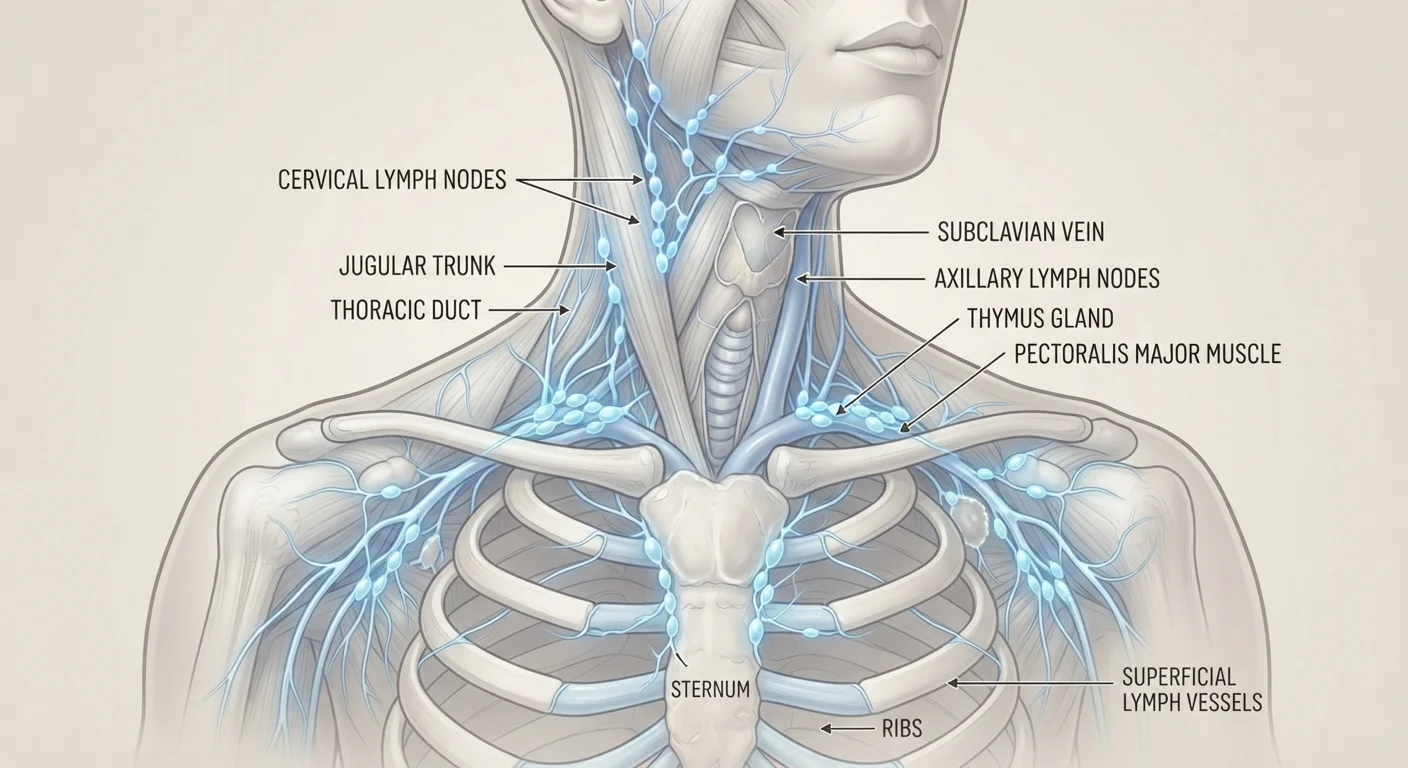
The body contains roughly 600 lymph nodes distributed throughout the lymphatic system - a network of vessels, tissues, and organs that works alongside the circulatory system. Lymph nodes are positioned strategically along these vessels, acting as checkpoints where a fluid called lymph is filtered before returning to the bloodstream.
Inside each node, specialized immune cells - including lymphocytes and macrophages - examine the filtered fluid for signs of threats: viruses, bacteria, cell debris, or abnormal cells. When a threat is detected, these cells mount a defense response. The increased activity causes the node to swell, sometimes becoming noticeable or tender.
Understanding this role reframes what swollen nodes actually signal. They are not malfunctioning - they are working. To understand the broader immune cascade that includes lymph node activity, see how the immune system responds to infection step by step.
Lymph Nodes vs. Other Lumps
Not every lump near common lymph node locations is a lymph node. Cysts, lipomas (benign fatty deposits), and other structures can also produce noticeable bumps under the skin. A healthcare provider can distinguish these through physical examination and, when needed, imaging or biopsy. Self-diagnosis of lumps is not reliable.
Common Causes of Lymph Node Swelling
The location of swollen nodes often points toward the source of the trigger, because each group of nodes drains a specific body region.
- Neck nodes: Most commonly enlarge in response to upper respiratory infections, throat infections, ear infections, or dental issues - conditions affecting the head and neck.
- Armpit (axillary) nodes: May react to infections or injuries in the arm, hand, or chest wall.
- Groin (inguinal) nodes: Typically respond to infections in the leg, foot, or lower abdominal area, including sexually transmitted infections.
Beyond localized infections, other triggers include:
- Viral illnesses such as influenza, mononucleosis, or COVID-19
- Bacterial infections, including strep throat or skin infections (cellulitis)
- Autoimmune conditions such as lupus or rheumatoid arthritis
- Certain medications, including some anticonvulsants and antibiotics
- Less commonly, lymphoma, leukemia, or metastatic cancer
~600
Lymph nodes in the human body
According to standard human anatomy references, the lymphatic system contains approximately 600 lymph nodes distributed throughout the body.
>90%
Cases caused by benign conditions
Clinical literature consistently notes that the large majority of lymphadenopathy cases in primary care settings are attributable to benign, self-limiting causes such as infection.
4-6 weeks
Threshold for clinical evaluation
Most clinical guidelines recommend formal evaluation when lymph node swelling persists beyond four to six weeks without an identified cause.
Signs That Deserve Medical Attention
Most swollen lymph nodes resolve without treatment once the underlying cause clears. However, certain features distinguish routine immune activity from changes that warrant professional evaluation.
Keep Track of Changes Over Time
If you notice swollen lymph nodes, note when they appeared, whether they are growing, and any accompanying symptoms such as fever or fatigue. This information is highly useful for a healthcare provider during an evaluation and can help distinguish a routine immune response from something that warrants further investigation.
Characteristics that should prompt a medical visit include:
- Swelling lasting longer than four to six weeks
- Nodes that continue to enlarge rather than stabilize or shrink
- Nodes that feel hard, rubbery, or fixed (not movable when pressed)
- Swelling in multiple regions of the body simultaneously
- Accompanying symptoms such as unexplained weight loss, drenching night sweats, or persistent fever
Swollen nodes alongside fever represent the body deploying multiple defense mechanisms at once - a pattern discussed in detail in our article on what fever during infection actually means. The combination of these signals helps clinicians assess what the immune system is responding to.
This article provides general health information for educational purposes only and is not a substitute for professional medical advice, diagnosis, or treatment. Always consult a qualified healthcare provider about any symptoms or health concerns.