

Key Takeaways
Where the Phrase Comes From - and Why It Resonates
"Use it or lose it" captures something real: the brain is not static. Neuroscience confirms that mental engagement supports the neural connections underlying memory, reasoning, and processing speed. This principle, grounded in the concept of cognitive reserve - the brain's accumulated resilience against age-related change - has been studied for decades.
But a phrase that fits on a bumper sticker rarely fits the complexity of human biology. The idea has drifted from a useful heuristic into a set of claims it cannot fully support. Understanding the distinction empowers you to invest your time and energy in habits that actually work.
For a plain-language introduction to the full spectrum of brain-protective behaviors, see our guide to brain-healthy living after 65.
Myths vs. Facts: What the Science Actually Says
Below, we address the most persistent misconceptions surrounding mental engagement and cognitive aging - each paired with what current evidence more accurately shows.
Myth
Doing crossword puzzles and brain-training games will keep dementia at bay.
Fact
Brain-training tasks improve performance on those specific tasks, but evidence that they reduce dementia risk in the general population is limited and contested.
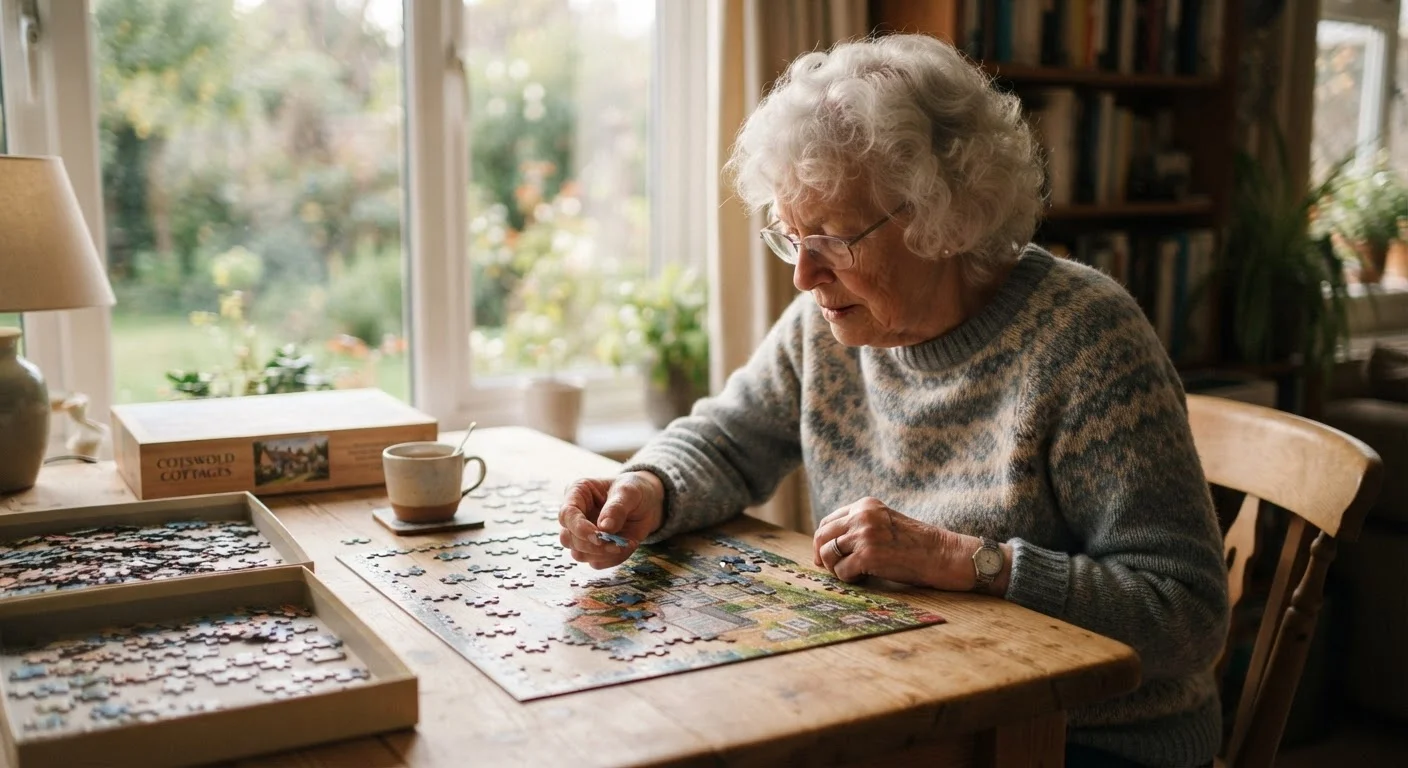
The commercial brain-training industry has made bold claims that have not held up to rigorous scientific scrutiny. A major review by leading cognitive scientists concluded that gains from brain-training programs are largely confined to the trained task itself - a phenomenon called near transfer. The broader leap to real-world memory or dementia prevention (far transfer) has not been reliably demonstrated. Crosswords are still enjoyable and may contribute to overall cognitive engagement, but they are not a proven shield against Alzheimer's disease or other dementias.
Myth
Mental activity is the most important thing older adults can do for their brain.
Fact
Physical exercise has at least as strong - and in many studies, stronger - evidence for protecting cognitive function than mental activity alone.
Multiple large-scale studies and meta-analyses have found that regular aerobic exercise is associated with increased hippocampal volume, better memory scores, and reduced dementia risk. The mechanisms are well-supported: exercise improves cerebral blood flow, reduces inflammation, and promotes growth factors that support neuron health. Mental engagement is valuable, but ranking it above physical activity misreads the weight of evidence. A physically active lifestyle is one of the most evidence-backed cognitive investments available to older adults.
Myth
If you keep your mind active enough, you can prevent cognitive decline entirely.
Fact
Cognitive engagement may delay the onset or slow the progression of decline, but it cannot fully prevent age-related brain changes or neurodegenerative disease.
Aging affects the brain through multiple biological pathways - vascular changes, protein accumulation, inflammation - that no amount of puzzle-solving neutralizes. The concept of cognitive reserve does suggest that people with higher levels of lifelong mental engagement may tolerate more brain pathology before symptoms appear, but this is delay and resilience, not immunity. Framing brain health as fully controllable by individual behavior can create false reassurance or unwarranted guilt, neither of which serves older adults well.
Myth
Repeating the same mentally engaging activities - like a daily newspaper crossword - is enough to keep the brain sharp.
Fact
Once a skill is mastered, repeating it delivers diminishing cognitive returns. Novelty and challenge are the active ingredients.
The brain adapts to familiar tasks. When you first tackle a challenging crossword, you recruit significant cognitive effort. After years of the same style of puzzle, the task has become largely automatic - less cognitively demanding than it once was. Research on learning and brain plasticity consistently highlights novelty as a key driver of neural engagement. Rotating activities, learning new skills, and stepping outside intellectual comfort zones are more likely to sustain meaningful cognitive stimulation than well-worn routines.
Myth
Social activity doesn't count as 'using' your brain - it's just leisure.
Fact
Social engagement is one of the most cognitively demanding and brain-protective activities available, with strong epidemiological support.
Navigating conversation, reading emotional cues, recalling shared history, and managing the give-and-take of relationships all demand sophisticated brain function. Longitudinal studies have repeatedly linked social isolation to accelerated cognitive decline and elevated dementia risk, independent of other health factors. Staying socially connected - through community groups, family ties, volunteering, or group movement activities - is a legitimate and powerful form of cognitive engagement, not a consolation prize.
What Actually Moves the Needle on Brain Health
45%
Dementia cases potentially attributable to modifiable risk factors
A 2020 Lancet Commission report estimated that approximately 40-45% of dementia cases worldwide may be linked to a combination of modifiable lifestyle and health factors, underscoring the importance of a broad, multi-factor approach.
2×
Dementia risk increase associated with social isolation
Research published in peer-reviewed aging journals has found that chronic social isolation is associated with roughly double the risk of dementia compared to socially engaged individuals, independent of depression and physical health.
~30%
Lower dementia risk linked to regular physical activity
Multiple meta-analyses of prospective studies suggest that consistent aerobic exercise is associated with approximately a 28-35% lower risk of cognitive decline and dementia in older adults.
The strongest evidence for protecting cognitive function across the lifespan points to a cluster of lifestyle factors - not any single intervention. Aerobic exercise, in particular, has consistently demonstrated effects on brain volume, blood flow, and memory performance in older adults. Physical exercise and brain health explores this evidence in detail.
Sleep is another under-appreciated pillar. During deep sleep, the brain clears metabolic waste products, including proteins associated with Alzheimer's disease. Chronic poor sleep is linked to measurably faster cognitive decline. Diet and social connection round out the picture - isolation, for instance, is associated with cognitive risk comparable to several established medical risk factors.
The takeaway: mental stimulation belongs in your toolkit, but it works best as one strand in a wider web. Explore how everyday behaviors contribute to a sharper brain in our article on daily habits that support a sharper brain in later life.
No Single Habit Protects the Brain Alone
The most durable approach to cognitive health combines regular physical activity, quality sleep, social connection, a balanced diet, and ongoing mental challenge. Over-relying on any one element - including mental stimulation - while neglecting the others leaves significant protective potential on the table. If you have concerns about your cognitive health, speak with a qualified healthcare provider rather than self-managing through lifestyle changes alone.
Making Cognitive Engagement Work for You
The goal isn't to log hours on a brain-training app - it's to build a lifestyle where your mind is genuinely stretched. Seek activities that are novel (new to you), effortful (requiring real concentration), and meaningful (connected to something you care about). Learning a language, picking up an instrument, taking a class in an unfamiliar subject, or joining a community group all fit this profile.
Consistency matters more than intensity. Short, regular engagement with challenging material outperforms occasional marathon sessions. Why consistency matters more than intensity in aging well explains the underlying principle across multiple domains of healthy aging.
For the most comprehensive framework - integrating sleep, movement, diet, mental engagement, and social ties - see Keeping Your Mind Sharp: A Whole-Life Approach to Cognitive Wellness.
This article is for general informational and educational purposes only and is not a substitute for professional medical advice. Always consult a qualified healthcare provider regarding any questions about your cognitive health or personal medical decisions.