

Key Takeaways
The Sleep-Anxiety Cycle
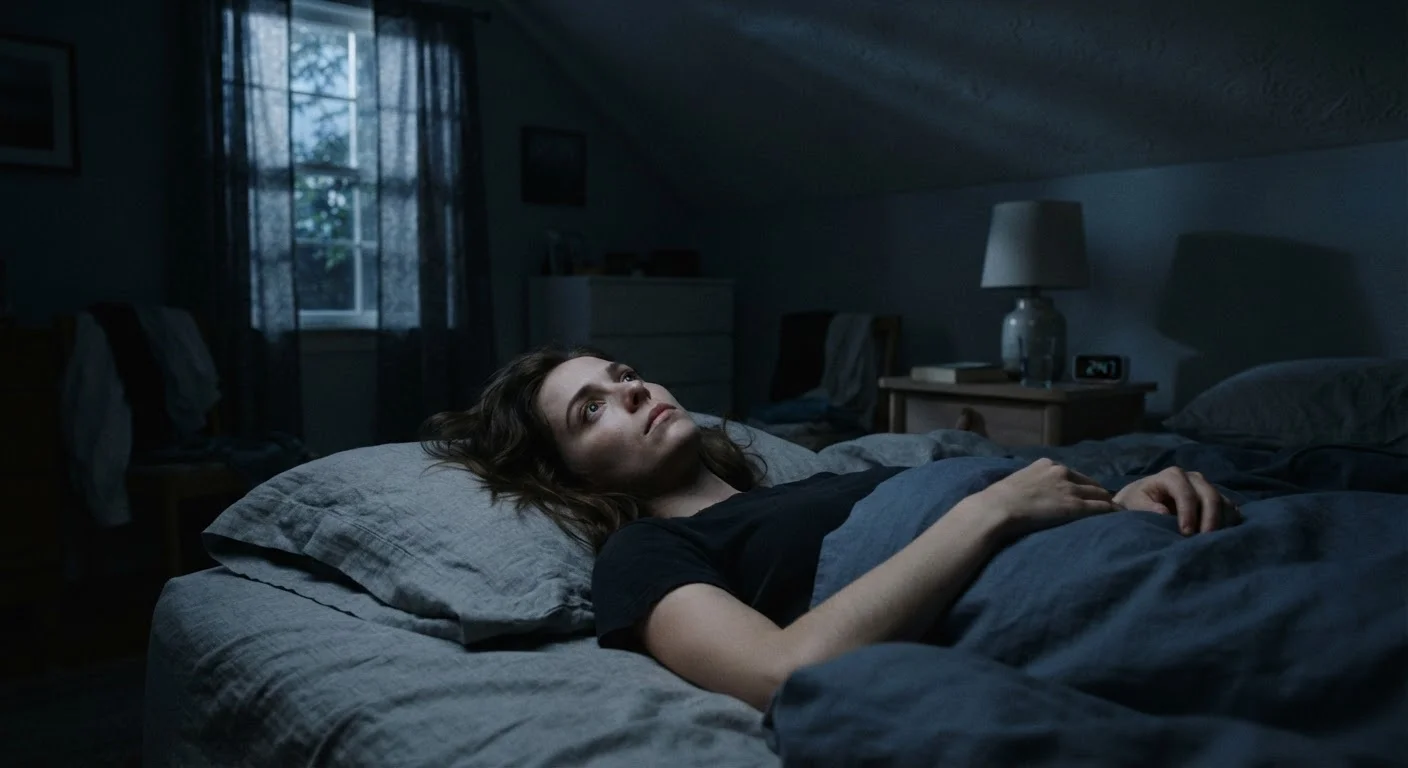
The sleep-anxiety cycle describes how poor sleep and anxiety reinforce each other in a continuous loop. Anxiety can make it harder to fall or stay asleep, while insufficient sleep lowers the brain's ability to regulate worry and fear. This bidirectional relationship means each problem can sustain and intensify the other over time.
Research in sleep medicine and clinical psychology identifies disrupted REM sleep as one key mechanism - poor REM sleep impairs emotional processing, which may amplify anxious thinking the following day.
Why These Two Problems Are Deeply Intertwined
Most people assume that anxiety causes sleep problems - and they're right. But the relationship runs in both directions, and that's the part many people miss. Poor sleep doesn't just follow from anxiety; it actively feeds it back, creating a loop that can be difficult to identify and even harder to exit without understanding how it works.
When you experience anxiety, your brain signals the release of stress hormones like cortisol and adrenaline. These chemicals heighten alertness - useful if you're facing a genuine threat, but counterproductive at 11 p.m. when your body needs to wind down. The result is a mind that races, a body that stays tense, and sleep that remains frustratingly out of reach.
Then comes the other direction. After a night of fragmented or insufficient sleep, the brain's prefrontal cortex - responsible for rational thinking and emotional regulation - is less effective. Studies using brain imaging have found that the amygdala, which processes threat and fear, becomes significantly more reactive after sleep loss. In plain terms: you're neurologically primed to feel more anxious the next day, even if nothing in your circumstances has changed.
Both Conditions Often Appear Together
Anxiety disorders and insomnia frequently co-occur, and clinicians are increasingly trained to screen for both when a patient presents with either problem. Treating only one without considering the other can limit how much improvement is possible. If you're experiencing persistent symptoms of either, speaking with a healthcare professional is the most reliable path to understanding what's driving your specific experience.
To learn more about how sleep shapes your overall stress response, see our article on sleep and stress resilience.
What Happens in the Brain and Body
Understanding the biology makes the cycle feel less mysterious. The autonomic nervous system has two key modes: the sympathetic system (fight-or-flight) and the parasympathetic system (rest-and-digest). Anxiety keeps the sympathetic system engaged, suppressing the natural drop in core body temperature and heart rate that signals the brain it's time for sleep.
REM sleep - the stage associated with dreaming - plays a particularly important role in emotional processing. During REM, the brain essentially re-runs emotionally charged experiences with lower levels of stress neurochemicals, which researchers believe helps reduce the emotional weight of difficult memories over time. When anxiety repeatedly disrupts REM sleep, this processing is cut short, potentially leaving distressing thoughts feeling just as raw the next day.
~50%
Adults with anxiety disorders reporting insomnia
Research published in sleep and psychiatry literature consistently finds that roughly half of people with anxiety disorders also meet criteria for clinically significant insomnia.
17-35%
Increased amygdala reactivity after sleep loss
Neuroimaging studies, including work by sleep researcher Matthew Walker and colleagues, have found substantially heightened threat responses in sleep-deprived brains compared to well-rested ones.
7-9 hours
Recommended nightly sleep for adults
The American Academy of Sleep Medicine and Sleep Research Society recommend 7-9 hours of sleep per night for adults to support physical and mental health.
It's also worth noting that anxiety disorders are among the most common mental health conditions associated with chronic insomnia. The two conditions co-occur frequently enough that clinicians often assess for both when a patient presents with either one.
If you're curious about how anxiety and everyday stress differ from each other - which matters for understanding what you're dealing with - our article on anxiety versus stress breaks it down clearly.
Practical Ways to Start Interrupting the Cycle
The encouraging news is that because sleep and anxiety are interconnected, improving one tends to benefit the other. You don't necessarily need to solve both simultaneously to begin feeling relief.
Try a Consistent Wind-Down Routine
Setting aside 20-30 minutes before bed for calming, non-stimulating activities - such as light reading, gentle stretching, or slow breathing - can signal to your nervous system that it's safe to transition toward sleep. Consistency matters more than perfection; even a simple, repeated routine helps train the body's internal clock over time.
Consistent sleep timing is one of the most evidence-supported behavioral changes available. Going to bed and waking at the same time each day - including weekends - helps stabilize the circadian rhythm, making it easier for the body to prepare for sleep at the right time.
Cognitive Behavioral Therapy for Insomnia (CBT-I) is a structured psychological approach that addresses both the thought patterns driving anxiety at night and the behaviors that disrupt sleep. It has strong research support and is often recommended as a first-line treatment by sleep specialists, sometimes before medication is considered.
Reducing avoidance behaviors is another important piece. When anxiety feels overwhelming, the instinct is often to avoid situations or thoughts that trigger it. But as explained in our piece on why avoidance often worsens anxiety, this typically strengthens the anxiety response over time rather than diminishing it.
Simple wind-down practices - limiting screens before bed, keeping the bedroom cool and dark, and avoiding stimulants in the evening - are not cures, but they reduce the physiological barriers to sleep onset. If you'd like to explore the broader picture of sleep and recovery, the Sleep & Recovery hub offers a range of practical guidance.
This article is for informational purposes only and is not a substitute for professional medical or mental health advice. If sleep problems or anxiety are significantly affecting your daily life, please consult a qualified healthcare provider.