

Key Takeaways
Option A
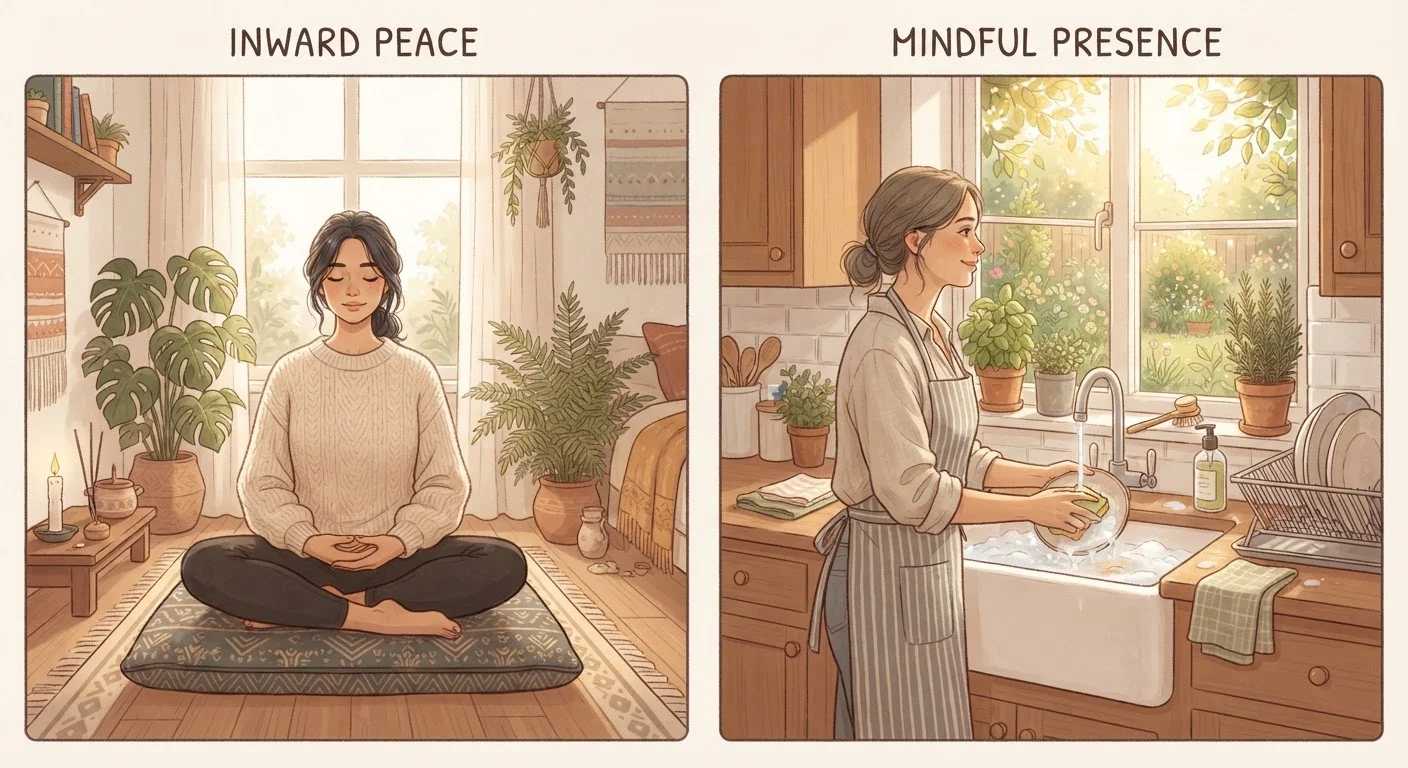
Formal Mindfulness Practice
The dedicated, structured approach to training attention.
Best for: People who thrive with routine and want to build a strong foundational awareness skill.
Option B
Informal Mindfulness Practice
The accessible, woven-into-life approach to present-moment awareness.
Best for: People with busy schedules who want to integrate mindfulness without carving out extra time.
If you want a structured foundation for deeper focus and stress reduction
Formal Mindfulness Practice
Dedicated sessions build the concentration skills that make all other mindfulness moments more effective. Even 10 minutes daily can strengthen attentional control over time.
If a packed schedule makes dedicated sit-down sessions feel impossible
Informal Mindfulness Practice
Everyday activities - eating, walking, washing up - become genuine practice with a small shift in attention, requiring no extra time in your day.
If you want a well-rounded, sustainable long-term practice
Formal Mindfulness Practice
Pairing short formal sessions with informal moments throughout the day tends to produce the most consistent and lasting benefits according to mindfulness research.
If you're exploring mindfulness for the first time and feel intimidated
Informal Mindfulness Practice
Starting with familiar daily activities lowers the barrier to entry considerably, making it easier to experience mindfulness without pressure or special equipment.
What Sets These Two Approaches Apart
Mindfulness, at its core, is the practice of paying deliberate, non-judgmental attention to the present moment. But the way you cultivate that attention varies significantly - and understanding the difference can help you find an approach that genuinely fits your life rather than one you abandon after a week.
Formal practice involves intentionally setting aside time to do nothing but practice mindfulness. Sitting meditation, body scans, breath-focused exercises, and guided mindfulness sessions all fall here. You stop other activities and direct your full attention inward.
Informal practice means bringing that same quality of present-moment awareness to things you're already doing - drinking your morning coffee, commuting, folding laundry, or having a conversation. There is no separate time block; instead, ordinary moments become the practice itself.
Neither is a shortcut for the other. Think of formal practice as the gym workout and informal practice as staying active throughout your day - both contribute to overall fitness, and ideally you do some of each. See how everyday moments can become genuine practice for concrete examples.
| Criterion | Formal Practice | Informal Practice |
|---|---|---|
| Time required | Dedicated daily sessions (e.g., 10-30 min) | No extra time; uses existing activities |
| Structure | High - clear start, end, and method | Low - flexible, context-dependent |
| Depth of focus | High - distraction-minimised environment | Variable - distractions naturally present |
| Barrier to entry | Moderate - requires habit formation | Low - attaches to existing routines |
| Evidence base | Extensive (MBSR, MBCT research) | Supported as a complement to formal practice |
| Best mood fit | Works well with consistency and routine | Works well with busy or variable schedules |
Weighing the Real-World Trade-Offs
Formal sessions offer something informal practice struggles to match: concentrated repetition. Research in mindfulness-based interventions - including Mindfulness-Based Stress Reduction (MBSR) and Mindfulness-Based Cognitive Therapy (MBCT) - typically involves structured daily sessions. That focused time appears to build the attentional and emotional regulation skills that transfer into the rest of your day.
The honest challenge? Life competes. Work, caregiving, and fatigue make regular sit-down sessions difficult for many people, and missing sessions can trigger guilt that undermines motivation altogether. A balanced look at what formal practice does and doesn't offer can help set realistic expectations.
Informal practice sidesteps the scheduling problem almost entirely. Because it attaches to existing habits - brushing teeth, eating lunch, walking between meetings - it requires no new time commitment. The trade-off is that attention can slide more easily without the clear container of a dedicated session. Distractions are literally built into the context.
8 weeks
Duration of standard MBSR programmes
The widely studied Mindfulness-Based Stress Reduction programme developed by Jon Kabat-Zinn at UMass Medical School involves 8 weeks of structured formal practice sessions.
~10 min
Daily formal practice shown to improve attention
Studies published in journals such as Psychological Science suggest even brief daily formal mindfulness sessions - around 10 minutes - can produce measurable improvements in attentional control.
For many people, the most workable path is a hybrid: a brief formal practice several times a week as an anchor, supplemented by informal moments throughout each day. This approach is explored further in our guide to building a daily mindfulness habit that actually sticks.
Choosing What Works - and Keeping It Going
There is no universally correct answer here. The best practice is one you actually return to. A few questions worth sitting with:
- Do you have 5-15 minutes you can reliably protect most days? If yes, a short formal practice is very achievable and offers compounding benefits.
- Does your day already feel impossibly full? Starting with informal moments - a mindful cup of tea, three intentional breaths before a meeting - can build genuine awareness without adding pressure.
- Do you respond well to structure, or does rigidity tend to trigger avoidance? Honest self-knowledge matters more than following a prescribed protocol.
It's also worth remembering that what works now may not work forever. Life seasons change - a formal practice that thrives during a quieter period might need to shift toward informal methods during an intense stretch, and that flexibility is healthy, not a failure.
For those committed to the long haul, evidence-informed approaches to sustaining mindfulness over months and years can be a valuable next step. And if you're exploring how mindfulness fits into broader stress management, the Anxiety & Stress hub offers additional context.
This article is for informational purposes only and does not constitute medical advice. If you are experiencing significant distress, anxiety, or mental health difficulties, please consult a qualified healthcare professional.