

Key Takeaways
Why Small Spaces Don't Have to Mean Less Movement
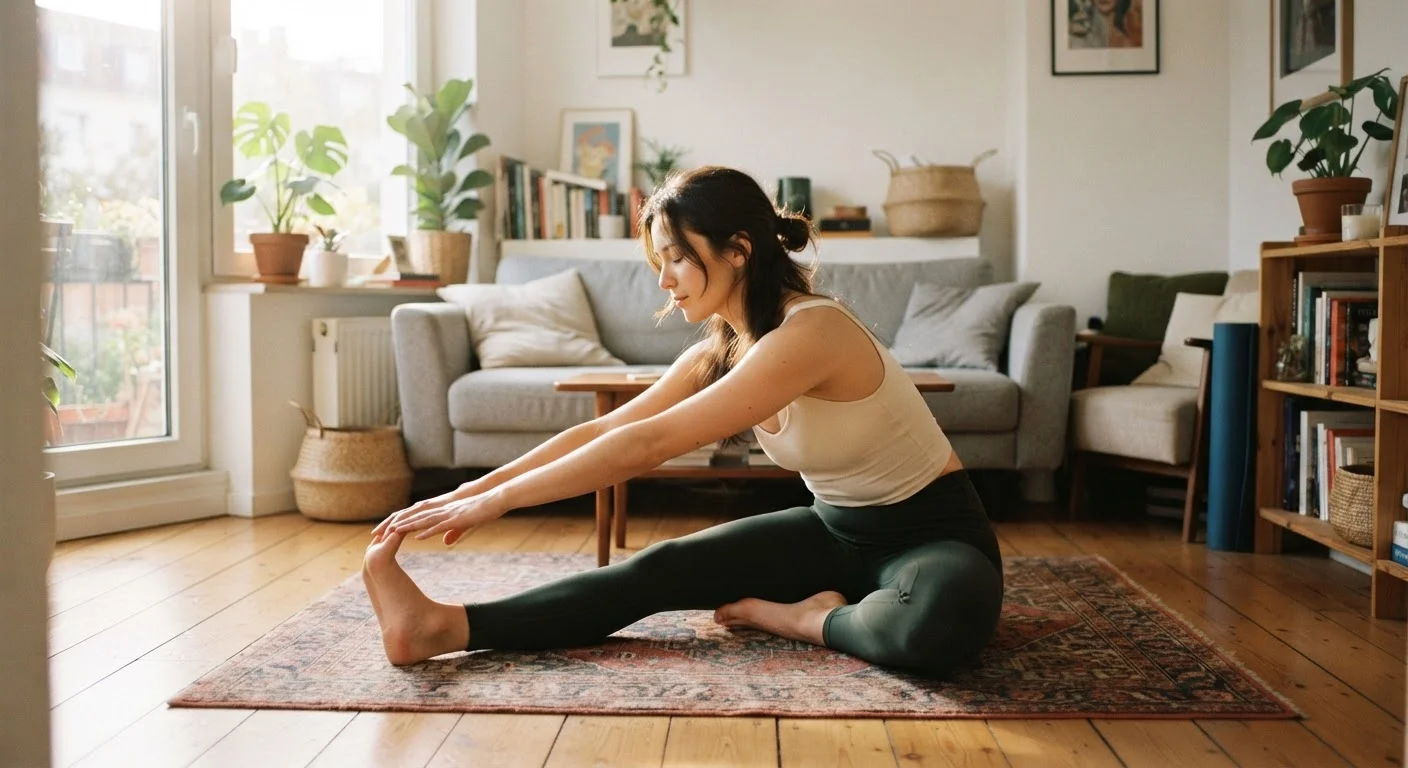
Living in a flat, a studio, or a compact urban home presents real challenges for staying active - but physical space is rarely the true limiting factor. Research consistently shows that brief, regular bouts of movement throughout the day can accumulate into meaningful health benefits, even when those sessions happen in a hallway or beside the sofa.
The key shift is reframing what "exercise" looks like. It doesn't require a dedicated room, equipment, or unbroken blocks of time. Movement is simply the act of using your body - and that's possible in almost any environment. For those looking to build consistency from scratch, our guide on starting an active lifestyle after a sedentary period offers a practical starting point.
Fitting Movement Into the Fabric of Your Day
One of the most effective strategies for small-space movers is habit anchoring - attaching a brief movement routine to something you already do every day. Boiling the kettle, waiting for a video call to connect, or finishing a meal are all natural entry points for a few minutes of purposeful movement.
This approach is explored in depth in our piece on turning everyday tasks into opportunities to move more, which shows how incidental activity quietly adds up. Pairing movement with existing cues removes the need for willpower - the habit slot is already built into your day.
What the Evidence Supports
Health guidelines from bodies such as the World Health Organization note that any amount of physical activity is better than none, and that activity can be accumulated in short sessions rather than in one continuous block. For people managing physical discomfort alongside limited space, low-impact movement options offer accessible routes that don't require outdoor terrain or equipment.
“Physical activity doesn't have to be complicated or involve the gym. Even a small amount of movement - done consistently - makes a real difference to health and wellbeing.”
— World Health Organization, Global public health authority on physical activity guidelines
As you build confidence with indoor movement, consider how your living environment itself can support activity - small adjustments described in our article on building an active home environment can quietly shift your defaults toward more movement.
This article is for general informational purposes only and is not a substitute for professional medical advice. If you have any health conditions or concerns, consult a qualified healthcare professional before starting or changing a physical activity routine.