

Key Takeaways
Sleep Cycles
A sleep cycle is a repeating sequence of sleep stages your brain moves through during the night. Each full cycle lasts roughly 90 minutes and includes both lighter stages and deeper stages - culminating in REM (Rapid Eye Movement) sleep. Most adults complete four to six of these cycles per night, and the balance of stages within each cycle shifts as the night progresses.
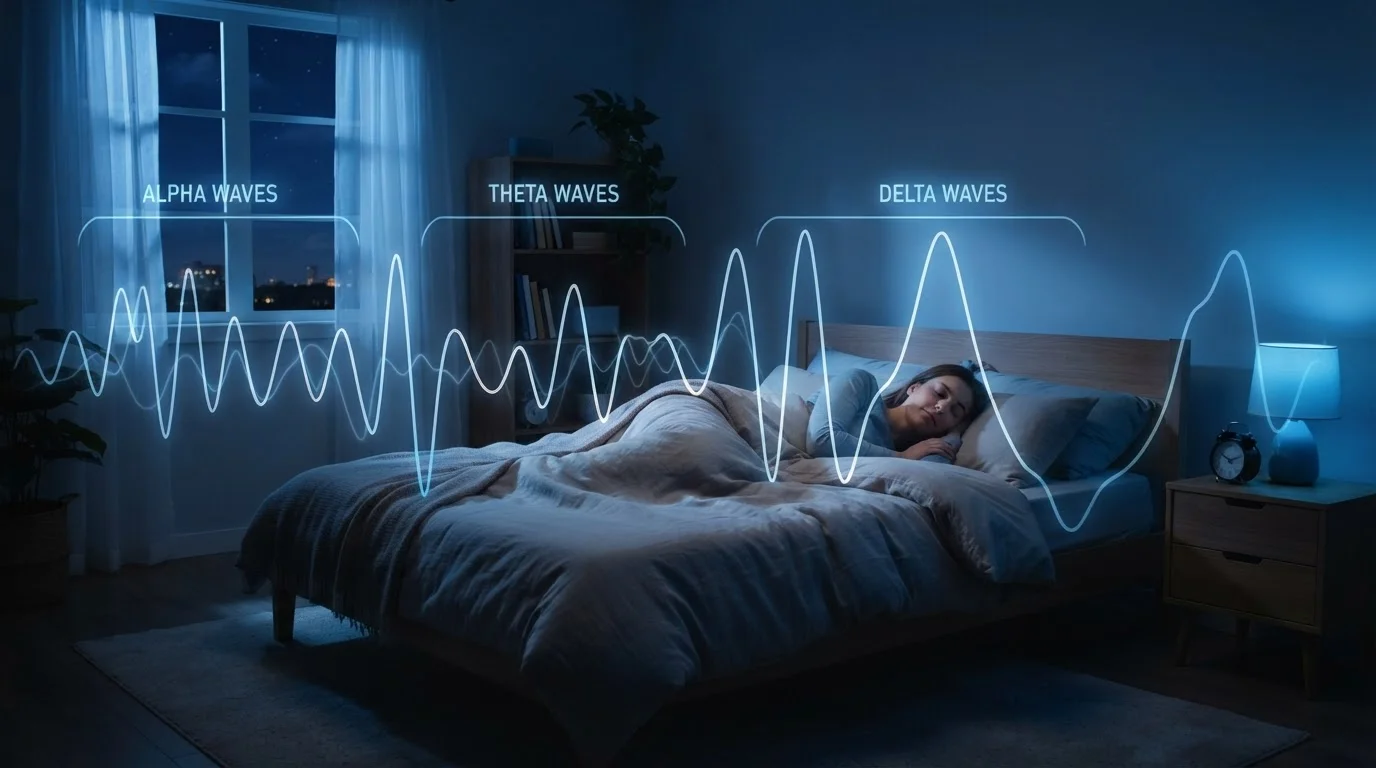
Sleep stages are classified by polysomnography (sleep study) into N1, N2, N3 (non-REM), and REM. N3, also called slow-wave sleep, is what most researchers refer to as 'deep sleep.'
The Four Stages of Sleep - What's Actually Happening
Sleep is not a single, uniform state. Every night your brain cycles through four distinct stages, each defined by specific patterns of brain activity and physical changes in the body.
- N1 (Light Sleep): The brief transition between wakefulness and sleep. Muscle activity slows, and you can be woken easily. This stage typically lasts just a few minutes.
- N2 (Stable Light Sleep): Your heart rate slows, body temperature drops, and the brain produces bursts of activity called sleep spindles that help consolidate memories. You spend more total time in N2 than any other stage.
- N3 (Deep Sleep / Slow-Wave Sleep): The most physically restorative stage. Brain waves slow dramatically, and the body increases blood flow to muscles, releases growth hormone, and repairs tissue. This is the stage that leaves you feeling physically refreshed.
- REM Sleep: Brain activity surges close to waking levels, your eyes move rapidly beneath closed lids, and most vivid dreaming occurs. This is when the brain consolidates learning, processes emotions, and strengthens neural connections.
For a broader look at what your body is doing during these stages, see what actually happens to your body while you sleep.
25%
Of total sleep time spent in REM
According to the American Academy of Sleep Medicine, healthy adults typically spend about 20-25% of their night in REM sleep.
13-23%
Of total sleep time spent in deep sleep (N3)
Research indicates that deep sleep occupies roughly 13-23% of a full night's sleep, with proportions declining naturally with age.
90 min
Average length of one sleep cycle
Sleep researchers consistently describe each complete sleep cycle as lasting approximately 90 minutes, though individual variation exists.
Why Deep Sleep and REM Serve Different - But Equally Vital - Roles
A common misconception is that more sleep automatically means better sleep. What actually matters is getting enough complete cycles so that both deep sleep and REM receive adequate time.
Deep sleep does the heavy lifting for your body. During N3, the pituitary gland releases growth hormone - essential for muscle repair, bone maintenance, and immune function. Research consistently links poor deep sleep to slower physical recovery and reduced immune response. Deep sleep is also front-loaded: you get more of it in the first half of the night.
REM sleep, by contrast, is back-loaded - most of your REM accumulates in the second half of the night. This is why cutting sleep even slightly by waking an hour early can strip away a disproportionate amount of REM. The consequences are cognitive rather than physical: reduced ability to retain new information, lower emotional resilience, and impaired creative problem-solving.
“Sleep is the single most effective thing we can do to reset our brain and body health each day. It is the foundation on which good mental and physical health is built.”
— Matthew Walker, Professor of Neuroscience and Psychology, author of 'Why We Sleep'
Understanding this timing helps explain why both how long you sleep and when you sleep matter. Learn more in our guide on building a sleep routine that works with your body clock.
Common Habits That Disrupt Your Sleep Architecture
Sleep architecture refers to the pattern and proportion of sleep stages across the night. Several everyday habits can fragment this architecture without your realizing it.
- Alcohol before bed: Sedating at first, alcohol suppresses REM sleep and causes fragmented sleep in the second half of the night as it metabolizes.
- Irregular sleep timing: Going to bed and waking at inconsistent times disrupts your circadian rhythm - the internal clock that orchestrates when each stage of sleep occurs.
- Late caffeine: Caffeine blocks adenosine receptors that build sleep pressure, delaying sleep onset and reducing deep sleep duration even when you feel like you slept fine.
- Screen light at night: Blue light from devices suppresses melatonin production, pushing back the body's readiness for sleep and compressing the total time available for all stages.
- Stress and anxiety: Elevated cortisol keeps the brain in a lighter sleep state, reducing time in both N3 and REM.
Protect Your Sleep Window Consistently
Going to bed and waking at the same time every day - even on weekends - is one of the most effective ways to preserve healthy sleep architecture. Consistent timing strengthens your circadian rhythm, making it easier for your brain to reach and sustain both deep sleep and REM. Even a one-hour shift on weekends can disrupt the pattern built during the week.
For a comprehensive look at how these habits compound over time, the complete guide to rest and recovery walks through evidence-informed strategies across the full sleep cycle.
This article is for general informational purposes only and is not a substitute for professional medical advice. If you have concerns about your sleep, consult a qualified healthcare provider.