

Key Takeaways
Sleep (Biological Function)
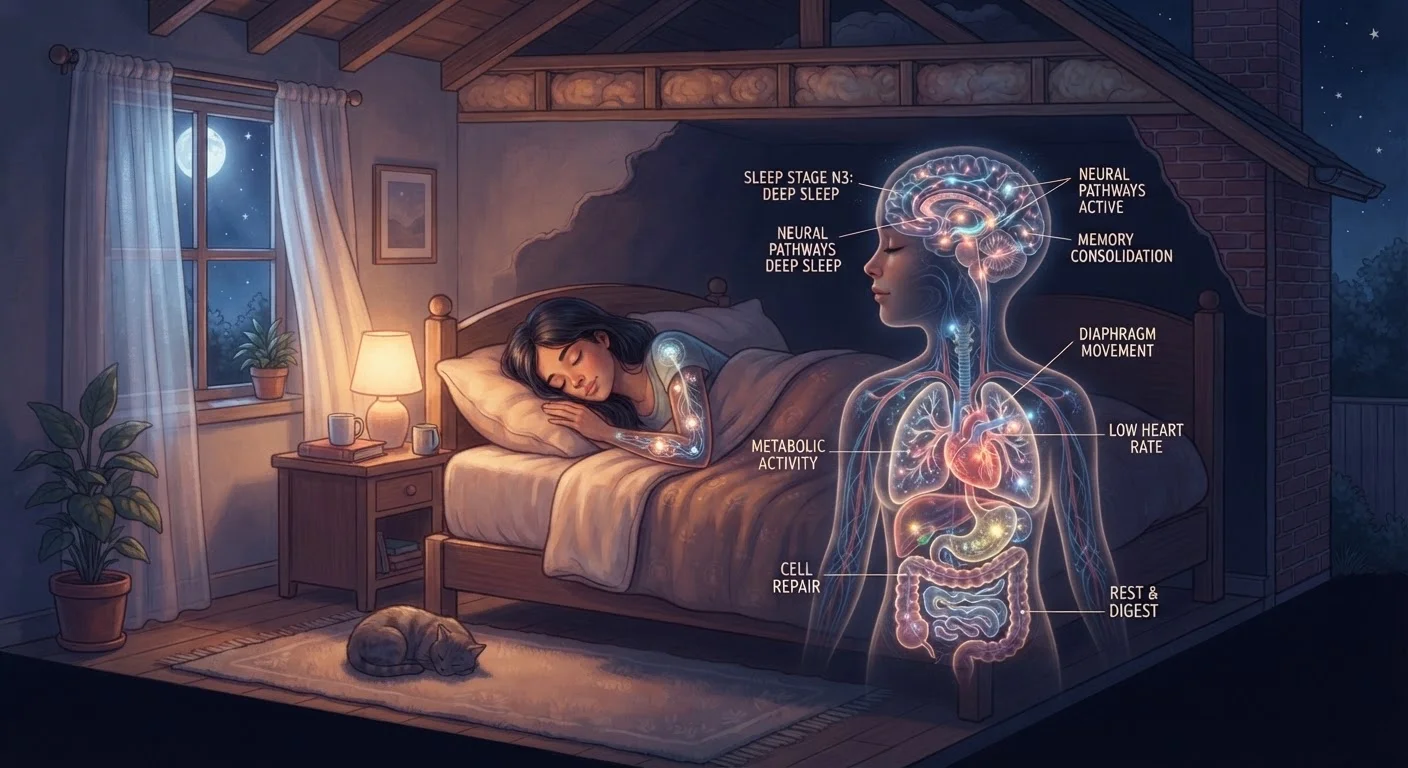
Sleep is a naturally recurring state of rest during which your brain and body carry out essential maintenance tasks - including cellular repair, hormone release, immune strengthening, and memory processing. Far from being inactive, your body cycles through distinct stages of sleep, each serving a specific biological purpose. Without adequate sleep, these processes are interrupted, leaving your body and mind functioning below their best.
Sleep is regulated by two biological systems: the circadian rhythm (a roughly 24-hour internal clock) and sleep pressure (driven by accumulating adenosine in the brain). Together, they time and deepen sleep for maximum restoration.
Sleep Isn't Rest - It's Active Biological Work
Most people think of sleep as simply switching off. In reality, the moment you close your eyes, your brain and body shift into an intensive maintenance mode that no other period of rest can replicate.
Sleep is structured into repeating cycles - typically four to six per night - each lasting about 90 minutes. Within every cycle, you move through three main stages: light sleep, deep sleep (also called slow-wave sleep), and REM (rapid eye movement) sleep. Each stage handles a different category of biological work. For a detailed breakdown of what each stage does, see our guide to the stages of sleep and why each one matters.
Understanding what happens in each stage helps explain why both the quantity and quality of your sleep matter so much to your overall health.
7-9 hrs
Recommended nightly sleep for adults
The American Academy of Sleep Medicine and Sleep Research Society recommend 7-9 hours of sleep per night for adults aged 18-60 for optimal health.
4-6
Sleep cycles completed in a full night
Each cycle lasts approximately 90 minutes and includes both deep and REM stages; missing cycles at the end of the night reduces total REM sleep significantly.
~30%
Increased infection risk with short sleep
A study published in Sleep found that adults sleeping under 6 hours per night were significantly more likely to develop a cold after exposure to a rhinovirus compared to those sleeping 7+ hours.
What Deep Sleep Does for Your Body
Deep sleep - which dominates the first half of the night - is when your body does its most significant physical repair work. During this stage, your pituitary gland releases a surge of growth hormone, which signals cells throughout your body to repair damaged tissue, build muscle, and consolidate bone. This is why deep sleep is especially critical after illness, injury, or intense physical activity.
Your immune system is also highly active during deep sleep. Immune cells and cytokines (proteins that coordinate the body's response to infection and inflammation) are produced and deployed during this period. Research consistently shows that people with chronically shortened sleep tend to have a reduced immune response.
The brain, meanwhile, uses deep sleep to clear out metabolic waste products through what scientists call the glymphatic system - a network of channels that flush cellular byproducts, including proteins linked to neurological conditions. Think of it as your brain's overnight cleaning service.
Support Deep Sleep With Simple Evening Habits
Your bedroom temperature plays a larger role in sleep depth than most people realize. Research suggests a slightly cool environment - around 65-68°F (18-20°C) - helps facilitate the core body temperature drop that triggers deep, restorative sleep. Pairing this with reduced light exposure in the hour before bed gives your biology the environmental cues it needs to shift into full recovery mode.
What REM Sleep Does for Your Mind
As the night progresses, your sleep cycles shift toward more REM sleep - the stage associated most closely with dreaming. But REM sleep does far more than produce vivid dreams. It plays a central role in memory consolidation, the process by which your brain transfers information from short-term storage into long-term memory.
During REM, your brain replays and reorganizes experiences from the day, strengthening neural connections that support learning and skill retention. It also processes emotions, helping regulate your mood and stress response. This is why a poor night's sleep often leads to emotional reactivity, difficulty concentrating, and a sense of mental fogginess the next day.
“Sleep is the single most effective thing we can do to reset our brain and body health each day. It is the foundation on which good mental and physical health is built.”
— Matthew Walker, Professor of Neuroscience and Psychology, University of California, Berkeley; author of research on sleep and human health
To understand how REM and deep sleep interact across the night, our article on sleep cycles decoded explains the full picture in plain language.
Building Habits That Support What Sleep Needs to Do
Knowing what sleep accomplishes helps make sense of why consistent, adequate rest is one of the most powerful things you can do for your health. Here are evidence-informed habits that support better sleep quality:
- Keep a consistent schedule. Going to bed and waking at the same time - even on weekends - anchors your circadian rhythm and improves sleep depth.
- Protect your sleep environment. Cool, dark, and quiet conditions support the body's natural drop in core temperature that triggers deeper sleep stages.
- Limit stimulants after midday. Caffeine has a half-life of around five to six hours in most adults, meaning a 3 p.m. coffee can still disrupt sleep onset at 10 p.m.
- Wind down with intention. Reducing bright light and screen exposure in the hour before bed signals your brain to begin releasing melatonin, the hormone that initiates sleep.
If you've noticed your sleep changing as you've gotten older, those shifts are normal - and understanding them matters. Our article on what happens to your body when you sleep less as you age covers what to expect and how to adapt. For broader context on rest and recovery, the Rest & Recovery hub is a helpful starting point.
This article is for general informational purposes only and is not a substitute for professional medical advice. If you have ongoing sleep difficulties or health concerns, please consult a qualified healthcare provider.