

Key Takeaways
Option A
Whole Foods
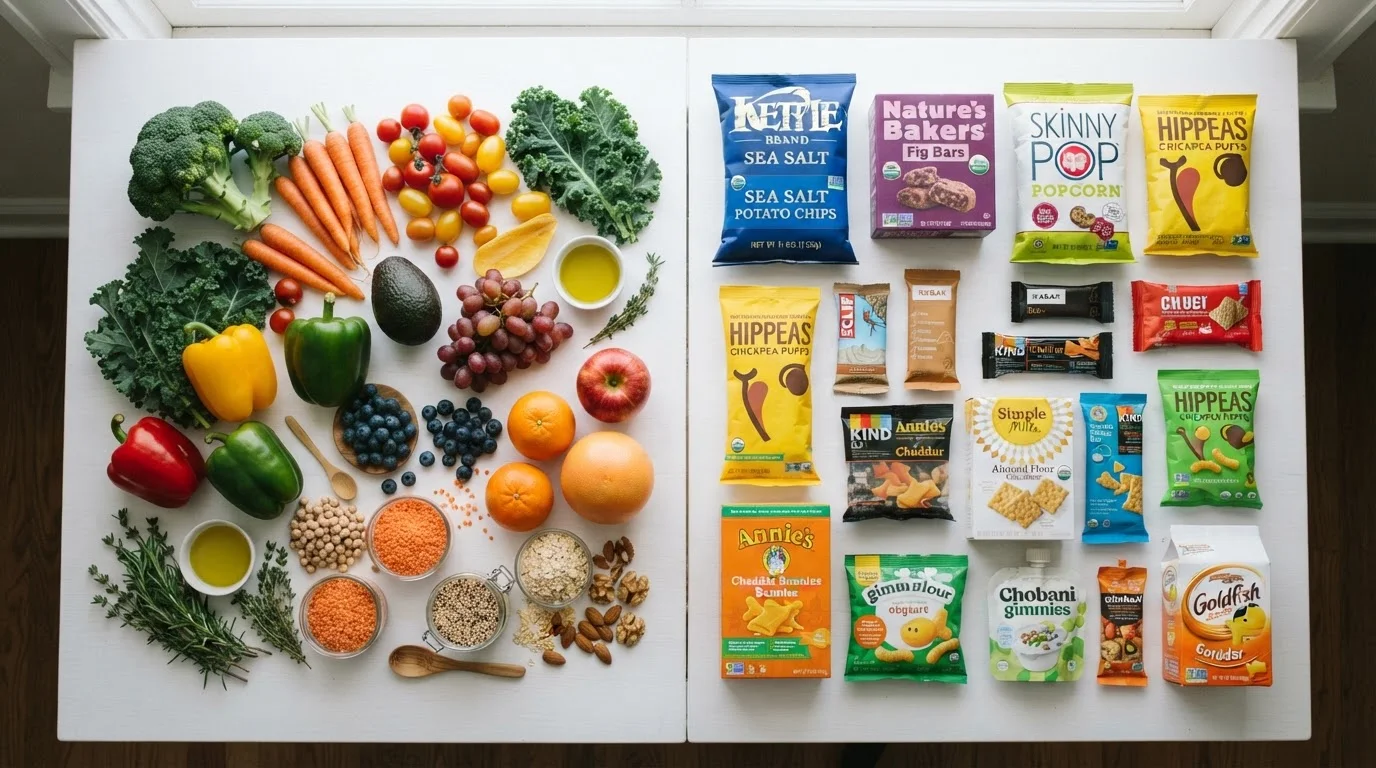
Minimally altered foods closest to their natural state.
Best for: People seeking sustained energy, nutrient density, and long-term metabolic health.
Option B
Ultra-Processed Foods
Industrially formulated products engineered for convenience and palatability.
Best for: Convenience and shelf stability, though frequent consumption is associated with poorer health outcomes.
If your goal is steady energy and appetite control throughout the day
Whole Foods
Fiber and protein in whole foods slow digestion and stabilize blood sugar, supporting more consistent energy levels and satiety.
If you need portable, shelf-stable options during travel or busy periods
Ultra-Processed Foods
Convenience is a real factor in dietary adherence. Some minimally processed packaged foods - like plain nuts or canned legumes - can bridge the gap without significant nutritional trade-offs.
If you're focused on long-term cardiovascular and metabolic wellbeing
Whole Foods
Research consistently associates higher whole-food intake with lower risk of type 2 diabetes, heart disease, and all-cause mortality.
If you're managing weight without strict calorie tracking
Whole Foods
Whole foods tend to be lower in calorie density and higher in satiety signals, supporting natural portion regulation without rigid restriction.
What Separates Whole Foods from Ultra-Processed Ones
The term whole foods refers to items consumed in or close to their natural state - think vegetables, fruits, legumes, whole grains, eggs, and unprocessed meats. Ultra-processed foods, as defined by the NOVA food classification system, are industrially manufactured products that contain ingredients rarely used in home cooking: emulsifiers, artificial flavors, modified starches, and preservatives designed primarily to extend shelf life and intensify palatability.
It's worth clarifying that not all processing is harmful. Freezing vegetables, fermenting dairy, or canning beans represents minimal processing that largely preserves nutritional value. The concern centers on ultra-processed products where the original food matrix is substantially disrupted. For a deeper look at how researchers define these categories, see the processing spectrum explained.
| Criterion | Whole Foods | Ultra-Processed Foods |
|---|---|---|
| Fiber content | High; supports digestion and satiety | Low; typically removed during processing |
| Micronutrient density | Rich in vitamins and minerals | Often fortified to replace lost nutrients |
| Blood sugar response | Gradual, stable rise and fall | Rapid spike followed by quick drop |
| Additives | None or minimal | Emulsifiers, colorings, flavor enhancers |
| Satiety signals | Strongly activates fullness hormones | May suppress or override satiety cues |
| Shelf life | Short; requires refrigeration or fresh use | Extended; designed for long storage |
| Preparation time | Often requires cooking or preparation | Ready-to-eat or minimal preparation |
How Your Body Digests Each Differently
Whole foods, particularly those rich in dietary fiber, slow the transit of food through the gastrointestinal tract. This matters because slower digestion moderates the rate at which glucose enters the bloodstream, producing a more gradual rise and fall in blood sugar - a response measured by the glycemic index. Intact cell walls in whole plant foods also act as physical barriers that enzymes must work through, preserving more time for nutrient absorption.
Ultra-processed foods, by contrast, are engineered to be rapidly broken down. Refined carbohydrates stripped of their bran and germ digest quickly, producing sharp blood glucose spikes followed by a rapid drop that can leave you feeling hungry again within hours. Research published in journals including Cell Metabolism has shown that ultra-processed diets promote faster eating and higher caloric intake, partly because the physical structure of the food offers little resistance to chewing and swallowing.
57%
Share of US calories from ultra-processed foods
A study published in BMJ Open (2016) estimated that ultra-processed foods account for approximately 57% of energy intake in the average American diet.
~500 kcal/day
Extra calories consumed on ultra-processed diet
A randomized controlled trial by Hall et al. in Cell Metabolism (2019) found participants consumed roughly 500 more calories per day when eating an ultra-processed diet compared to a whole-food diet.
12%
Higher all-cause mortality risk
A prospective cohort study in JAMA Internal Medicine (2019) associated each 10% increase in ultra-processed food intake with a 14% higher risk of all-cause mortality.
Nutrient Density, Satiety, and Long-Term Wellbeing
Beyond macronutrients, whole foods contain a wide array of vitamins, minerals, antioxidants, and phytochemicals - bioactive compounds that support everything from immune function to cellular repair. Two foods can deliver the same calorie count while differing dramatically in nutritional value; understanding the distinction between calories and nutrients helps illustrate why food quality matters beyond energy intake alone.
Satiety - the feeling of fullness that follows a meal - is also shaped by food structure. Protein and fiber in whole foods trigger hormones like peptide YY and GLP-1 that signal the brain to stop eating. Ultra-processed products often lack sufficient fiber and protein while providing high amounts of sodium, added sugar, and fat, a combination that can override these natural fullness cues.
Long-term, large-scale observational studies consistently link higher ultra-processed food consumption to elevated risk of obesity, type 2 diabetes, cardiovascular disease, and certain cancers. These are associations, not guaranteed outcomes - individual diet, genetics, activity level, and overall lifestyle all play roles. Dietary patterns as a whole carry more weight than any single food choice.
Processing Level Exists on a Spectrum
Not all packaged food warrants the same scrutiny. Plain rolled oats, canned tomatoes, and frozen peas are processed for preservation but retain most of their original nutritional profile. The NOVA classification distinguishes between these minimally processed staples and the heavily reformulated ultra-processed category. When evaluating a packaged product, look at the ingredient list length and the presence of additives unfamiliar from a home kitchen as a practical guide.
This article is for informational purposes only and is not a substitute for professional medical or dietary advice. Consult a qualified healthcare provider or registered dietitian before making significant changes to your diet, especially if you have a chronic health condition.