

Key Takeaways
Option A
Eating Patterns
The big-picture, long-game approach to daily nutrition.
Best for: Anyone seeking durable, whole-health benefits from their diet over months and years.
Option B
Single Superfoods
The targeted, nutrient-dense quick-fix strategy.
Best for: People looking to add specific nutrients or variety to an already reasonable diet.
If you want the greatest overall impact on long-term wellbeing
Eating Patterns
Broad dietary patterns - rich in plants, whole grains, and healthy fats - show the most consistent evidence for supporting energy, heart health, and cognitive function over time.
If you already eat a balanced diet and want to boost specific nutrients
Single Superfoods
Adding nutrient-dense foods like leafy greens, berries, or legumes to a solid dietary foundation can meaningfully contribute to filling nutritional gaps.
If you are starting from scratch and feel overwhelmed by dietary advice
Eating Patterns
Focusing on an overall pattern - more plants, fewer ultra-processed foods - is simpler and more forgiving than tracking individual "must-eat" foods.
If you want to support brain health as you age
Eating Patterns
Research on cognitive aging consistently points to dietary patterns like the Mediterranean or MIND diet rather than any single food as protective influences.
Why Nutrition Science Shifted Toward Patterns
For decades, nutrition research chased individual nutrients - vitamin C, omega-3s, antioxidants - searching for the single ingredient that unlocked good health. Today, most researchers agree the question was too narrow. Foods don't act in isolation inside the body; they interact with each other, with gut bacteria, and with lifestyle factors in ways that single-nutrient studies can't fully capture.
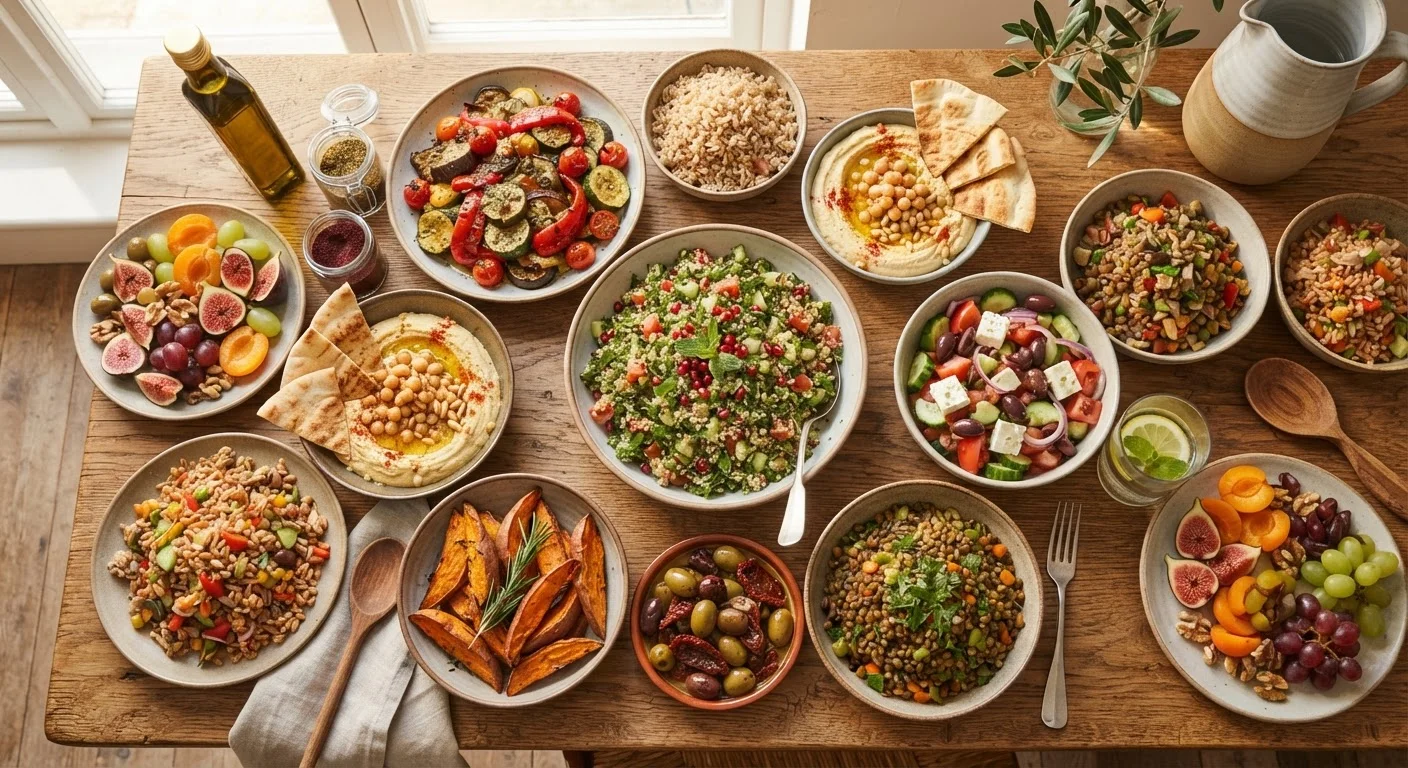
A dietary pattern simply means the habitual combination of foods and drinks a person consumes over time. Patterns like the Mediterranean diet - emphasizing vegetables, legumes, whole grains, fish, and olive oil - have been studied across large populations and linked to reduced risk of cardiovascular disease, type 2 diabetes, and cognitive decline. To understand why patterns outperform individual foods, see what makes a dietary pattern meaningful.
The core insight: synergy. Nutrients in whole foods work together. Fibre in legumes, for example, feeds gut bacteria that influence inflammation - a benefit you can't get by swallowing isolated fibre extract alongside an otherwise poor diet. Learn more in our guide to why dietary fibre matters so much.
What "Superfood" Actually Means
The term superfood has no formal scientific or regulatory definition. It is largely a marketing descriptor applied to foods with notably high concentrations of particular nutrients - think blueberries for antioxidants, salmon for omega-3 fatty acids, or kale for vitamins K and C.
These foods are genuinely nutritious. The problem arises when they are treated as corrective agents - as if eating a daily handful of goji berries can offset a diet heavy in ultra-processed foods. The evidence does not support that framing. A food that is nutrient-dense in isolation cannot override the cumulative effects of a poor eating pattern.
| Criterion | Eating Patterns | Single Superfoods |
|---|---|---|
| Evidence base | Large, long-term population studies | Often short-term, smaller trials |
| Health impact breadth | Multi-system (heart, brain, metabolism) | Typically narrow, nutrient-specific |
| Sustainability | Adaptable to culture and preference | Trends change; can feel prescriptive |
| Cost | Flexible across all budgets | Often marketed as premium items |
| Ease of adoption | Gradual habit shifts, no strict rules | Simple to add, but easy to over-rely on |
| Compensatory effect | Whole pattern buffers occasional poor choices | Cannot offset a poor overall diet |
That said, superfoods are not without value. Adding a wider variety of nutrient-rich foods to your meals contributes to the diversity that makes a good dietary pattern work. The distinction matters: a superfood is a useful component of a healthy pattern, not a substitute for one. For a deeper look at how processing levels change the nutritional equation, see how food processing affects health outcomes.
Head-to-Head: What the Evidence Actually Shows
Large-scale population studies - including long-running cohorts tracking tens of thousands of adults - consistently find that people who follow varied, plant-forward dietary patterns have better health markers across multiple domains: cardiovascular risk, blood sugar regulation, inflammatory markers, and self-reported energy levels.
~30%
Reduced cardiovascular risk in Mediterranean-pattern followers
The PREDIMED randomized controlled trial found roughly a 30% reduction in major cardiovascular events among those following a Mediterranean dietary pattern compared to a low-fat control group.
~11%
Lower all-cause mortality linked to healthy dietary patterns
A 2020 meta-analysis published in JAMA Internal Medicine found adherence to several established healthy dietary patterns was associated with meaningfully lower all-cause and cause-specific mortality.
4 out of 5
Leading dietary guidelines emphasize overall patterns
Major health organizations, including the WHO and the US Dietary Guidelines Advisory Committee, frame recommendations around dietary patterns rather than specific foods or nutrients.
Studies on individual superfoods tend to be shorter, smaller, and often conducted in controlled lab conditions that don't reflect real-world eating. When a single food shows a promising result in a short-term trial, it rarely translates to the same magnitude of benefit when studied in a real diet over years.
One telling example: the PREDIMED trial, a large randomized study from Spain, found that a Mediterranean-style eating pattern (not any single food within it) was associated with significantly reduced cardiovascular events compared to a low-fat control diet. No individual olive, walnut, or tomato made that finding - the pattern did.
Principles shared by most evidence-based diets point in the same direction: variety, whole foods, and moderation of highly processed items matter far more than any single ingredient.
Practical Steps: Building a Pattern That Sticks
Focusing on dietary patterns doesn't require a complex meal plan or expensive ingredients. The habits with the clearest evidence tend to be straightforward:
- Add vegetables to most meals - not just dinner. A handful of spinach in a morning smoothie or sliced tomatoes with lunch counts.
- Swap refined grains for whole grains most of the time - oats, brown rice, whole-wheat bread, or barley.
- Include legumes regularly - beans, lentils, and chickpeas are affordable, fiber-rich, and genuinely nutrient-dense.
- Vary your protein sources - fish, eggs, legumes, and occasional lean meat provide different nutrient profiles.
- Limit ultra-processed foods - not because any one product is catastrophic, but because frequent consumption crowds out more nutritious options. See how whole and processed foods differ for context.
If you enjoy specific nutrient-dense foods - blueberries, walnuts, dark leafy greens - include them freely. They are genuinely good for you. Just don't rely on them to carry the rest of your diet. A sustainable, enjoyable eating pattern built around mostly whole foods will serve your wellbeing far better than any single ingredient you add or remove. For a flexible framework that doesn't require restriction, explore balancing enjoyment and nutrition.
Healthy Eating Looks Different Across Cultures
There is no single "correct" dietary pattern. Nutritious diets exist worldwide - from traditional Japanese eating to West African plant-forward cuisines - and they differ considerably in specific foods. What they share is variety, minimally processed whole foods, and balance. Explore how healthy eating varies across cultures for a broader perspective.
This article is for general informational purposes only and is not a substitute for personalized medical or nutritional advice. If you have specific health conditions or dietary concerns, please consult a qualified healthcare professional or registered dietitian.