

Key Takeaways
Our Verdict
Plant-based, vegan, and vegetarian eating are related but meaningfully different approaches to food. Each offers genuine health benefits supported by research, and each requires different levels of nutritional attention. No single pattern is universally superior - what matters most is how well any eating style is planned and maintained over time.
| Best for | Recommended |
|---|---|
| Those wanting flexibility while increasing whole plant foods | Plant-based eating |
| Those motivated by ethical or environmental commitments | Vegan diet |
| Those eliminating meat but preferring some animal-derived foods | Vegetarian diet |
| Those unsure where to start with plant-forward eating | Plant-based eating |
Why the Terminology Gets Confusing
Terms like plant-based, vegan, and vegetarian appear constantly in food media, restaurant menus, and product labels - often interchangeably. In practice, they describe meaningfully different eating patterns with distinct rules, nutritional profiles, and underlying motivations. Understanding what each term actually means is the foundation for choosing the approach that fits your life. For a broader look at how these fit among other dietary patterns, see Popular Eating Patterns and the Science Behind Each One.
If some of the nutrition language in this article feels unfamiliar, the Key Terms Glossary offers a plain-language reference for common nutrition vocabulary.
Defining Each Eating Style
Plant-Based Eating
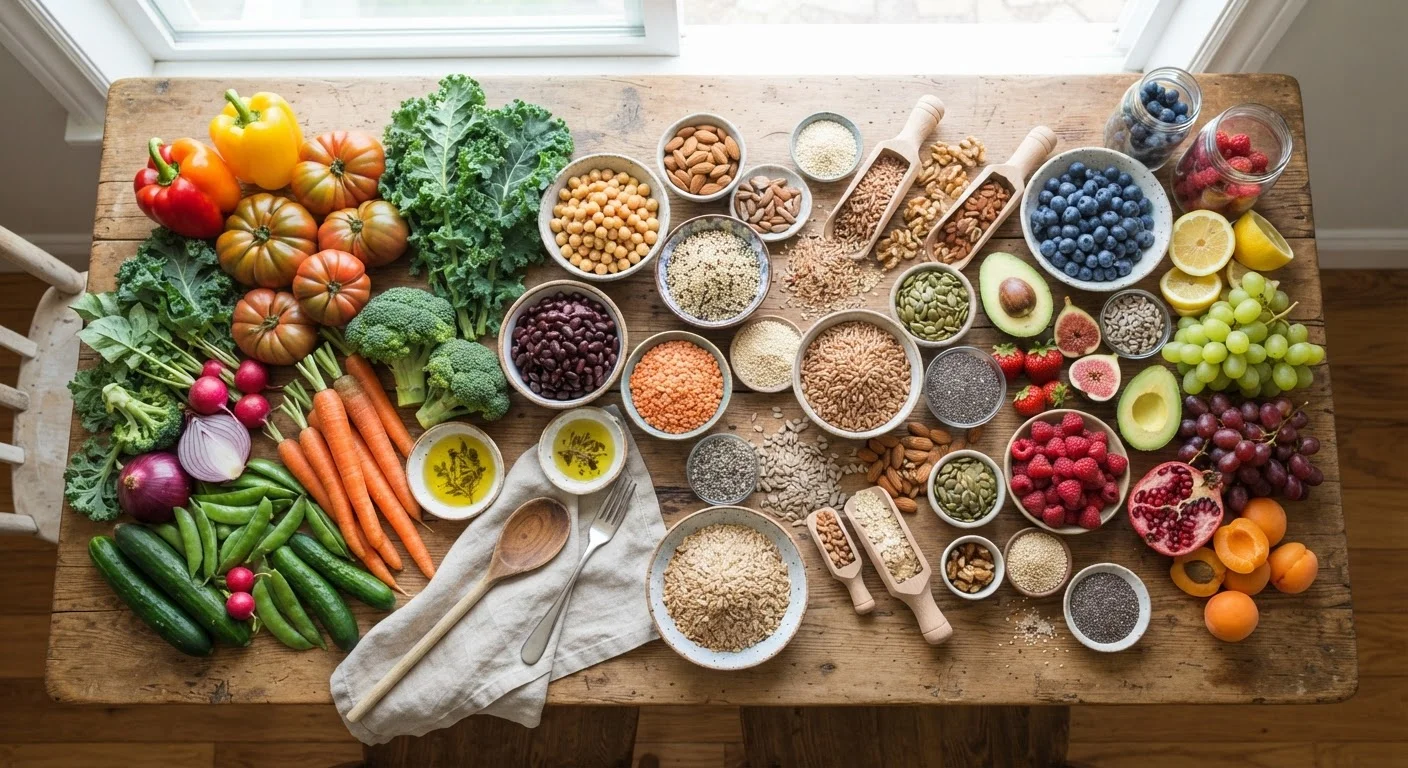
Plant-based is the least restrictive of the three terms. It describes a dietary pattern centered on whole plant foods - vegetables, fruits, legumes, whole grains, nuts, and seeds - while minimizing (but not necessarily eliminating) animal products. Someone eating plant-based might still consume small amounts of meat, fish, or dairy, but the majority of their calories and nutrients come from plants. The emphasis is on quality and proportion rather than strict exclusion.
Vegetarian Diets
Vegetarian eating excludes meat and seafood entirely but usually allows animal-derived foods that don't require slaughter. Several subtypes exist:
- Lacto-vegetarian: Includes dairy, excludes eggs and meat
- Ovo-vegetarian: Includes eggs, excludes dairy and meat
- Lacto-ovo vegetarian: Includes both dairy and eggs - the most common form in the US
Vegan Diets
Vegan eating is the most restrictive category. It excludes all animal-derived foods and ingredients: meat, poultry, seafood, dairy, eggs, and typically honey. Veganism often extends beyond diet into broader lifestyle choices (such as avoiding leather or products tested on animals), though the dietary definition alone is what nutrition researchers study.
| Plant-Based | Vegetarian | Vegan | |
|---|---|---|---|
| Meat & Poultry | Minimized, not excluded | Excluded | Excluded |
| Seafood | Minimized, not excluded | Excluded | Excluded |
| Dairy | Minimized, not excluded | Usually allowed | Excluded |
| Eggs | Minimized, not excluded | Usually allowed | Excluded |
| Honey | Not restricted | Allowed | Typically excluded |
| Key nutrient watch points | Varies by intake | Iron, zinc, vitamin D | B12, calcium, omega-3, iodine |
| Flexibility level | High | Moderate | Low |
| Common motivation | Health, sustainability | Health, ethics | Ethics, environment, health |
Nutritional Strengths and Considerations
Research consistently links all three patterns to reduced risk of certain chronic conditions, including cardiovascular disease and type 2 diabetes, compared to diets high in processed meats and refined foods. However, each pattern carries specific nutritional considerations that require attention.
~5%
US adults identifying as vegetarian
Gallup polling has consistently found roughly 5% of American adults describe themselves as vegetarian.
~3%
US adults identifying as vegan
Gallup data indicates approximately 3% of US adults follow a vegan diet, a proportion that has grown modestly over the past decade.
Lower CVD risk
Plant-forward diets and cardiovascular health
Multiple large reviews, including those published in the Journal of the American Heart Association, link vegetarian and vegan diets to reduced cardiovascular disease risk factors.
Plant-based eaters generally have lower risk of nutrient gaps because some animal foods remain in the diet. Vegetarians need to monitor iron (non-heme iron from plants is less readily absorbed), zinc, and vitamin D. Vegans face additional considerations: vitamin B12 is found almost exclusively in animal products and must be supplemented or obtained through fortified foods. Omega-3 fatty acids, calcium, and iodine also warrant attention on a vegan diet.
Supplementing on a Vegan Diet
Vitamin B12 supplementation is widely recommended for people following a vegan diet, as plant foods do not reliably provide it. Fortified foods such as plant milks and nutritional yeast can help, but a supplement is generally considered the most reliable source. Speak with a registered dietitian to identify which nutrients need the most attention in your individual case.
For a detailed side-by-side look at nutrient profiles, see Plant-Based vs. Omnivore Diets: Comparing Nutritional Profiles.
This article is for general informational purposes only and does not constitute medical or dietary advice. Always consult a qualified healthcare professional or registered dietitian before making significant changes to your diet, especially if you have existing health conditions.
Choosing the Approach That Works for You
The right eating style is the one you can maintain consistently while meeting your nutritional needs. Motivation matters: those driven by environmental or ethical values may find veganism aligns well with their broader principles. Those seeking health benefits without strict exclusions may find a plant-based approach more sustainable. Vegetarian eating often serves as a middle ground - structured enough to reduce reliance on animal products while retaining familiar foods like yogurt or eggs.
Cultural context is also worth acknowledging. Nutritious eating patterns around the world look very different from one another, and no single framework suits every person or tradition. Why 'Eating Healthy' Looks Different Across Cultures explores this diversity in depth.
If you're considering a shift toward any of these patterns, a gradual approach tends to be more sustainable than an overnight overhaul. Transitioning Toward a More Plant-Forward Diet Without Overhauling Everything offers practical, step-by-step guidance for getting started.