

Key Takeaways
Muscle Repair After Exercise
When you exercise - especially with resistance or high-intensity effort - your muscle fibers sustain microscopic damage. Muscle repair is the biological process by which your body detects, patches, and rebuilds those fibers, resulting in stronger and more resilient muscle tissue over time. This process is not a sign of injury; it is the intended mechanism behind fitness adaptation.
The process involves satellite cell activation, inflammatory signaling, and muscle protein synthesis (MPS) - a cascade regulated by hormones such as insulin-like growth factor 1 (IGF-1) and mechanistic target of rapamycin (mTOR) pathways.
What Happens Inside Your Muscles During Exercise
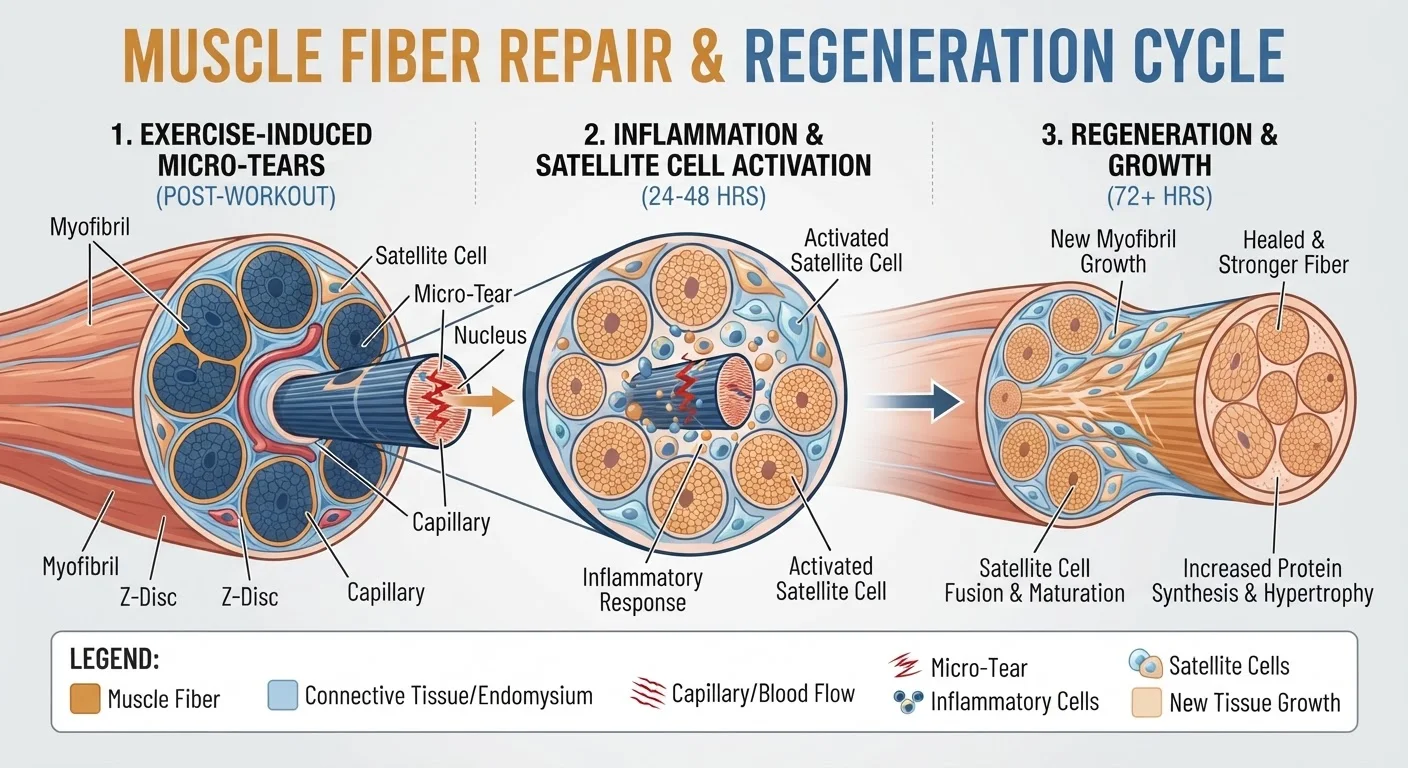
Every time you push through a challenging set of squats, sprint up a hill, or lift a heavier weight than usual, you are creating controlled stress in your muscle fibers. At a cellular level, the mechanical tension and metabolic demand of exercise cause tiny disruptions - called micro-tears - in the structural proteins that make up those fibers.
These micro-tears trigger an immediate immune response. Inflammatory cells rush to the affected tissue, clearing debris and releasing chemical signals that tell your body: repair and rebuild here. This is why mild soreness and warmth in a trained muscle are completely normal responses. The discomfort is not damage going wrong - it is the start of the repair process going right.
Muscle Soreness Doesn't Always Mean Muscle Damage
Not all post-exercise discomfort reflects significant micro-tearing. Metabolic fatigue, fluid shifts, and neural changes can all contribute to that heavy, achy feeling. Well-trained individuals often experience less soreness for the same relative effort - this reflects adaptation, not reduced effectiveness of the workout.
The Repair Cascade: From Inflammation to Stronger Tissue
Muscle repair follows a predictable biological sequence. After the initial inflammatory phase, specialized cells called satellite cells - which sit dormant along muscle fibers - become activated. They multiply and fuse to damaged fibers, donating new material that patches and reinforces the tissue.
Simultaneously, your body ramps up muscle protein synthesis (MPS) - the process of assembling new proteins from amino acids to rebuild fiber structure. MPS can remain elevated for 24 to 48 hours after exercise, which is why what you eat and how well you sleep in that window has a measurable impact on your results. See our guide to nutrition's role in post-exercise recovery for a detailed look at what fuels this process.
The end result - when recovery is adequate - is muscle fibers that are slightly thicker and better adapted to handle the same stress next time. This is the core mechanism behind strength and endurance gains.
24-48 hrs
Peak window for muscle protein synthesis post-exercise
Exercise science research consistently identifies this window as when MPS is most elevated following resistance training.
~72 hrs
Typical recovery time for moderate muscle damage
Most exercise physiology texts cite 48-72 hours as the general repair window for moderate-intensity sessions in healthy adults.
7-9 hrs
Sleep recommended for optimal recovery
The American Academy of Sleep Medicine recommends this range for adults, and sleep is closely tied to growth hormone secretion that drives repair.
Why Recovery Is Half the Training
A common misconception is that fitness is built during exercise. It is not. Exercise provides the stimulus; recovery is when adaptation actually occurs. Skipping or shortening recovery doesn't make you fitter faster - it interrupts the repair cycle before it completes.
Chronic under-recovery leads to a state known as overtraining syndrome, characterized by performance decline, persistent fatigue, disrupted sleep, and increased susceptibility to injury. The body simply cannot finish rebuilding before the next training session adds new stress.
Sleep is the most potent recovery tool available. During deep sleep stages, growth hormone release peaks - and growth hormone is a key driver of the satellite cell activity and protein synthesis described above. Prioritizing seven to nine hours of sleep is not a lifestyle luxury; it is a physiological requirement for the adaptation process. For a deeper look at the hormonal side of recovery, explore how recovery works at a hormonal level.
Support Recovery With Simple Daily Habits
You don't need special supplements or expensive tools to recover well. Prioritize consistent sleep, eat enough protein spread across the day, stay well-hydrated, and schedule at least one or two lower-intensity days per week. These basics have the strongest evidence behind them and cost nothing.
How Age Affects Muscle Repair
Muscle repair capacity does shift with age. Research indicates that satellite cell activity and anabolic hormone levels - including testosterone and IGF-1 - decline gradually after the mid-thirties. This means older adults typically experience a slower repair timeline and may need additional recovery days between intense sessions.
Importantly, this does not mean strength training becomes ineffective with age. The adaptation process still works; it simply benefits from more deliberate pacing and nutrition support. Older adults who resistance train consistently show meaningful gains in muscle mass and function. Our article on strength training after 60 explains exactly how physiology shifts and what adjustments are worth making.
This article is for general informational purposes only and does not constitute medical advice. Consult a qualified healthcare professional before beginning or modifying any exercise program, particularly if you have existing health conditions.