

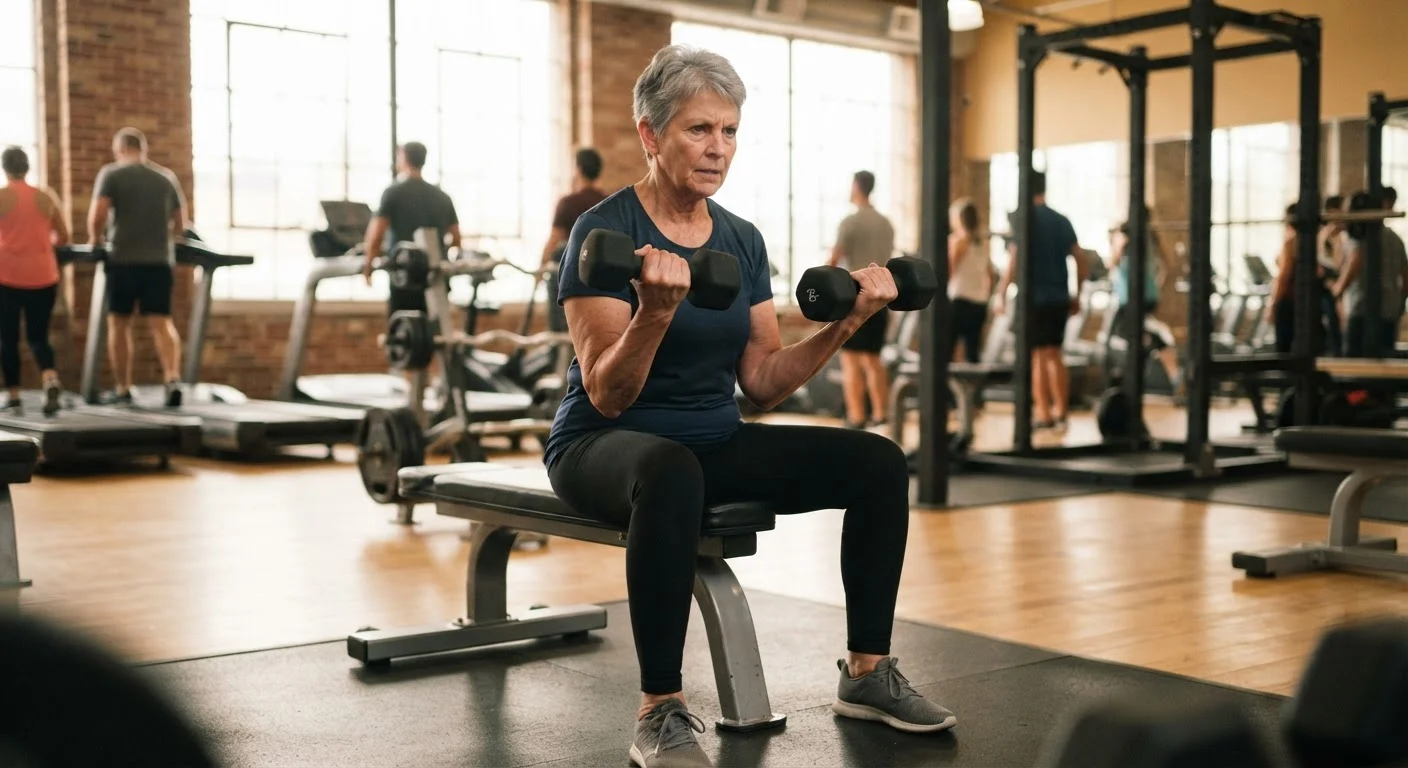
Key Takeaways
Strength Training After 60
Strength training after 60 refers to structured resistance exercise - using weights, bands, or bodyweight - performed by adults in their seventh decade and beyond. The underlying biology changes with age, but the muscles' fundamental ability to grow stronger in response to challenge does not disappear. Adapting how you train - not whether you train - is the key distinction.
Age-related muscle loss, called sarcopenia, accelerates after 60 partly due to declining anabolic hormone levels and slower motor neuron regeneration, but progressive resistance overload still activates muscle protein synthesis in older adults.
What Actually Changes After 60
The physiology of aging does alter how your body responds to exercise - but not in ways that make strength training less worthwhile. Understanding the shifts helps you train smarter rather than giving up on training altogether.
Recovery slows down. Muscle tissue repair after a training session takes longer as you age. This is partly driven by reduced levels of testosterone, growth hormone, and insulin-like growth factor-1. The practical implication: rest days are not optional. Training the same muscle group on consecutive days becomes increasingly counterproductive after 60.
Connective tissue needs more respect. Tendons and ligaments become less elastic with age, increasing injury risk if you skip warm-up or progress load too quickly. A longer, more deliberate warm-up is no longer just good practice - it is a protective necessity.
Muscle fiber composition shifts. Aging preferentially affects fast-twitch muscle fibers (the ones responsible for power and speed), which decline faster than slow-twitch fibers. This is one reason falls become more common - the quick-reaction strength that catches a stumble weakens first. Incorporating some faster-tempo movements within a safe range of motion can help address this.
For a broader view of how physical capacity evolves decade by decade, see our guide to active aging across the decades.
Sarcopenia Is Common - and Preventable
Sarcopenia, the gradual loss of muscle mass and function with age, affects an estimated 10-30% of adults over 60 depending on diagnostic criteria used. It is not an inevitable fate. Resistance training is among the most well-supported interventions for slowing or partially reversing it. If you are concerned about muscle loss, a conversation with your physician or a physical therapist can help clarify your current baseline and next steps.
What Never Changes: The Core Principles
Despite the biological shifts, the fundamental rules of building strength remain constant at any age.
Progressive overload still works. Muscles grow stronger when progressively challenged beyond their current capacity. Whether you are 25 or 75, gradually increasing resistance, repetitions, or difficulty over time is what drives adaptation. The pace of progression simply needs to be more measured after 60.
Consistency outperforms intensity. A moderate, sustainable routine performed week after week produces far better long-term outcomes than sporadic high-intensity efforts. This is true at every age but becomes especially important when recovery margins narrow.
Compound movements remain the foundation. Squats, deadlifts, rows, and presses recruit multiple muscle groups simultaneously and translate directly to functional daily tasks - getting up from a chair, carrying groceries, climbing stairs. These movements do not retire just because you have.
Start Where You Are, Not Where You Were
If you are returning to strength training after a long break, begin at a lighter load than your previous experience suggests you can handle. Muscle memory accelerates retraining, but tendons, ligaments, and joints adapt more slowly than muscles - so patience in the first four to six weeks protects you from the setbacks that force longer breaks. Consistent modest effort beats heroic effort followed by injury every time.
Muscle loss from inactivity - sometimes called disuse atrophy - accelerates at older ages, making skipping strength sessions more costly over time. Our article on why older adults avoid strength work examines the evidence behind common fears that keep people on the sidelines.
Practical Adjustments Worth Making
Adapting your approach is not about lowering your expectations - it is about training in a way that delivers results without accumulating unnecessary wear.
- Warm up longer: Spend 10-15 minutes on light movement and mobility work before adding any meaningful load. Cold connective tissue is more vulnerable to strain.
- Prioritize form over load: Technique errors that younger bodies absorb with less consequence become more significant injury risks after 60. When in doubt, reduce weight and reinforce mechanics.
- Build in more recovery: Two to three sessions per week is a well-supported frequency for older adults. See our article on finding the right training load for guidance on calibrating effort.
- Support your training with protein: Older muscles are less sensitive to dietary protein, meaning you need more of it - not less - to stimulate muscle repair. Our overview of protein needs after 60 explains the evidence.
- Add balance work: Strength and balance complement each other. Coordination training deserves its own dedicated time in an older adult's weekly routine.
~3-8%
Muscle mass lost per decade after 30
Research published in journals including the Journal of Cachexia, Sarcopenia and Muscle suggests this rate accelerates significantly after age 60 without resistance training.
2-3x
Weekly strength sessions recommended for older adults
Major public health guidelines, including those from the American College of Sports Medicine, recommend at least two resistance training sessions per week for adults over 65.
Up to 30%
Strength gain possible in older adults through training
Multiple clinical studies have demonstrated meaningful strength improvements in adults in their 60s, 70s, and 80s following structured progressive resistance programs.
This article is for general informational purposes only and does not constitute medical advice. Always consult a qualified healthcare professional before beginning or modifying an exercise program, particularly if you have existing health conditions or physical limitations.