

Key Takeaways
The Stress Response
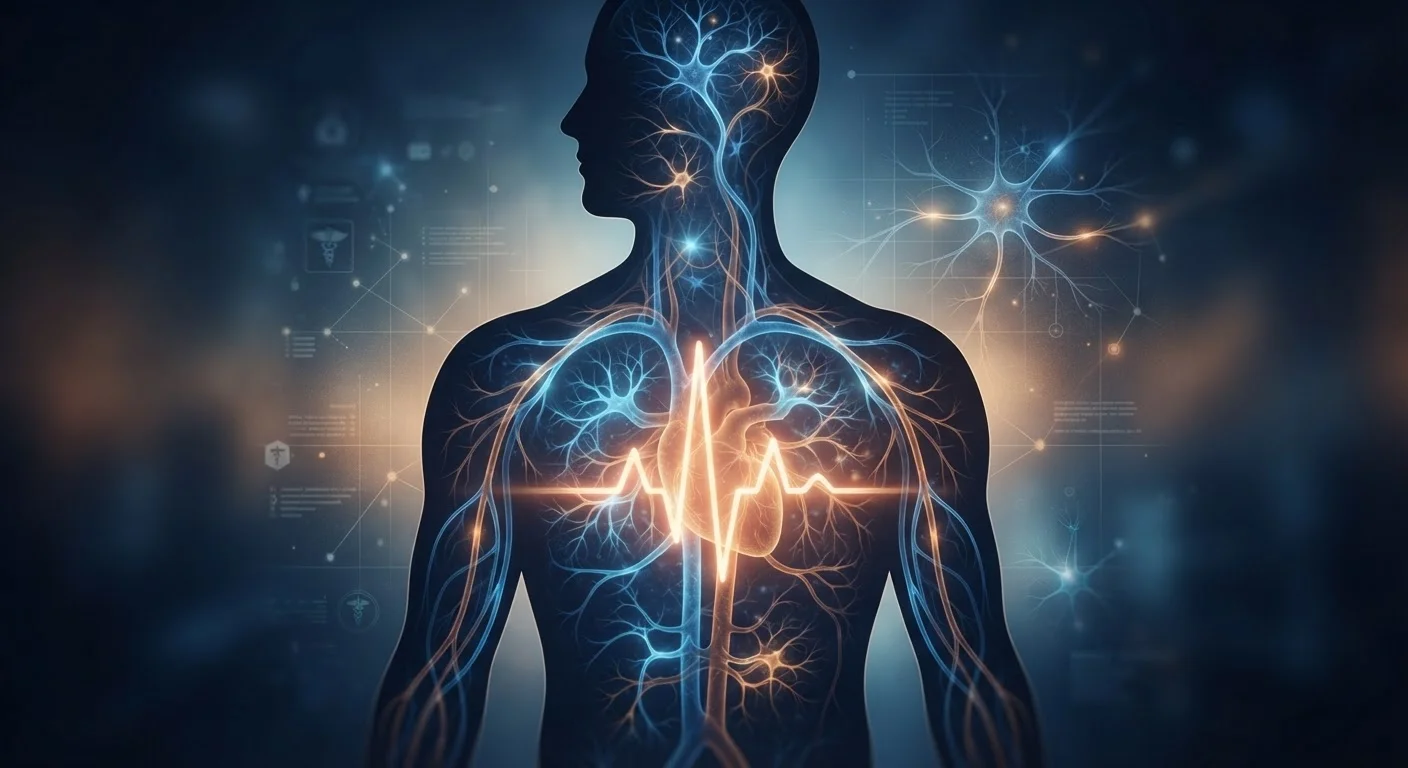
The stress response is your body's automatic, built-in reaction to anything it perceives as a threat or challenge. Within seconds, your brain triggers a cascade of hormones and physical changes designed to help you react quickly. This response evolved to protect you from immediate danger - though today it's just as likely to be activated by a work deadline as a physical threat.
Researchers refer to this system as the hypothalamic-pituitary-adrenal (HPA) axis, working alongside the sympathetic nervous system to coordinate the hormonal and physiological changes associated with acute stress.
It Starts in the Brain, Not the Body
When you encounter something your brain interprets as threatening - a near-miss car accident, a tense confrontation, or even an anxious thought - a small, almond-shaped structure called the amygdala fires an alert. This happens before your conscious mind has fully registered what's going on.
The amygdala sends an urgent signal to the hypothalamus, the brain's command center, which in turn activates the sympathetic nervous system. Think of this as flipping a master switch. Within milliseconds, your body begins shifting resources away from long-term maintenance tasks and toward immediate survival.
This rapid-fire process is sometimes called the fight-or-flight response. It's worth noting that researchers now also recognize a third state - freeze - where the body becomes momentarily still and hyper-alert. All three are variations of the same underlying stress response. For a broader look at the terms you'll encounter reading about this system, see our plain-language stress and anxiety glossary.
The Hormone Surge: Adrenaline and Cortisol
Two hormones do most of the heavy lifting during a stress response.
- Adrenaline (epinephrine) is released almost instantly from the adrenal glands, which sit just above your kidneys. It triggers your heart to beat faster, your lungs to take in more air, and your pupils to dilate - all in service of sharper perception and faster movement.
- Cortisol follows slightly behind, released through a chain of signals involving the hypothalamus, pituitary gland, and adrenal glands - what scientists call the HPA axis. Cortisol sustains the response by releasing stored glucose for energy and temporarily suppressing functions your body deems non-urgent, such as digestion and certain immune processes.
~30 seconds
Time for adrenaline to reach peak levels
Research in stress physiology indicates adrenaline can surge to peak concentrations within roughly 30 seconds of a perceived threat.
1,400+
Chemical reactions triggered by stress
The American Institute of Stress has noted that a stress response involves over 1,400 known physical and chemical reactions in the body.
77%
Americans who experience physical stress symptoms
According to the American Psychological Association's Stress in America survey, a large majority of U.S. adults report experiencing physical symptoms linked to stress.
Together, these hormones explain why stress feels so physical. The racing heart, the dry mouth, the tightened chest - these aren't imaginary. They're coordinated, measurable biological events.
What's Happening Throughout Your Body
The effects of this hormone surge spread quickly across multiple body systems:
- Cardiovascular system
- Heart rate increases and blood vessels in the muscles dilate, improving blood flow to the limbs for physical action. Blood pressure rises as a result.
- Respiratory system
- Breathing becomes faster and shallower to bring more oxygen in quickly. This can cause a feeling of tightness or breathlessness.
- Digestive system
- Blood is redirected away from the gut, which is why stress often causes nausea, stomach cramping, or a sudden loss of appetite. Digestion slows.
- Immune system
- Short-term stress can actually provide a brief immune boost. However, sustained activation has the opposite effect over time.
- Muscles
- Muscles tense in preparation for movement. This is why prolonged stress often manifests as jaw clenching, shoulder tension, or headaches.
Help Your Body Find the Off Switch
Slow, diaphragmatic breathing - inhaling for four counts and exhaling for six - signals the parasympathetic nervous system to begin calming the stress response. Even a few minutes of this type of breathing after a stressful event can meaningfully support recovery. It won't eliminate the response, but it can help your body return to baseline more efficiently.
Understanding how these systems connect helps explain why stress shows up differently in different people - the pattern depends partly on individual physiology and partly on which systems are most activated by a given stressor.
When the Response Doesn't Switch Off
In an ideal scenario, once the threat passes, your parasympathetic nervous system - sometimes called the rest-and-digest system - brings everything back to baseline. Heart rate slows. Breathing deepens. Cortisol drops. The body recovers.
The challenge in modern life is that many stressors don't have a clear endpoint. Financial pressure, relationship tension, or chronic work demands can keep the stress response partially activated for extended periods. Over time, this persistent low-level activation can affect sleep quality, digestion, cardiovascular health, and mood.
To understand how that ongoing activation unfolds, explore what happens when stress becomes a daily constant and what chronic stress actually does to your body over the long term. It's also worth understanding that not all stress works the same way - the difference between acute and chronic stress matters significantly for your health.
Stress Is Not Always the Problem
Short-term stress in manageable doses can actually enhance focus, motivation, and performance - a phenomenon sometimes called 'eustress,' or beneficial stress. The concern arises when the response is frequent, prolonged, or disproportionate to the actual situation. Context and recovery time matter enormously in determining whether stress helps or harms.
This article is for general informational purposes only and does not constitute medical advice. If you are experiencing persistent physical or emotional symptoms related to stress, please speak with a qualified healthcare provider.