

Key Takeaways
Reduces unbroken sitting time during the workday
Using a sit-stand desk makes it easier to break up long sedentary periods, which is associated with lower risks of musculoskeletal discomfort and metabolic concerns linked to prolonged sitting.
Encourages more frequent position changes
Having the option to shift positions can prompt workers to move more often, which is beneficial for circulation and reducing static muscle load - a key driver of postural fatigue.
Can reduce sitting-related lower back discomfort
Some research suggests that alternating sit-stand work may help reduce lower back pain intensity compared to exclusively seated work, particularly when proper ergonomic setup is maintained.
Supports greater energy and alertness for some users
Anecdotal reports and some small studies suggest that standing periodically during the day may support alertness, though this effect varies between individuals and diminishes with fatigue.
Prolonged standing causes its own physical strain
Standing for extended periods without movement has been linked to lower back pain, varicose veins, and leg fatigue - problems that can match or exceed those caused by prolonged sitting.
Poor setup negates most of the potential benefit
An incorrectly adjusted desk height, misaligned monitor, or inappropriate footwear can lead to neck strain, wrist problems, and shoulder tension regardless of whether the user is sitting or standing.
Doesn't correct underlying postural habits
Standing desks change the surface, not the behavior. People who slouch, lean, or shift their weight unevenly while sitting tend to carry those same habits into standing - just with different muscle groups under strain.
Can create a false sense of postural security
Believing the desk itself is solving a posture problem may reduce a person's motivation to address the movement habits, muscle imbalances, or ergonomic factors that are actually at the root of their discomfort.
Our Verdict
Standing desks can be a genuinely useful part of a healthier workday - but only when used thoughtfully. Simply swapping your seat for a standing position transfers postural strain rather than eliminating it. The best outcomes come from pairing a height-adjustable desk with proper monitor placement, supportive footwear, an anti-fatigue mat, and regular movement breaks.
Best suited to desk workers who already understand basic ergonomic principles and want to reduce prolonged sitting as part of a broader movement strategy - not as a stand-alone posture fix.
The Appeal - and the Limits - of Standing Desks
Standing desks have become a fixture of modern office culture, often marketed as an antidote to the postural damage caused by hours of sitting. The appeal is understandable: if sitting hunched over a keyboard strains your spine, standing must be better - right?
The reality is more nuanced. Research does support reducing prolonged sitting for overall health, but the evidence that standing desks specifically improve posture is far less clear-cut. A standing desk changes your position; it doesn't change your habits. And for many people, those habits are where postural problems actually originate.
For a broader look at what healthy alignment really means, see our article on what good posture actually looks like.
Reduces unbroken sitting time during the workday
Using a sit-stand desk makes it easier to break up long sedentary periods, which is associated with lower risks of musculoskeletal discomfort and metabolic concerns linked to prolonged sitting.
Encourages more frequent position changes
Having the option to shift positions can prompt workers to move more often, which is beneficial for circulation and reducing static muscle load - a key driver of postural fatigue.
Can reduce sitting-related lower back discomfort
Some research suggests that alternating sit-stand work may help reduce lower back pain intensity compared to exclusively seated work, particularly when proper ergonomic setup is maintained.
Supports greater energy and alertness for some users
Anecdotal reports and some small studies suggest that standing periodically during the day may support alertness, though this effect varies between individuals and diminishes with fatigue.
Where Standing Desks Can Go Wrong
Standing for long, unbroken stretches introduces its own set of problems. Research has linked prolonged occupational standing to lower back pain, leg fatigue, varicose veins, and discomfort in the feet and knees. These aren't rare edge cases - they're predictable outcomes when standing replaces sitting without any change in movement frequency.
Poor monitor height, awkward keyboard positioning, and unsuitable footwear amplify these risks considerably. Many people who switch to a standing desk also tend to shift their weight onto one leg, lean on the desk surface, or crane their neck forward - postures that can be just as problematic as a collapsed sitting position.
Prolonged standing causes its own physical strain
Standing for extended periods without movement has been linked to lower back pain, varicose veins, and leg fatigue - problems that can match or exceed those caused by prolonged sitting.
Poor setup negates most of the potential benefit
An incorrectly adjusted desk height, misaligned monitor, or inappropriate footwear can lead to neck strain, wrist problems, and shoulder tension regardless of whether the user is sitting or standing.
Doesn't correct underlying postural habits
Standing desks change the surface, not the behavior. People who slouch, lean, or shift their weight unevenly while sitting tend to carry those same habits into standing - just with different muscle groups under strain.
Can create a false sense of postural security
Believing the desk itself is solving a posture problem may reduce a person's motivation to address the movement habits, muscle imbalances, or ergonomic factors that are actually at the root of their discomfort.
To understand what extended sitting does to the body in the first place, our companion piece on sitting all day and its physical effects provides useful context.
How to Get More Out of a Standing Desk
The most consistent recommendation from ergonomics researchers is to alternate between sitting and standing rather than committing to either for hours at a time. A common evidence-informed approach is to change positions roughly every 30 to 60 minutes, though individual comfort and tolerance will vary.
The Sit-Stand Ratio That Tends to Work
Current ergonomic guidance generally suggests spending roughly equal time sitting and standing across a workday, with brief movement breaks built in throughout. There is no single ratio that suits everyone - factors like existing back conditions, footwear, flooring, and individual fatigue levels all play a role. If you have a pre-existing musculoskeletal condition, it's worth discussing workstation adjustments with a physiotherapist or occupational health professional before making significant changes.
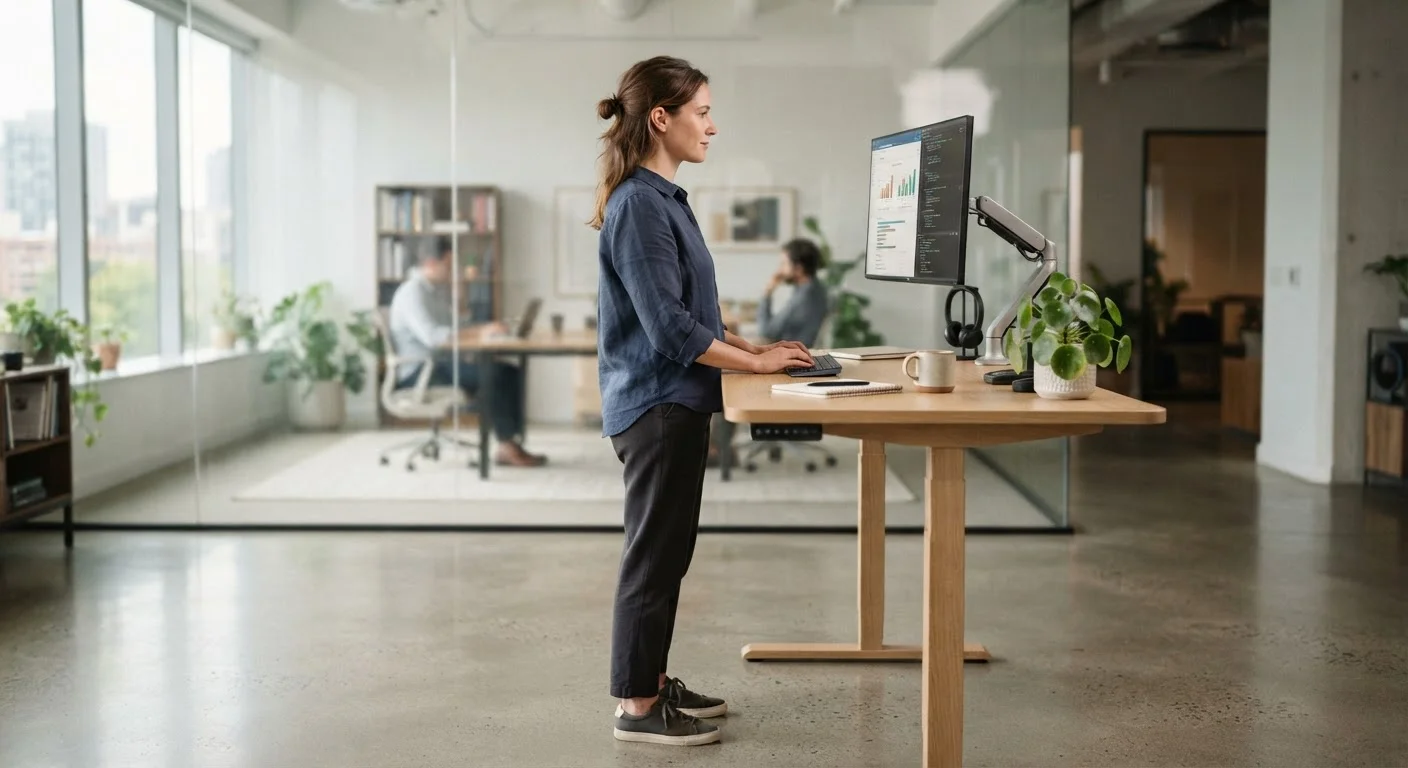
Setup details matter enormously. Your monitor should sit at roughly eye level, your elbows should rest at approximately 90 degrees when using the keyboard, and your wrists should be neutral - not bent upward or downward. An anti-fatigue mat and supportive footwear can significantly reduce lower-limb strain during standing periods.
It's also worth recognising that a standing desk is one tool, not a complete solution. Brief walking breaks, targeted mobility work, and strengthening exercises for the core and posterior chain all contribute to postural health in ways a desk adjustment alone cannot. For a comparison of how walking breaks and standing stack up, see walking vs. standing desks.
~30 min
Recommended maximum standing interval before switching
Ergonomics guidelines from occupational health bodies generally suggest alternating between sitting and standing every 30-60 minutes to manage fatigue and strain.
54%
Workers reporting musculoskeletal discomfort from prolonged standing
A review published in occupational health literature found that more than half of workers in predominantly standing jobs reported significant lower-limb or back discomfort.
This article is for general informational purposes only and does not constitute medical or ergonomic advice. If you experience persistent pain or discomfort, consult a qualified healthcare or allied health professional.