

Key Takeaways
Self-Limiting Infection
A self-limiting infection is one the immune system can identify and eliminate without the help of prescription medication. The illness runs a predictable course - symptoms peak, then gradually resolve - because the body's defenses successfully contain and clear the pathogen. Many common viral illnesses fall into this category. Not all infections are self-limiting; some require targeted medical treatment to prevent serious harm.
Self-limitation depends on whether the pathogen's replication rate stays within what an intact adaptive immune response can suppress before causing tissue damage or systemic spread.
Why Your Body Can Clear Many Infections Without Help
The human immune system is a remarkably sophisticated defense network. When a pathogen - a virus, bacterium, fungus, or parasite - enters the body, the immune system launches a layered response designed to detect, contain, and eliminate the threat. For many common infections, this response is sufficient. The illness follows a predictable arc: exposure, symptom onset, peak, and resolution.
Viral upper respiratory infections are a classic example. The immune response to a cold or flu involves identifying the virus, producing targeted antibodies, and clearing infected cells - all without pharmaceutical intervention. Rest, hydration, and time support this process, but the immune system is doing the heavy lifting.
Self-limiting infections tend to share certain characteristics: the pathogen doesn't replicate faster than the immune system can respond; it doesn't produce toxins that cause rapid irreversible damage; and it doesn't evade immune detection. When these conditions hold, recovery follows naturally.
Support Your Immune Response During Illness
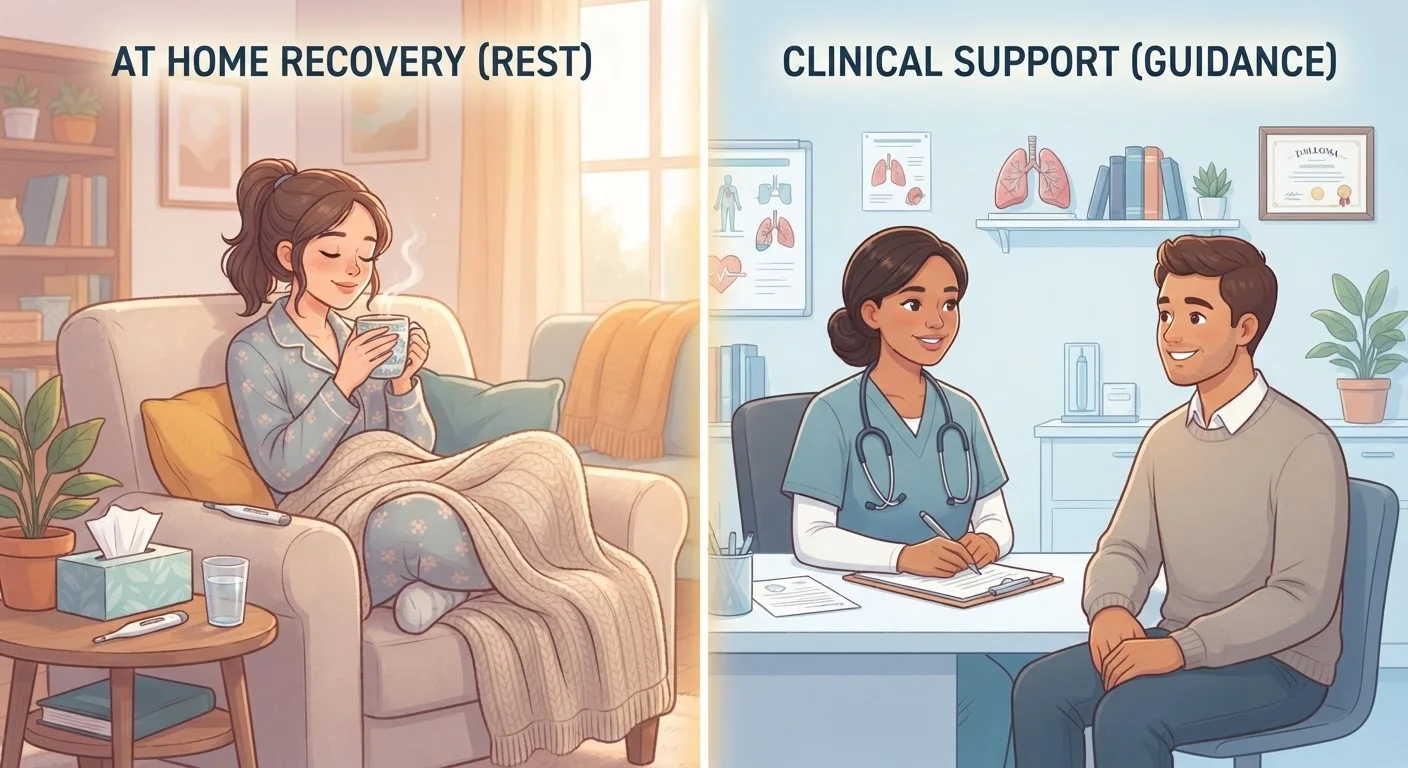
During a self-limiting infection, prioritize sleep, adequate hydration, and eating regularly if you can tolerate food. These basic measures help your immune system function at its best. Over-the-counter symptom relief - such as for fever or congestion - can improve comfort but does not shorten the course of most viral illnesses. Always read labels and check with a pharmacist or provider if you have questions about symptom management products.
What Makes Some Infections Require Medical Treatment
Not all pathogens play by the same rules. Some bacteria produce toxins, invade deep tissues, or replicate so aggressively that the immune system cannot suppress them without help. Bacterial infections like Streptococcus pyogenes (responsible for strep throat) or Escherichia coli urinary tract infections are unlikely to resolve safely without antibiotics. Left untreated, they can spread and cause serious complications.
Understanding why viruses and bacteria require different treatments is foundational here. Antibiotics target bacterial cell structures that human cells lack - they are meaningless against viruses. Prescribing them for viral illness doesn't speed recovery; it only increases the risk of resistant bacteria developing.
Beyond pathogen type, several host factors determine outcome:
- Immune status: Immunocompromised individuals - including those on certain medications, living with HIV, or undergoing cancer treatment - may not clear even typically self-limiting infections without help.
- Age: Infants and older adults have immune systems that are less equipped to mount robust responses.
- Infection site: Infections in the bloodstream, central nervous system, or heart valves are medical emergencies regardless of pathogen type.
- Pathogen virulence: Some organisms are inherently more destructive. Certain infections, like bacterial meningitis, require immediate treatment to prevent death or permanent disability.
~30%
Antibiotic prescriptions that are unnecessary
The CDC has estimated that roughly 30% of outpatient antibiotic prescriptions in the U.S. are unnecessary, often prescribed for self-limiting viral infections.
700,000+
Annual deaths from drug-resistant infections globally
The World Health Organization attributes over 700,000 deaths per year worldwide to antimicrobial resistance, a problem driven partly by overuse of antibiotics in self-limiting illness.
7-10 days
Typical duration of a common cold
According to the CDC, most adults experience 2-3 colds per year, each typically resolving within 7 to 10 days without medical treatment.
Reading the Signals: When to See a Healthcare Provider
The challenge for most people is distinguishing ordinary illness from something requiring intervention. Symptoms alone don't tell the whole story - a mild bacterial infection can feel like a bad cold, while a serious viral illness can feel dramatically worse than it actually is. That said, certain warning signs consistently indicate that medical evaluation is warranted.
Seek care if you experience: fever that is unusually high, persists beyond a few days, or returns after seeming to improve; difficulty breathing or chest pain; confusion or altered mental status; symptoms that worsen rather than plateau and improve; or any severe symptoms in an infant, pregnant person, or someone with a chronic health condition. These are situations where waiting for natural resolution may allow preventable harm.
It's also worth noting that fever is often misunderstood. A moderate fever is actually part of your immune response - it creates an environment less hospitable to pathogens. Its presence alone is not always a reason for alarm, but persistent or very high fevers are signals that should not be dismissed.
Knowing the Pathogen Changes Everything
The same symptom - say, a cough or diarrhea - can result from a virus, bacterium, parasite, or fungus. Each requires a different approach, and treatment that works for one pathogen type may be useless or harmful for another. See our reference on common infections and the pathogens behind them to understand which organisms cause familiar illnesses.
This article is for general health education only and is not a substitute for professional medical advice. Always consult a qualified healthcare provider if you are concerned about an infection or any health symptom.