

Key Takeaways
Option A
Viruses
The intracellular hijacker that requires your own cells to replicate.
Best for: Understanding why antibiotics are ineffective and when antiviral therapy or immune support is the appropriate response.
Option B
Bacteria
The self-sufficient single-celled organism that antibiotics are designed to target.
Best for: Understanding when antibiotic treatment is appropriate and how bacterial infections differ from viral illness in presentation and management.
If you have a sore throat, fever, and a positive strep test
Bacteria
Strep throat is a bacterial infection caused by Streptococcus pyogenes, making it responsive to antibiotic treatment prescribed by a clinician.
If you have a runny nose, cough, and cold symptoms lasting under 10 days
Viruses
Common colds are caused by viruses; antibiotics will not help, and the illness typically resolves with rest and supportive care.
If you are concerned about flu-like symptoms and early antiviral therapy
Viruses
Influenza is viral; antivirals like oseltamivir may be prescribed by a provider for high-risk individuals when started early in illness.
If symptoms worsen significantly after initial improvement or persist beyond expected timeframes
Bacteria
A worsening course can signal a secondary bacterial infection requiring clinical evaluation and possibly antibiotic treatment.
Two Entirely Different Types of Pathogens
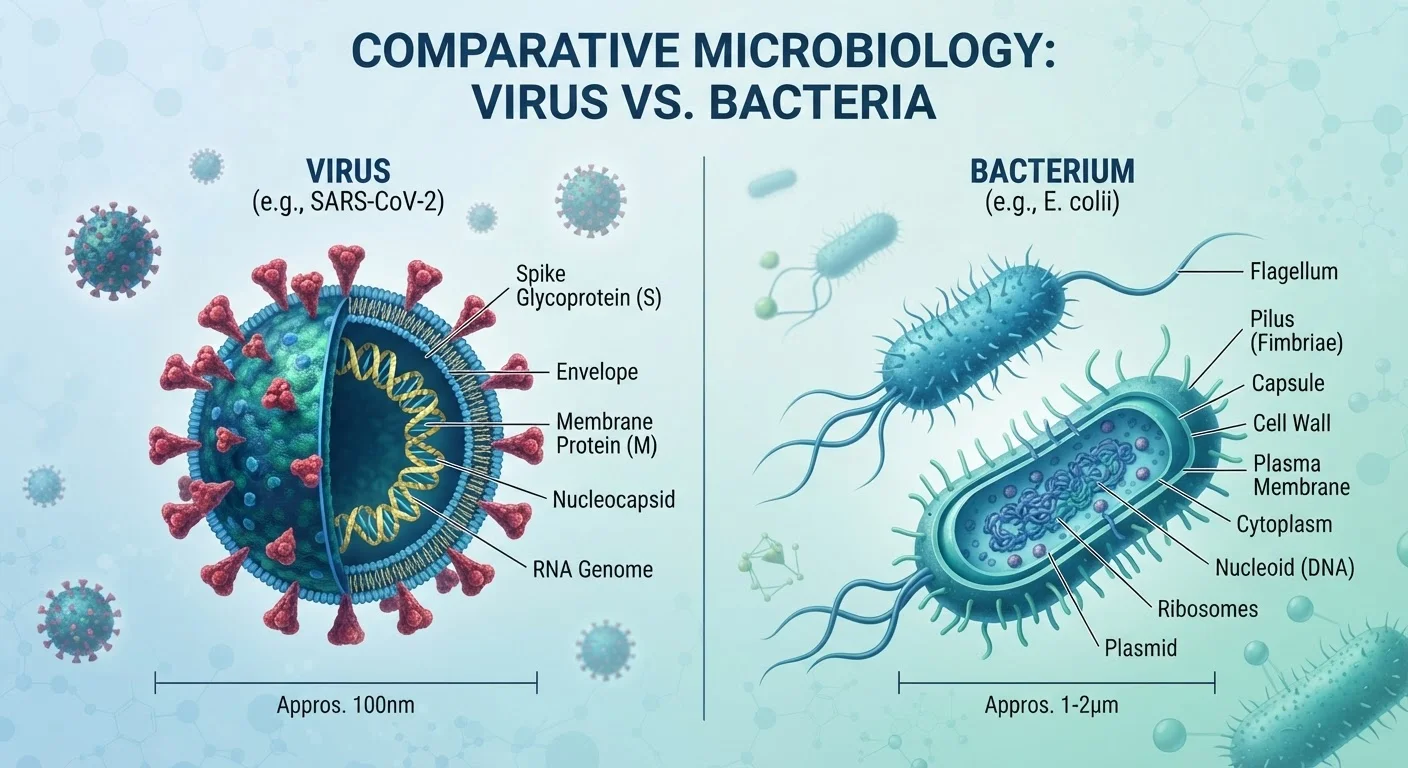
When you come down with an infection, your body is under attack - but the nature of that attack depends entirely on whether the culprit is a virus or a bacterium. These are not just two categories of the same thing; they are fundamentally different in structure, behavior, and how they interact with the human body.
Bacteria are single-celled living organisms. They have their own cellular machinery - including a cell wall and ribosomes - and can reproduce independently by dividing. They can live in soil, water, food, and inside or on the human body. Most bacteria are harmless or even beneficial (as with gut flora), but pathogenic strains cause illnesses ranging from urinary tract infections to pneumonia.
Viruses are not technically alive in the same sense. They are microscopic packages of genetic material (DNA or RNA) enclosed in a protein coat. Viruses cannot replicate on their own - they must invade a host cell and hijack its machinery to make copies of themselves. This biological distinction is precisely why the same medication cannot treat both. For a broader look at which pathogens cause specific illnesses, see Common Infections and the Pathogens Behind Them.
Head-to-Head: Key Differences at a Glance
Understanding the structural and biological contrasts between viruses and bacteria clarifies why they require different clinical responses.
| Criterion | Viruses | Bacteria |
|---|---|---|
| Classification | Not considered living organisms | Living single-celled organisms |
| Replication | Requires a host cell | Divides independently |
| Size | Far smaller (20-300 nm) | Larger (1-10 micrometers) |
| Cell wall | None | Present (in most species) |
| Effective treatment | Antivirals (limited range); immune support | Antibiotics (when appropriate) |
| Immune response | Primarily innate + adaptive immunity | Innate + adaptive; phagocytosis key |
| Common examples | Influenza, COVID-19, common cold | Strep throat, UTI, Lyme disease |
These distinctions are not academic - they directly shape how clinicians diagnose and treat illness. For a deeper look at what unfolds inside the body during one type of infection, see What Happens Inside the Body During a Bacterial Infection.
Why Treatment Cannot Be Interchanged
Antibiotics work by targeting structures or processes unique to bacteria - disrupting their cell walls, inhibiting protein synthesis, or blocking DNA replication. Because human cells lack bacterial cell walls and use different ribosomes, antibiotics can selectively harm bacteria without (in most cases) damaging the host. Viruses have none of these bacterial targets, so antibiotics are completely ineffective against them.
Antiviral medications work differently - they typically interfere with a virus's ability to replicate inside host cells, or block the proteins it uses to enter cells. They are pathogen-specific: an antiviral developed for influenza does not work against the herpes simplex virus, for example. Antivirals exist for conditions such as influenza, HIV, hepatitis B and C, and herpes, but there are no antivirals for the majority of common cold-causing viruses.
~30%
Antibiotic prescriptions that are unnecessary
The CDC has estimated that roughly 28-30% of outpatient antibiotic prescriptions in the U.S. are unnecessary, often prescribed for viral illnesses.
700,000+
Annual deaths linked to antimicrobial resistance globally
The World Health Organization estimates over 700,000 deaths per year are attributable to drug-resistant infections, driven partly by antibiotic misuse.
Prescribing antibiotics for a confirmed viral illness does not speed recovery and carries real costs: side effects, disruption of beneficial gut bacteria, and contribution to antibiotic resistance. The Antibiotic Resistance: What It Is, Why It Happens, and Why It Matters article explains why this matters far beyond any single patient.
Symptoms Overlap - Which Makes Diagnosis Harder
One reason the virus-versus-bacteria distinction confuses so many people is that both types of infection produce overlapping symptoms: fever, fatigue, inflammation, and pain are common to both. There is no reliable way to determine the cause based on how sick you feel alone.
Clinicians use a combination of symptom history, physical examination, and diagnostic tests - throat cultures, blood counts, rapid antigen tests, or PCR tests - to distinguish viral from bacterial illness. A beginner's overview of infectious diseases can help build foundational understanding of how infections are identified and managed.
When Viral Illness Opens the Door to Bacteria
A viral infection can temporarily weaken local immune defenses, allowing bacteria to take hold in tissues already inflamed or damaged. This is called a secondary bacterial infection. Classic examples include bacterial pneumonia following influenza, or bacterial sinusitis following a viral upper respiratory infection. If you notice significant worsening after a period of improvement - especially with high fever or new localized pain - contact a healthcare provider rather than waiting it out.
It is also worth noting that some infections start as viral but create conditions for a secondary bacterial infection - such as a viral respiratory illness followed by bacterial pneumonia or sinusitis. This is one reason symptoms that worsen after initially improving deserve prompt clinical attention. Why Some Infections Resolve on Their Own While Others Require Treatment explores how the body handles both scenarios.
This article is for general educational purposes and does not constitute medical advice. Always consult a qualified healthcare provider for diagnosis, treatment decisions, or concerns about any health condition.