

Key Takeaways
Why Exercise Needs Change With Age
Staying physically active across the later decades of life is one of the most well-supported strategies for preserving independence, reducing chronic disease burden, and supporting mental wellbeing. But a workout suited to a 52-year-old may look quite different from what serves a 78-year-old well - and understanding those differences is what makes movement sustainable and safe.
Several physiological shifts drive the change. From your 30s onward, the body gradually loses muscle mass through a process called sarcopenia. Bone density declines. Cardiovascular efficiency decreases. Connective tissue becomes less elastic. These aren't reasons to slow down - they're reasons to exercise more strategically.
The type and amount of movement that best supports wellbeing shifts with each passing decade, and matching your approach to your current physiology is the key to long-term benefit.
~3-5%
Muscle mass lost per decade after age 30
This rate accelerates after 60, according to research published in journals covering sarcopenia and musculoskeletal aging.
1 in 4
Adults over 65 who fall each year
The CDC reports that falls are the leading cause of injury-related death among adults aged 65 and older in the US.
150 min
Recommended weekly moderate aerobic activity for older adults
This target is consistent across US and WHO physical activity guidelines for adults aged 65 and over.
Your 50s: Build the Foundation
The 50s are an ideal decade to invest seriously in physical capacity before age-related decline steepens. Many people in this group are still relatively strong and resilient, but hormonal shifts - particularly declining estrogen and testosterone - begin to accelerate muscle and bone loss.
Key priorities in your 50s
- Resistance training: Aim to include strength work at least twice a week. Compound movements - squats, rows, presses - that engage multiple muscle groups provide the most return. See our practical starting point for strength training after 50 if you're newer to this.
- Aerobic conditioning: Moderate-intensity cardio (brisk walking, cycling, swimming) supports heart health and metabolic function. Mixing in some higher-intensity intervals, if appropriate and cleared by a doctor, can further benefit cardiovascular fitness.
- Flexibility and mobility: Dynamic stretching before activity and static stretching after helps maintain range of motion and reduce injury risk.
In your 50s, treat strength training as an investment with compound interest: the capacity you build now directly buffers the steeper losses that come in your 60s and 70s.
Muscle mass and bone density are significantly easier to maintain than to rebuild once lost, making proactive resistance work far more effective than reactive intervention.
Don't skip the warm-up as you age - spend at least 8-10 minutes gradually raising your heart rate and mobilizing joints before loading them.
Older connective tissue is less elastic and slower to respond to demand. An adequate warm-up meaningfully reduces strain injury risk at every fitness level.
Nutrition and exercise work together: protein intake becomes especially important for muscle preservation. For context on how dietary needs also shift, see our overview of nutrition across the lifespan.
Your 60s: Protect What You've Built
By the 60s, the physiological changes underway in the 50s become more pronounced. Recovery after exercise takes longer. Joint discomfort may appear more frequently. Chronic conditions such as hypertension, type 2 diabetes, or osteoarthritis may begin to shape what's comfortable and safe.
Key priorities in your 60s
- Maintain strength work: Resistance training remains critical - it directly counters the accelerating muscle loss of this decade. Moderate loads with controlled form are generally more sustainable than heavy maximal lifts.
- Add balance training: Simple balance exercises (standing on one foot, heel-to-toe walking) should begin appearing regularly in your routine.
- Manage intensity carefully: The public health guidelines for adults over 65 recommend at least 150 minutes of moderate aerobic activity per week, spread across multiple days.
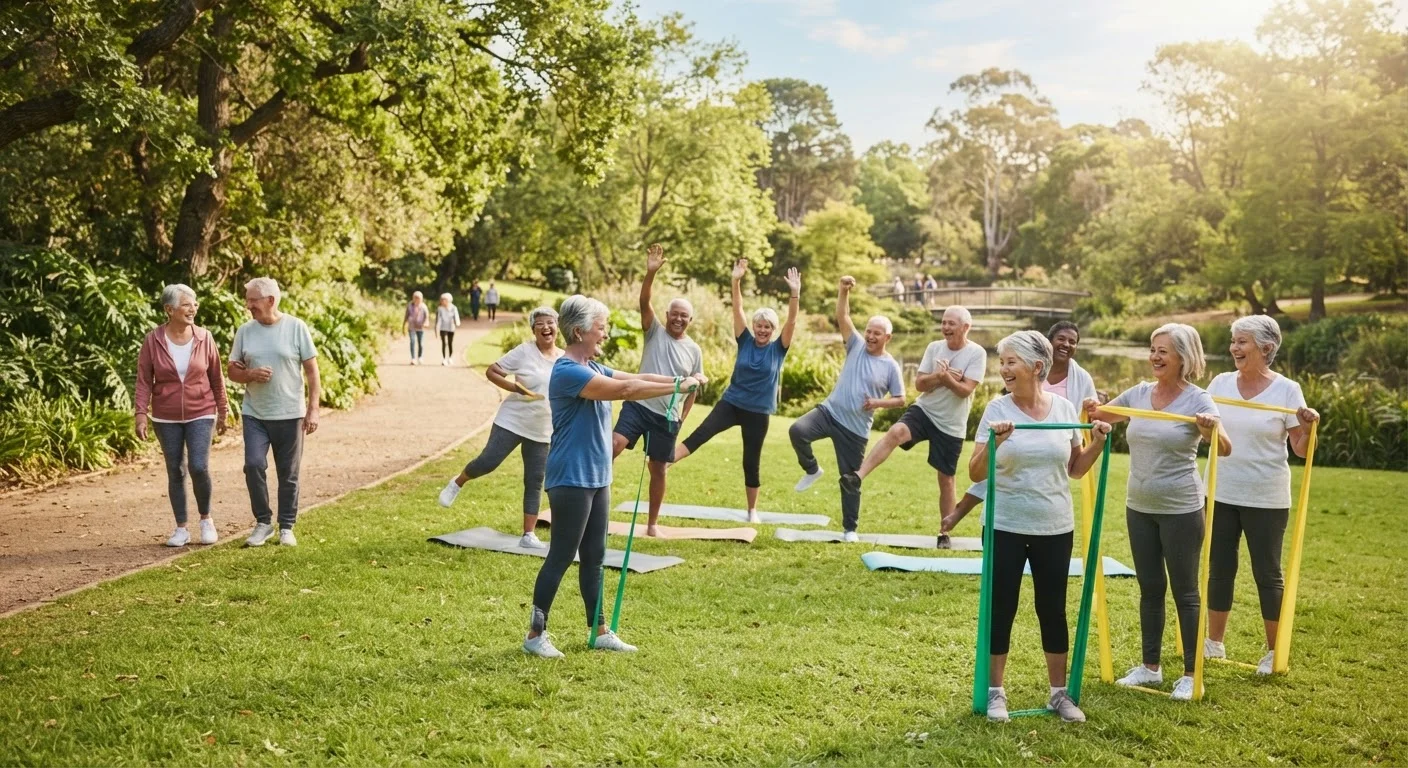
- Social exercise: Group exercise classes offer accountability and have been linked to measurable wellbeing gains beyond the physical.
New or Worsening Symptoms Deserve Medical Review
If you experience chest pain, shortness of breath at rest, sudden dizziness, or joint pain that's new or sharply worsened, stop exercising and consult a healthcare provider before continuing. These symptoms should always be evaluated - never pushed through. This is particularly important if you are managing cardiovascular disease, diabetes, or other chronic conditions.
Your 70s: Prioritize Function and Fall Prevention
In the 70s, the emphasis shifts toward preserving functional independence - the ability to dress, cook, walk, climb stairs, and recover from a stumble without serious injury. Falls become a significant health risk in this decade; hip fractures in older adults are associated with serious long-term complications.
Key priorities in your 70s
- Balance and stability training: Tai chi, yoga, and targeted single-leg exercises directly improve balance and reduce fall risk. Evidence supports these approaches consistently.
- Lower-impact aerobic activity: Walking, water aerobics, and recumbent cycling are effective and joint-friendly options for maintaining cardiovascular health.
- Functional strength: Exercises that mimic real-life movements - sit-to-stand, step-ups, reaching - train the body for the activities that matter most day to day.
- Flexibility and posture: Maintaining spinal flexibility and hip mobility reduces stiffness and contributes to better gait and posture.
“The goal of exercise in older adulthood isn't to look younger - it's to function better. Strength, balance, and endurance are the currencies of independence.”
— American College of Sports Medicine, Professional body for exercise science and sports medicine guidance
Explore how movement patterns shift across the decades for a broader lens on staying meaningfully active at this stage.
Your 80s and Beyond: Keep Moving, Safely
Exercise in the 80s is not about performance - it's about preserving quality of life. Even modest amounts of regular movement at this stage are associated with reduced hospitalizations, better mood, and maintained independence. The body's tolerance for high-intensity effort is lower, but the need to move is no less real.
Key priorities in your 80s
- Chair-based and supported exercise: Seated resistance exercises, wall push-ups, and supported standing movements allow strength work to continue safely for those with balance limitations or frailty.
- Daily walking: Even short, regular walks maintain circulation, support bone density, and improve mood. Consistency matters more than distance.
- Breathing and relaxation practices: Gentle yoga, tai chi, and diaphragmatic breathing support respiratory health and reduce stress, with low injury risk.
- Professional guidance: A physical therapist or accredited exercise physiologist can design a program tailored to specific conditions, mobility limitations, or post-surgical needs.
Frailty Is Not a Reason to Stop Moving
Research consistently shows that even people in their 80s and 90s - including those with frailty - can gain meaningful benefits from gentle, supervised exercise. Chair-based resistance work and short daily walks are considered safe entry points for most people. Always involve your doctor or a physical therapist when designing a program for someone with complex health needs or significant deconditioning.
The Active Lifestyle hub offers practical ideas for weaving more movement into everyday routines at any age.
Principles That Apply at Every Age
Across all decades, a handful of principles remain consistently supported by evidence and clinical practice:
- Consistency beats intensity. Moving regularly - even at moderate effort - outperforms sporadic bursts of high-intensity exercise for most health outcomes in older adults.
- All four pillars matter. Aerobic fitness, muscular strength, flexibility, and balance each serve distinct functions. Neglecting any one of them creates vulnerability.
- Rest and recovery are part of training. Adequate sleep and recovery time between sessions become increasingly important as the body's repair mechanisms slow.
- Adapt, don't stop. A new diagnosis, a flare-up, or a change in capacity calls for modification - not cessation. Work with your care team to find what still works.
- Enjoyment sustains habits. Exercise you'll actually do is always more valuable than an optimal program you won't.
For a full breakdown of recommended activity levels by age group, the physical activity guidelines reference provides clear, evidence-based targets from public health guidance.
This article is intended for general informational purposes only and does not constitute medical advice. Always consult a qualified healthcare provider before beginning, modifying, or stopping any exercise program, particularly if you have a chronic condition, recent injury, or other health concern.