

Key Takeaways
Bacterial Infection
A bacterial infection occurs when harmful bacteria enter the body, multiply beyond the immune system's immediate control, and damage tissues or disrupt normal biological processes. The body mounts a defence that produces recognisable symptoms - such as fever, swelling, and fatigue - as a direct result of this conflict. Most bacterial infections follow a predictable sequence from entry to resolution.
Bacteria are single-celled prokaryotic organisms that can cause disease through direct tissue invasion, toxin production, or by triggering disproportionate immune responses that damage the host.
Phase One: Entry and Colonisation
Every bacterial infection begins with a point of entry. Bacteria gain access to the body through the respiratory tract, gastrointestinal system, urinary tract, skin breaks, or mucous membranes. Once inside, they attempt to establish a foothold - a process called colonisation.
Not every encounter with bacteria leads to infection. The body's first line of defence - intact skin, mucus, stomach acid, and resident beneficial microbes - eliminates most incoming threats before they can multiply. Infection occurs when bacteria overcome these barriers, either because they are present in large numbers, are particularly virulent, or the host's defences are compromised.
To colonise successfully, bacteria use surface proteins to adhere to host tissues. Some species form protective communities called biofilms, which shield them from immune attack and make clearance more difficult. This adhesion phase is silent - there are typically no symptoms yet.
Colonisation Is Not the Same as Infection
Many bacteria live on and in the body without causing harm - this is called colonisation. The gut microbiome, for instance, contains trillions of bacteria that support digestion and immunity. Infection occurs only when bacteria invade tissues, multiply excessively, and trigger damage or an immune response. Understanding this distinction helps explain why not all bacterial exposure leads to illness.
Phase Two: Invasion and Damage
Once established, bacteria begin to multiply rapidly. As their numbers grow, they spread deeper into tissues and start causing measurable harm through two primary mechanisms.
- Direct invasion: Some bacteria penetrate host cells, disrupting their function and triggering cell death. Streptococcus pyogenes, for example, invades soft tissue and can cause the characteristic inflammation of strep throat or, in severe cases, deeper tissue infections.
- Toxin production: Many bacteria secrete toxins - chemical compounds that interfere with cellular processes far from the original infection site. Staphylococcal toxins can cause food poisoning symptoms by acting on the gut lining; Clostridium tetani toxin travels to the nervous system and disrupts muscle control.
The type and degree of damage depends heavily on which bacterial species is involved. For a detailed comparison of infections and their causative organisms, see common infections and the pathogens behind them.
Phase Three: The Immune Response and Symptoms
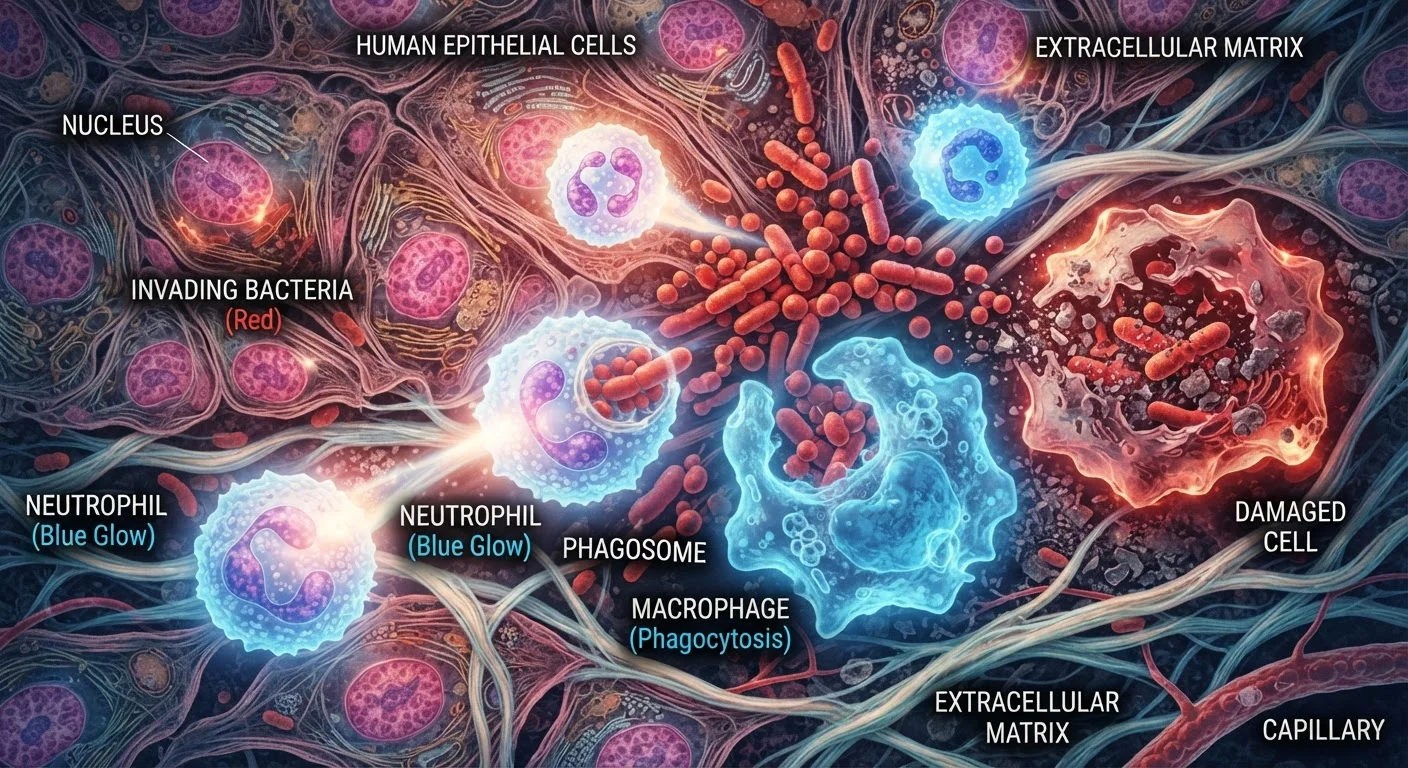
As bacteria multiply and cause tissue damage, the immune system mounts a coordinated defence. This is the phase most people associate with feeling sick - and with good reason. Many of the symptoms you experience are not caused directly by bacteria, but by your own immune response.
Immune cells called neutrophils and macrophages rush to the infection site, engulfing bacteria and releasing chemical signals called cytokines. Cytokines coordinate the broader immune response but also cause inflammation, fever, muscle aches, and fatigue - the hallmark signs of systemic infection.
Fever serves a defensive purpose: elevated body temperature slows bacterial replication and accelerates immune cell activity. Localised swelling (inflammation) increases blood flow to the affected area, delivering more immune cells. Pus - a mixture of dead bacteria, immune cells, and tissue debris - forms when the battle is intense and localised.
For a step-by-step breakdown of this process, the immune response to infection, step by step explains each stage in detail.
700,000+
Annual deaths linked to antibiotic-resistant bacteria globally
According to the World Health Organization, antimicrobial resistance is one of the greatest threats to global health, driven in part by bacterial infections that no longer respond to standard treatments.
1-4 days
Typical incubation period for many common bacterial infections
The Centers for Disease Control and Prevention notes that most common bacterial pathogens cause symptoms within one to four days of exposure, though this varies by organism and host factors.
Phase Four: Resolution or Escalation
In many bacterial infections, the immune response gains the upper hand. Bacteria are neutralised, dead cells are cleared, and tissue begins to repair. Symptoms gradually subside as inflammatory signalling winds down. This resolution can occur with or without antibiotic treatment, depending on the infection's severity and the individual's immune status.
When the immune system cannot contain the infection alone - or when bacteria produce toxins faster than they can be neutralised - the infection escalates. Bacteria may enter the bloodstream (bacteraemia), spreading to organs and potentially triggering sepsis, a life-threatening systemic inflammatory response. This is why escalating symptoms - high fever, rapid heart rate, confusion, or spreading redness - require urgent medical evaluation.
Understanding whether an infection will resolve on its own or needs treatment is a key clinical question. why some infections resolve on their own while others require treatment explores the factors that guide this determination.
It's also worth noting that bacterial and viral infections are frequently confused - a distinction with real treatment consequences. why the difference between viruses and bacteria shapes your treatment explains why getting this right matters.
Know When to Seek Medical Attention
Mild bacterial infections often improve within a few days as the immune system responds. However, symptoms such as a fever above 103°F (39.4°C), rapidly spreading redness or swelling, severe pain, confusion, or difficulty breathing warrant prompt medical evaluation. When in doubt, contact a healthcare provider rather than waiting to see if symptoms improve on their own.
This article is for general informational purposes only and does not constitute medical advice. Always consult a qualified healthcare professional if you have concerns about an infection or any health condition.